Inspiring Green Kitchen Decor Ideas
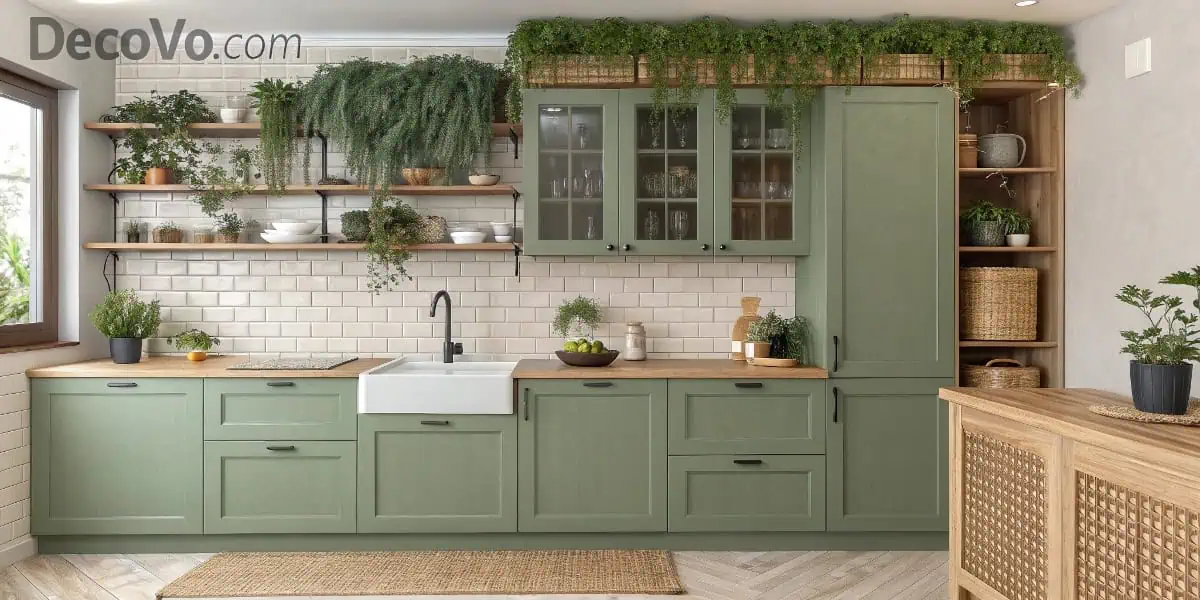
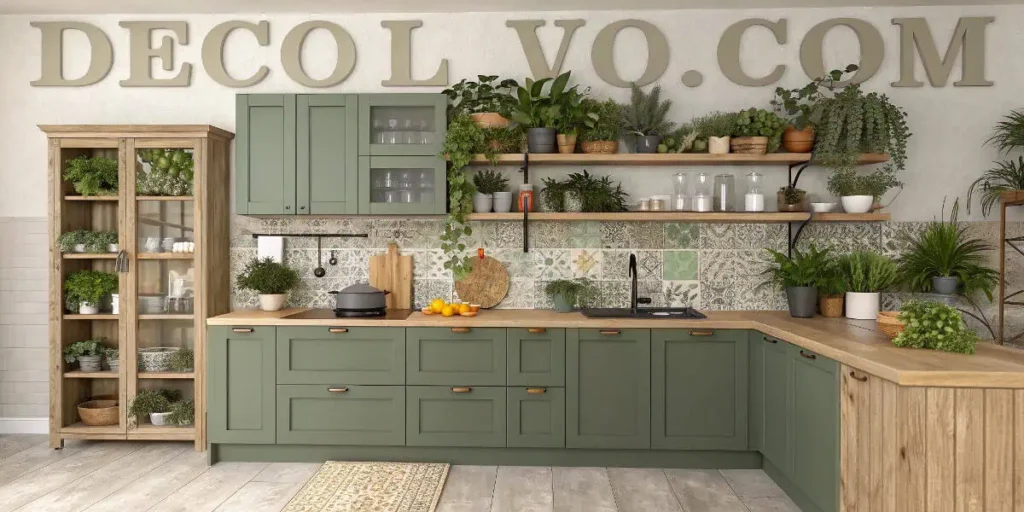
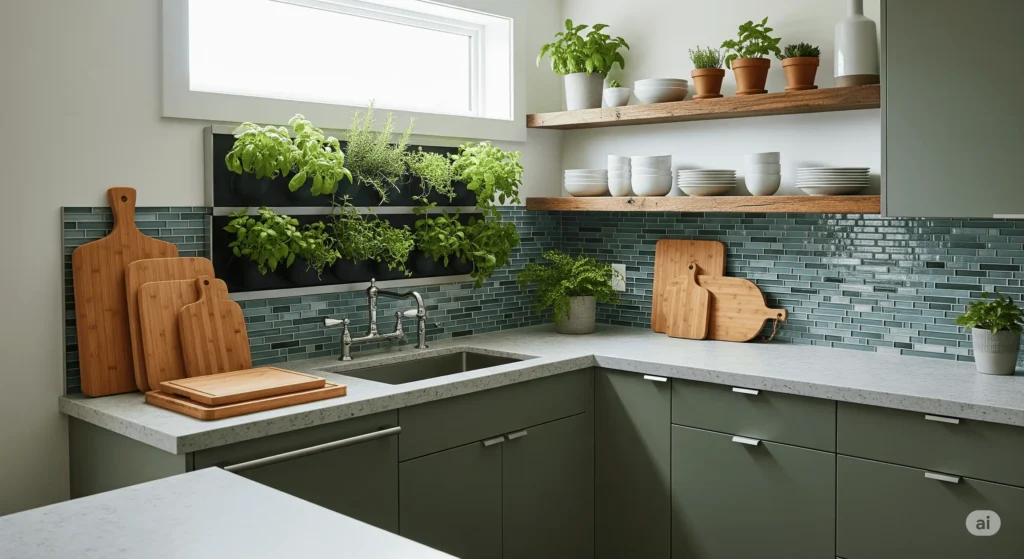
You can create an eco-friendly green kitchen by painting cabinets in earth-toned sage or forest green, which reduces visual stress while mimicking nature’s calming palette. Install a living herb wall above your sink for year-round access to fresh basil and thyme, then add natural stone countertops that resist bacteria without chemical treatments. Incorporate bamboo cutting boards, open shelving with potted plants, and recycled glass tile backsplashes to complete your sustainable configuration that’ll liberate additional environmental benefits.
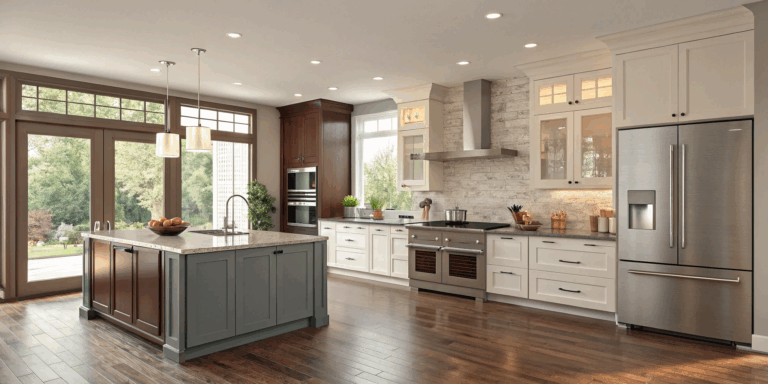
Paint Your Cabinets in Sage or Forest Green

Save what you love, hover or tap the image and pin it now.
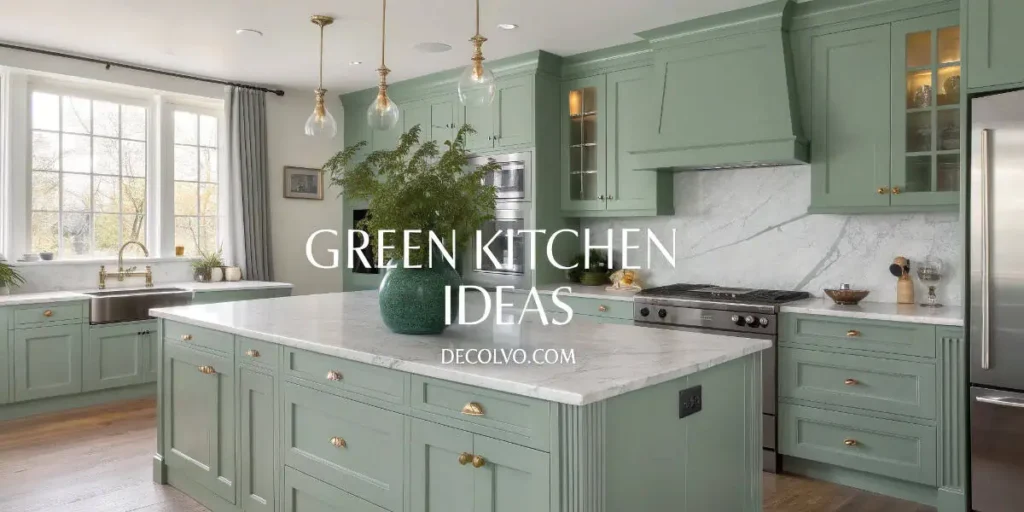
Cabinet color alters your kitchen’s entire atmosphere, and sage or forest green delivers both sophistication and natural warmth. These earth-toned hues reduce visual stress by mimicking nature’s calming palette, which studies show lowers cortisol levels.
Save what you love, hover or tap the image and pin it now.
Before painting, you’ll need to degrease surfaces with TSP cleaner and sand lightly for ideal primer adhesion. Choose semi-gloss or satin finishes that resist moisture and food stains while maintaining easy cleanup.
Save what you love, hover or tap the image and pin it now.
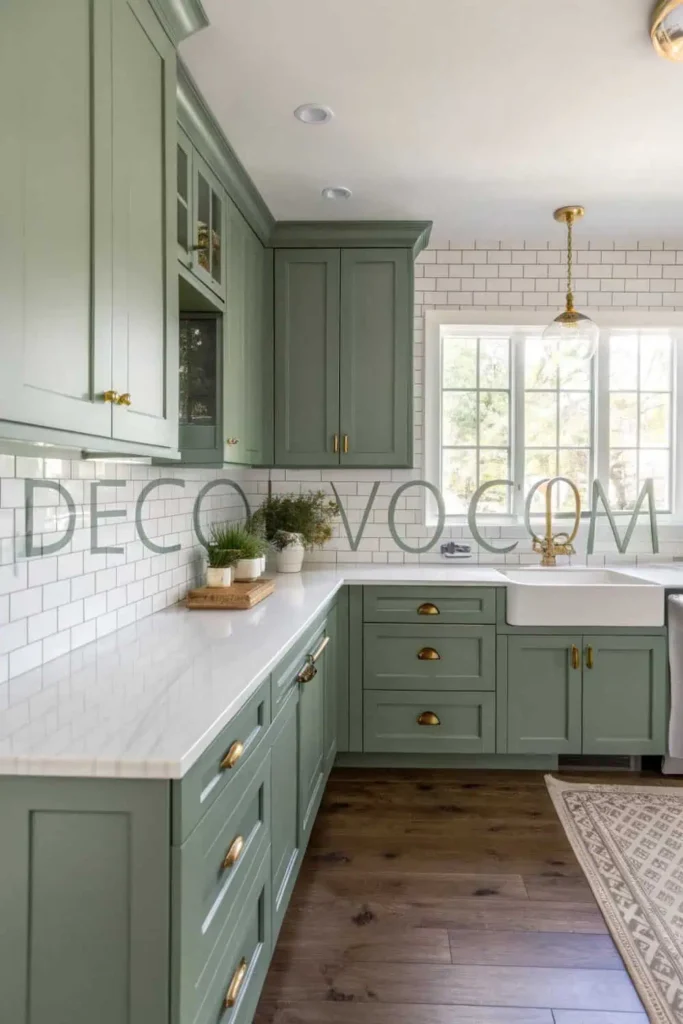
Repaint hardware in complementary brass or black finishes to enhance the green’s richness. Consider timing this project when you upgrade appliances, as stainless steel pairs beautifully with forest green while white appliances complement sage tones.
Save what you love, hover or tap the image and pin it now.
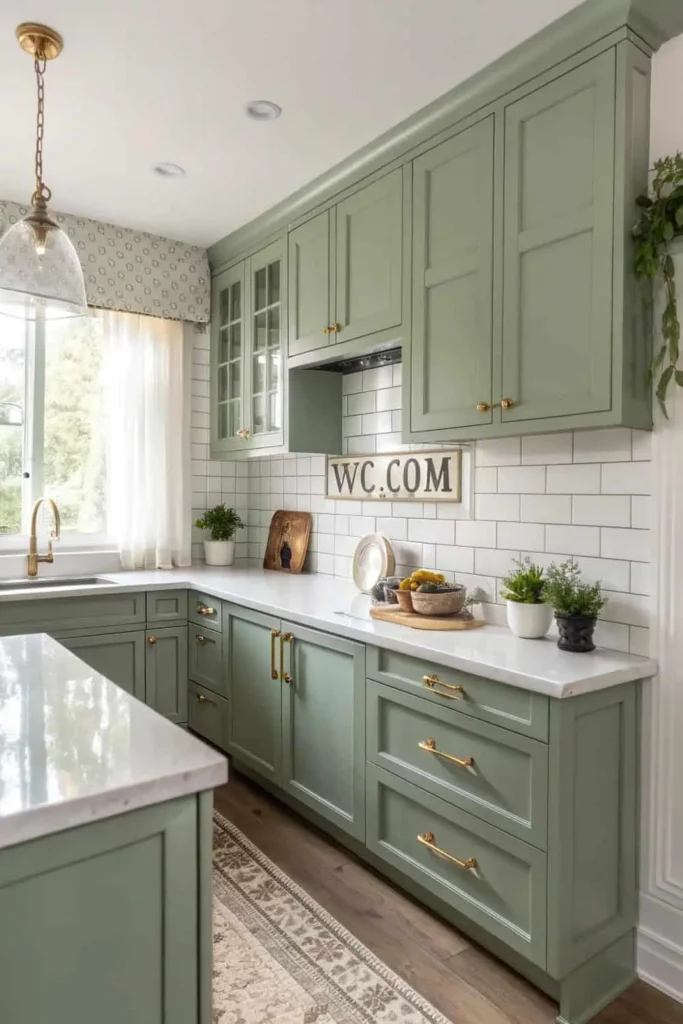
Apply thin, even coats using a high-quality brush for smooth coverage. This change typically costs 80% less than cabinet replacement.
Save what you love, hover or tap the image and pin it now.
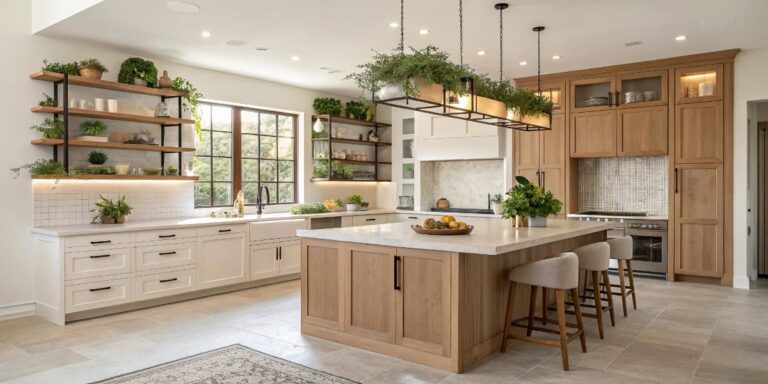
Install a Living Herb Wall Above Your Sink
While fresh herbs from the grocery store wilt within days, a living herb wall above your sink provides year-round access to basil, thyme, and cilantro at peak nutritional potency. This vertical gardening solution maximizes limited kitchen space while ensuring ideal growing conditions near your water source.
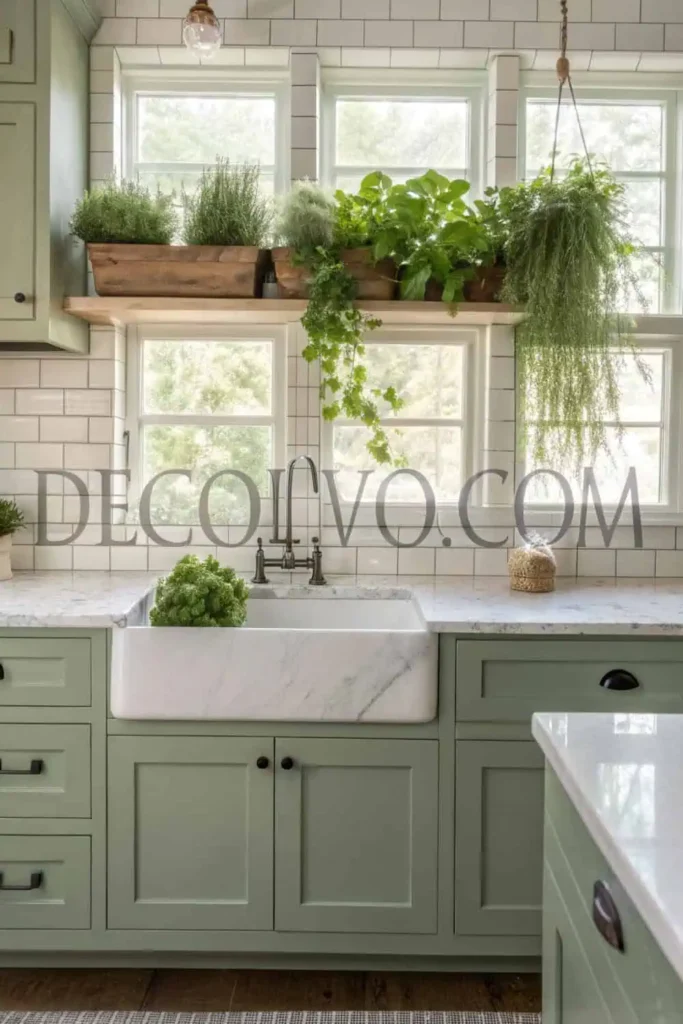
Save what you love, hover or tap the image and pin it now.
Choose low-maintenance herbs that thrive indoors and complement your cooking style:
Install modular wall planters with built-in drainage systems 18 inches above your sink. Position grow lights underneath cabinets if natural light is insufficient. You’ll reduce grocery costs while adding living color to your green kitchen design.
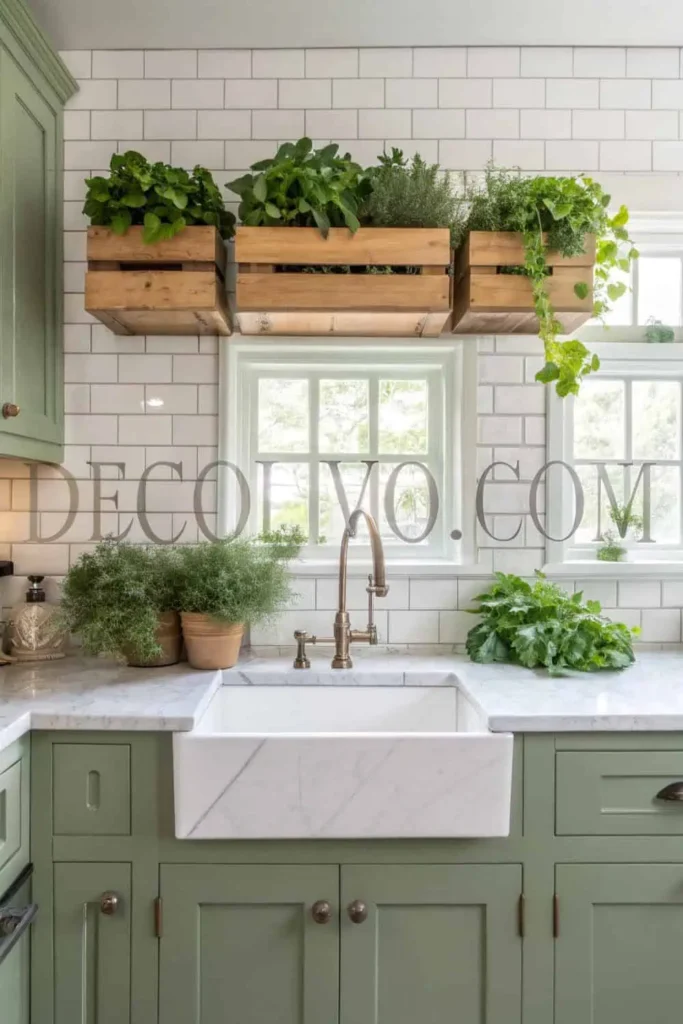
Save what you love, hover or tap the image and pin it now.
Choose Natural Stone Countertops in Earth Tones
Natural stone countertops in earth tones provide your kitchen with an eco-friendly workspace that reduces environmental impact while offering unmatched durability. Granite, slate, and soapstone naturally resist bacteria and heat without requiring chemical treatments. You’ll find these materials lasting for decades with minimal maintenance, eliminating frequent replacements that generate waste.
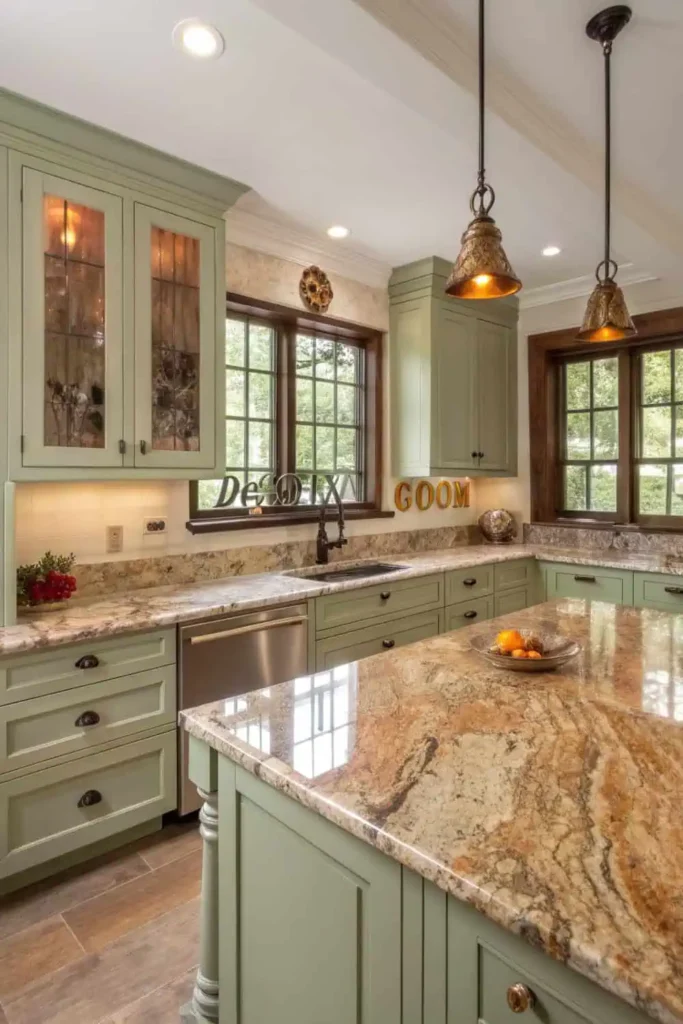
Save what you love, hover or tap the image and pin it now.
When selecting stone, prioritize sustainable sourcing from local quarries to minimize transportation emissions. Recycled granite offers another environmentally conscious design option, utilizing reclaimed materials from demolished buildings.
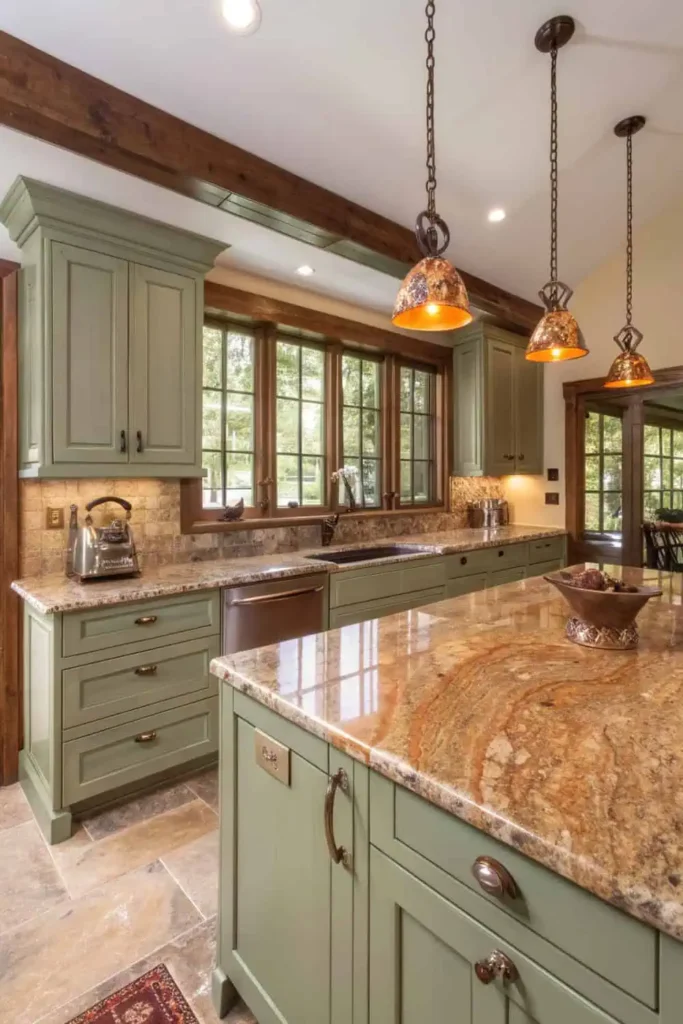
Save what you love, hover or tap the image and pin it now.
Earth tones like sage green, warm brown, and charcoal gray complement natural lighting while hiding minor scratches better than lighter surfaces. Stone’s thermal mass helps regulate kitchen temperatures, potentially reducing energy costs. Unlike synthetic alternatives, natural stone contains no volatile organic compounds, improving indoor air quality for healthier cooking environments.
Add Open Shelving With Potted Plants
Open shelving paired with potted plants alters your kitchen into a living ecosystem that actively purifies indoor air while reducing your reliance on manufactured storage solutions. You’ll leverage floating shelves to maximize vertical space while minimizing environmental impact through reduced material consumption.
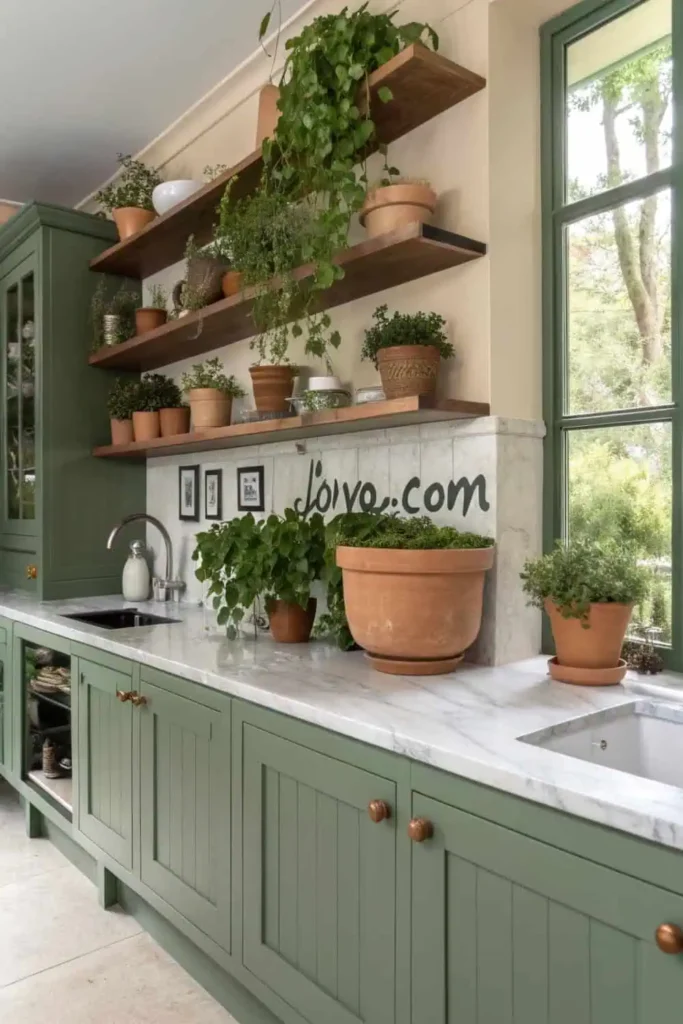
Save what you love, hover or tap the image and pin it now.
Transform your kitchen into a living ecosystem that purifies air naturally while reducing dependence on manufactured storage through strategic plant-shelf integration.
Strategic plant placement creates natural air filtration systems. Consider these science-backed approaches:
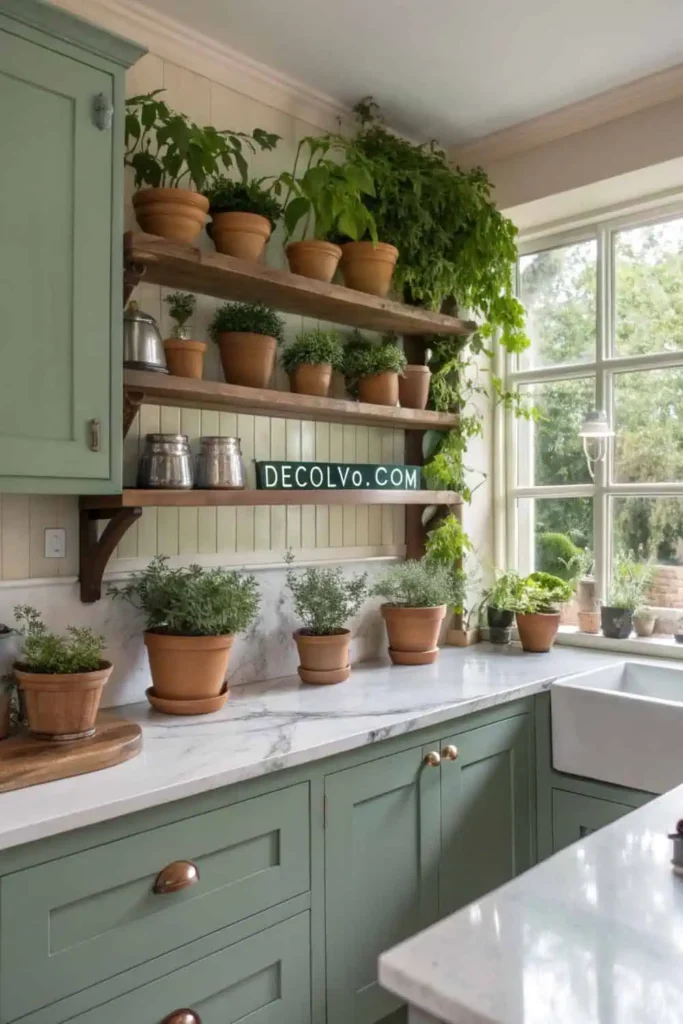
Save what you love, hover or tap the image and pin it now.
This combination modifies storage into functional décor while improving indoor air quality through photosynthesis and natural humidity regulation.
Incorporate Bamboo Cutting Boards and Utensils
Bamboo’s rapid regeneration cycle—reaching harvest maturity in just 3-5 years compared to hardwood’s decades—makes it the most sustainable material choice for your kitchen tools and cutting surfaces. You’ll reduce plastic waste while accessing naturally antimicrobial properties that inhibit bacterial growth without chemical treatments.
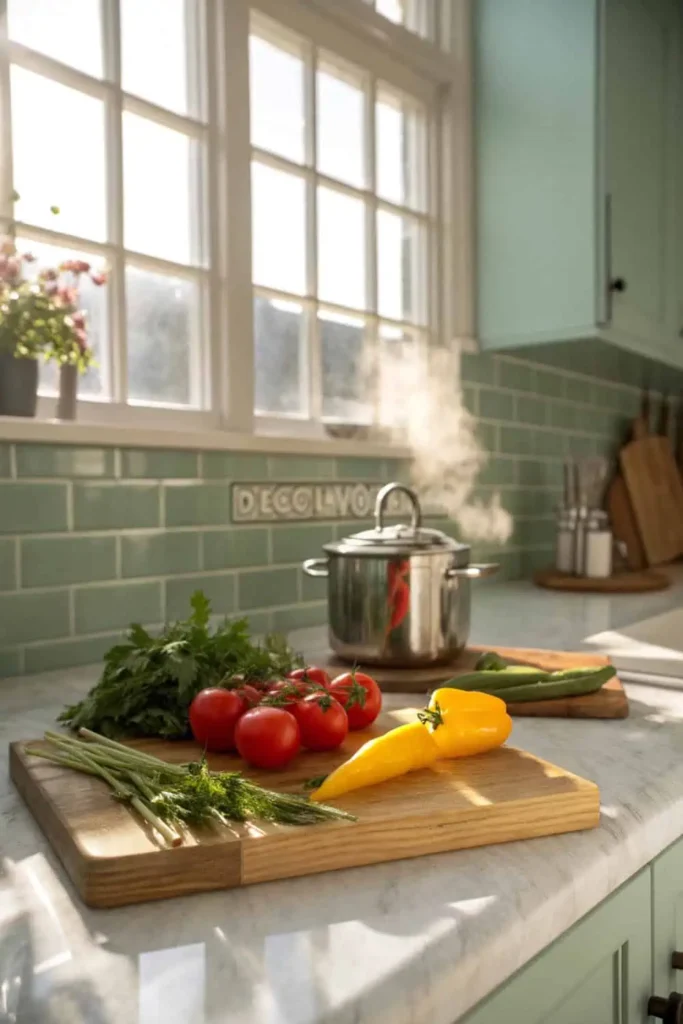
Save what you love, hover or tap the image and pin it now.
Choose products from sustainable bamboo sourcing operations that maintain forest certifications and avoid clear-cutting practices. Look for FSC-certified bamboo to guarantee responsible harvesting methods.
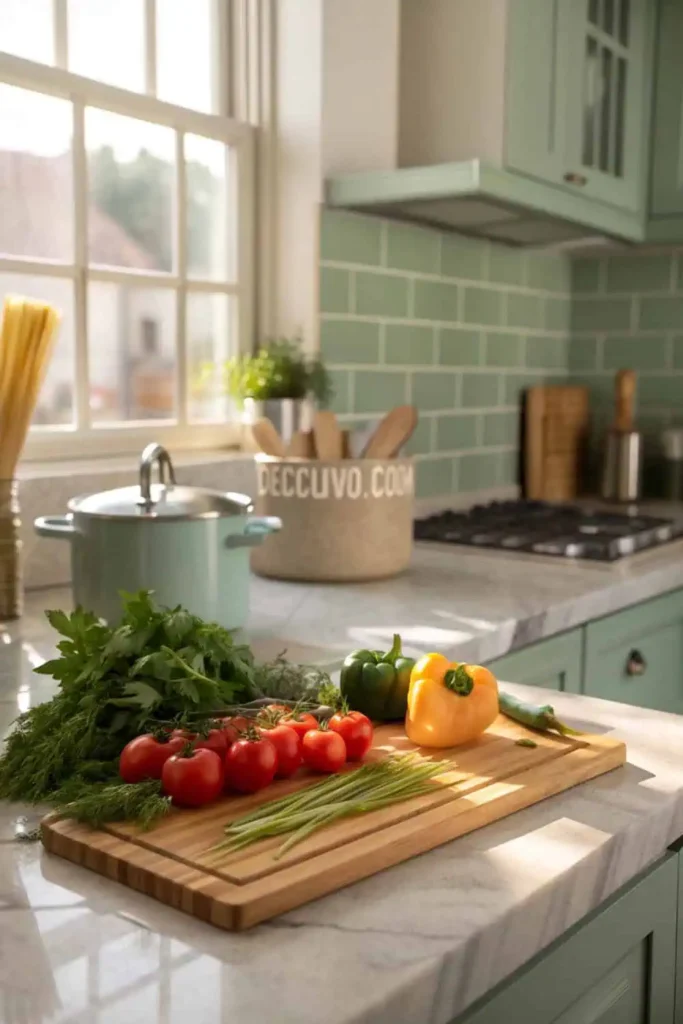
Save what you love, hover or tap the image and pin it now.
Proper bamboo utensil care extends lifespan enormously. Hand-wash with mild soap, avoiding dishwashers that cause cracking. Oil monthly with food-grade mineral oil to prevent drying. Sand lightly with fine-grit paper to remove stains and restore smoothness. Replace cutting boards when deep grooves develop, as these harbor bacteria despite bamboo’s natural antimicrobial qualities.
Install Energy-Efficient LED Strip Lighting
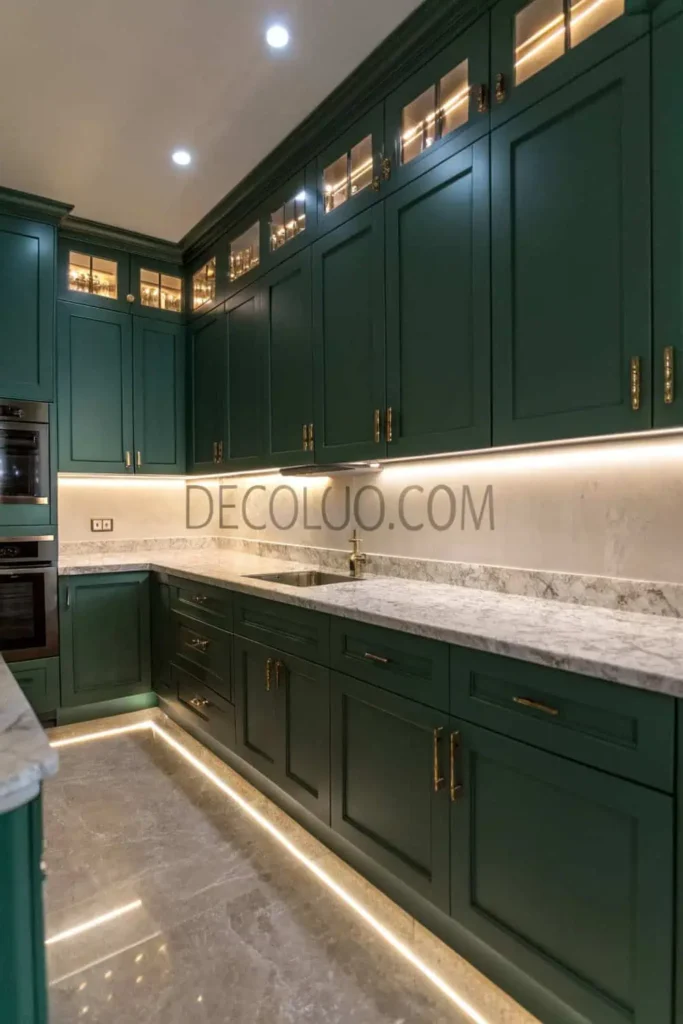
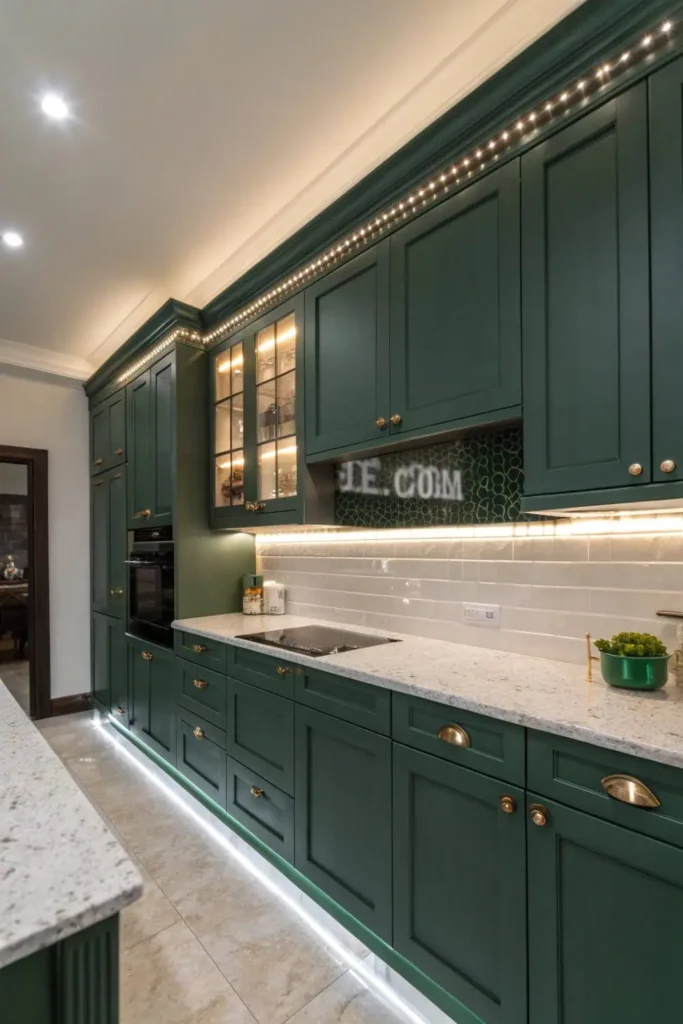
LED strip lighting consumes 75% less energy than traditional incandescent bulbs while producing the same brightness levels, making it the most efficient choice for under-cabinet and accent kitchen lighting.
Save what you love, hover or tap the image and pin it now.
You’ll maximize energy savings by following these installation strategies:
LED strips generate minimal heat compared to halogen alternatives, reducing cooling costs while providing consistent 3000K color temperature for accurate food preparation visibility.
Save what you love, hover or tap the image and pin it now.
Create a Backsplash With Recycled Glass Tiles
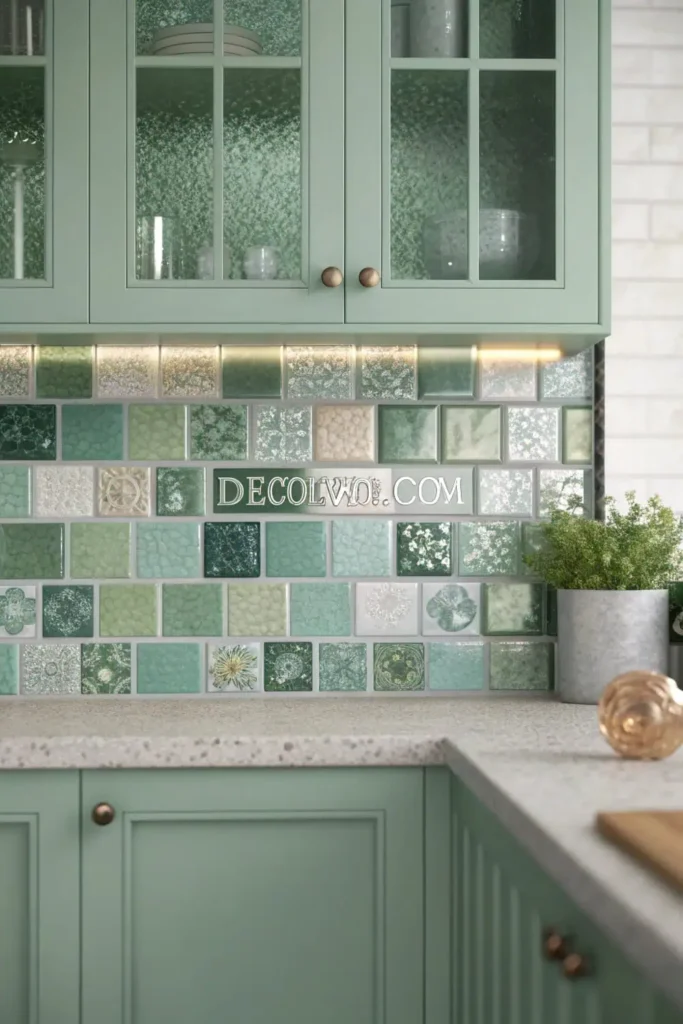
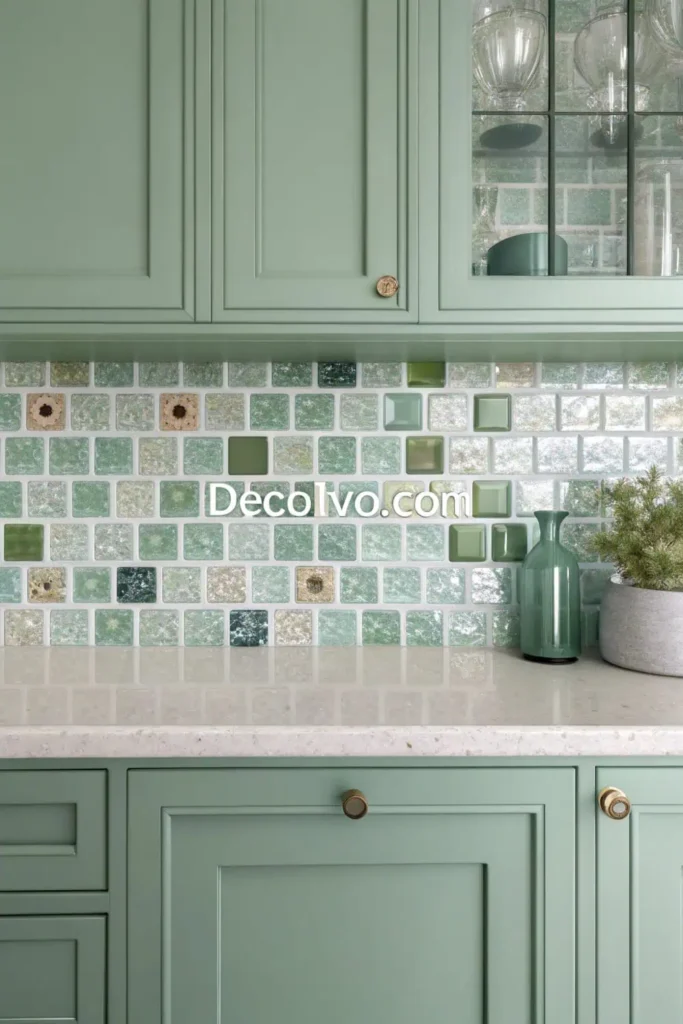
While efficient lighting reduces your kitchen’s energy consumption, choosing sustainable materials for visible surfaces creates additional environmental benefits. You can use recycled glass for visual interest by selecting backsplash tiles made from post-consumer bottles and windows. These tiles divert waste from landfills while requiring 30% less energy to manufacture than virgin glass alternatives.
Save what you love, hover or tap the image and pin it now.
When you incorporate salvaged materials for sustainable design, you’re reducing demand for new resource extraction. Recycled glass tiles offer identical durability to conventional options, with heat resistance up to 400°F and zero water absorption rates.
They’re available in various colors reflecting their source materials—clear bottles create neutral tones, while colored glass produces lively blues and greens. Installation follows standard tile procedures, requiring no specialized tools or techniques.
Save what you love, hover or tap the image and pin it now.
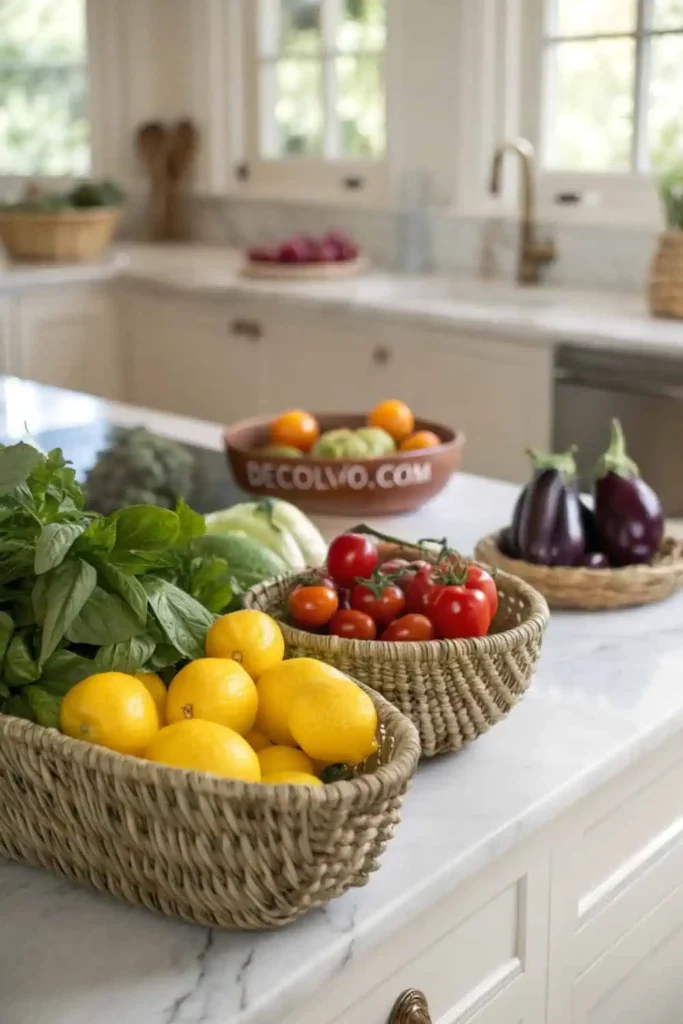
Display Fresh Produce in Woven Baskets
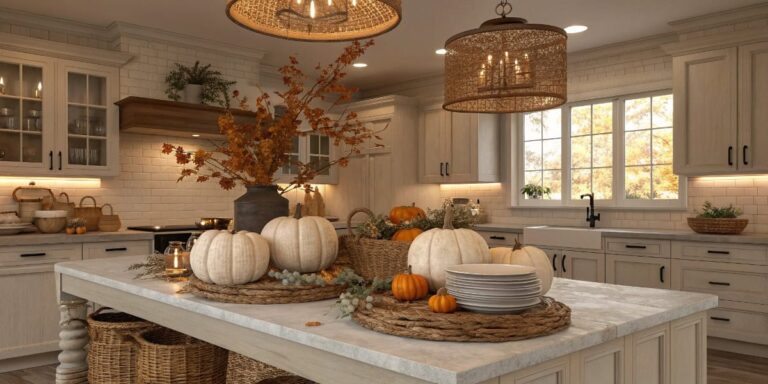
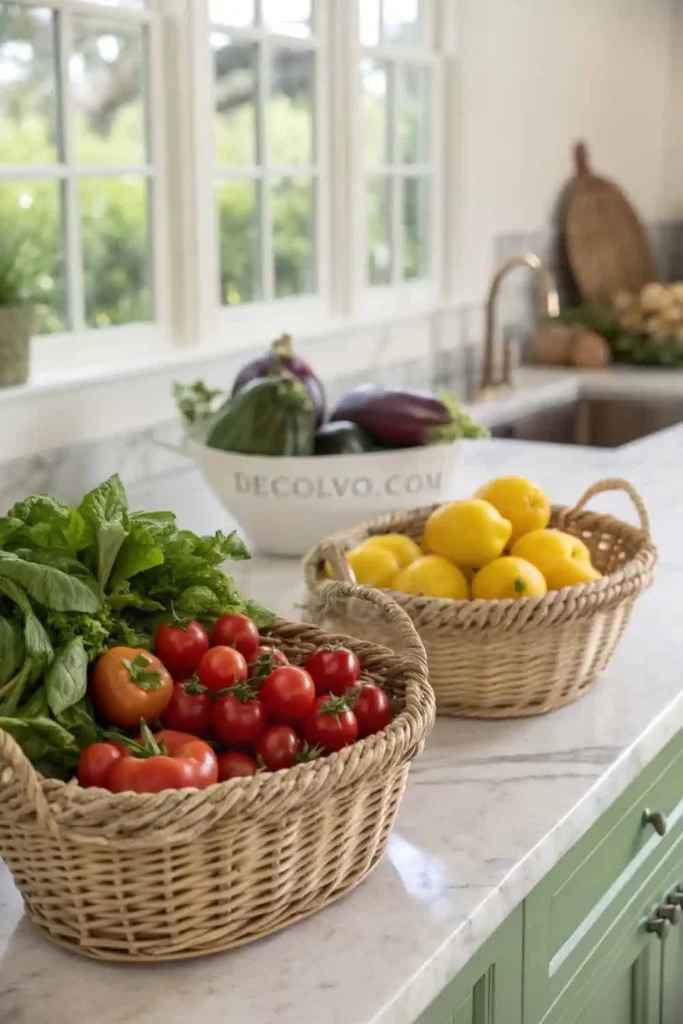
Beyond incorporating recycled materials into your kitchen’s infrastructure, you can enhance its eco-friendly appeal through thoughtful storage choices that showcase natural abundance. Woven baskets create an organized system that promotes proper air circulation, extending produce freshness while reducing food waste.
Save what you love, hover or tap the image and pin it now.
You can display seasonal produce effectively by implementing these strategies:
Save what you love, hover or tap the image and pin it now.
Natural fiber baskets made from bamboo, rattan, or seagrass provide breathable storage that prevents moisture buildup. This ventilation system reduces bacterial growth and maintains ideal humidity levels, keeping your produce fresh longer while creating an aesthetically pleasing, sustainable kitchen display.
Choose Eco-Friendly Cork or Bamboo Flooring
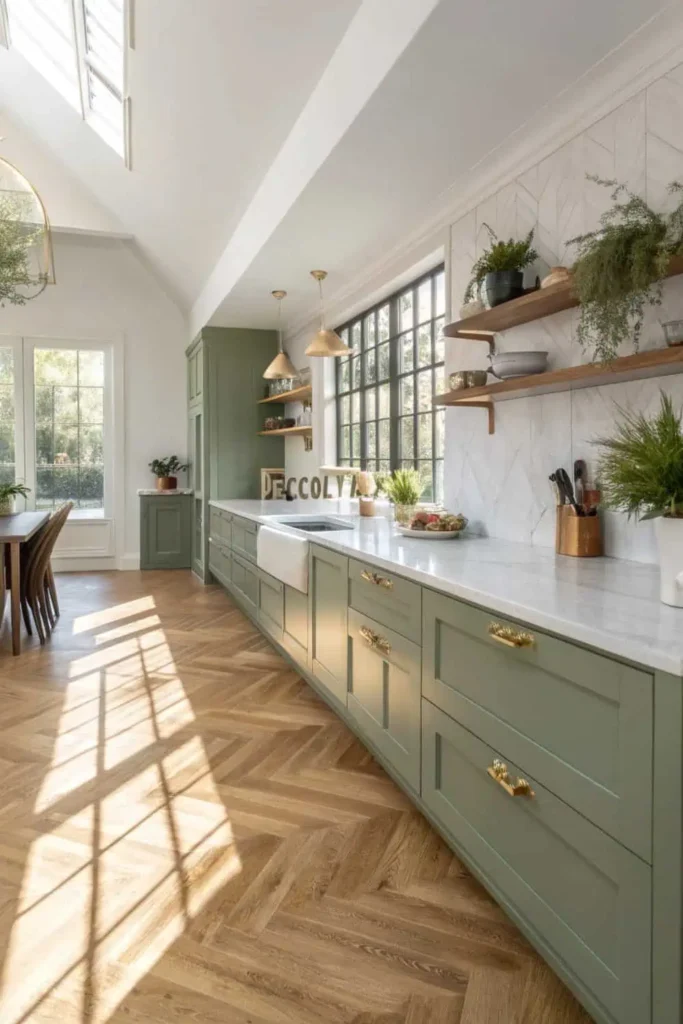
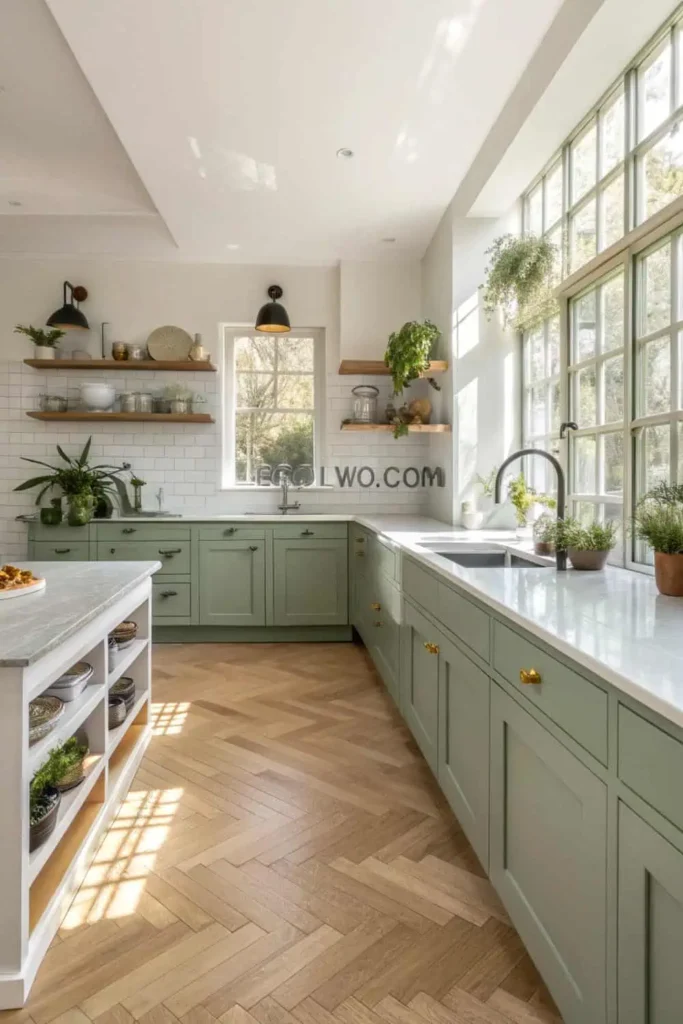
Since traditional hardwood flooring requires harvesting mature trees that take decades to regenerate, cork and bamboo offer sustainable alternatives that dramatically reduce your kitchen’s environmental impact.
Save what you love, hover or tap the image and pin it now.
Cork flooring comes from bark harvested every nine years without harming trees, providing natural antimicrobial properties and moisture resistance. Bamboo grows 30 times faster than hardwood, reaching maturity in three to five years. Both materials offer excellent durability and easy maintenance.
Save what you love, hover or tap the image and pin it now.
When installing eco-friendly flooring, pair it with sustainable insulation options like recycled denim or cellulose beneath subflooring to maximize energy efficiency. Complete your green renovation by selecting low VOC paint selections for walls and trim, ensuring indoor air quality remains healthy while you’re cooking and entertaining in your environmentally conscious kitchen space.
Add Vintage Copper Pots as Decorative Elements
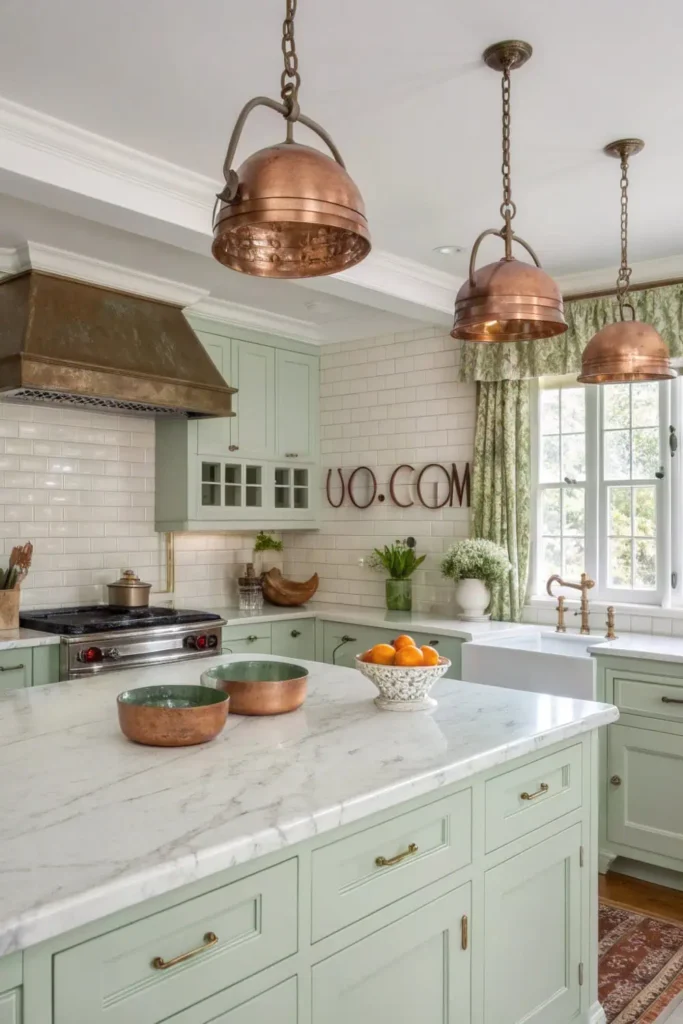
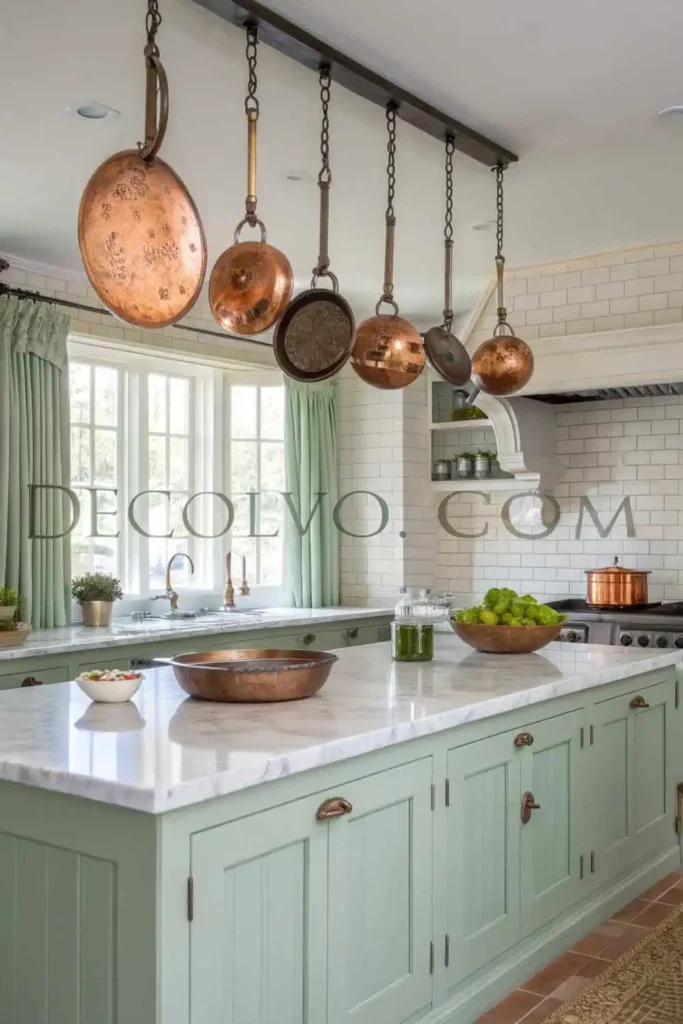
Creating an eco-friendly kitchen extends beyond flooring materials to include the cookware and decorative elements you choose. Antique copper cookware serves dual purposes as functional kitchenware and sustainable décor. These vintage pieces reduce demand for new manufacturing while adding warmth to your space.
Save what you love, hover or tap the image and pin it now.
Vintage copper cookware transforms your kitchen into an eco-conscious space while reducing manufacturing demand and adding timeless warmth.
Benefits of vintage copper elements:
Save what you love, hover or tap the image and pin it now.
You’ll find authentic pieces at estate sales, antique shops, and online marketplaces. Look for solid copper construction rather than copper-plated items for maximum durability and performance.
Conclusion
You’ll uncover that embracing earth-conscious design choices inherently uplifts your culinary sanctuary’s aesthetic while supporting environmental stewardship. These sustainable elements don’t just enhance your space’s visual appeal—they contribute to improved indoor air quality and reduced ecological impact. Research confirms that biophilic design elements amplify mental well-being and productivity. By thoughtfully selecting eco-friendly materials and incorporating living elements, you’re investing in both your home’s long-term value and the planet’s future health.

Save what you love, hover or tap the image and pin it now.