Living Room Design Ideas (Cohesive, Cozy & Modern)
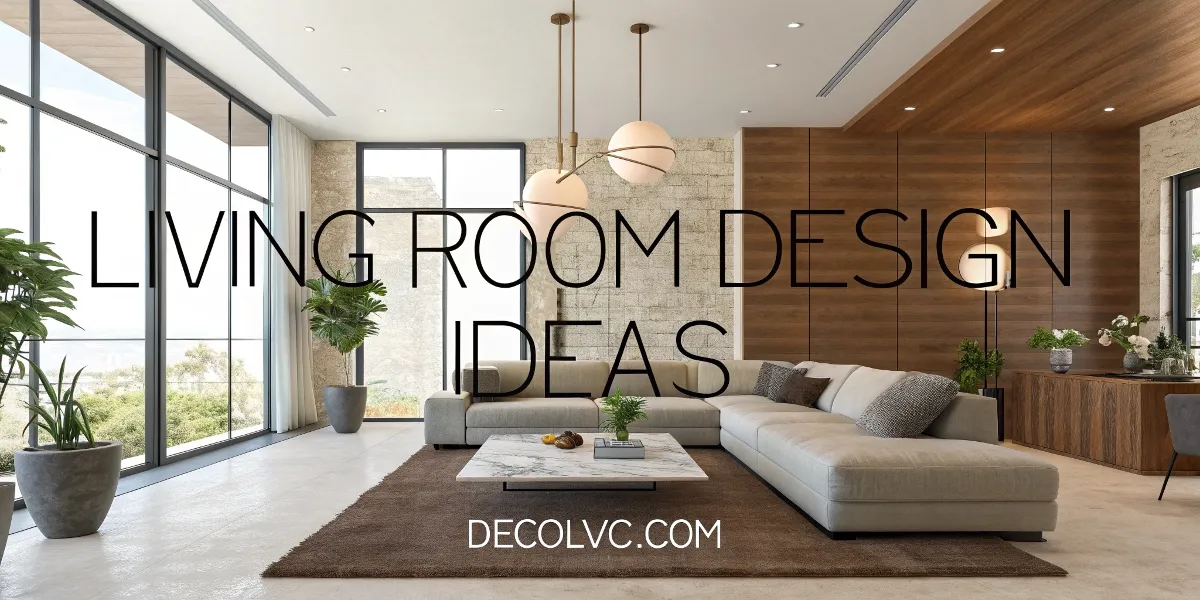
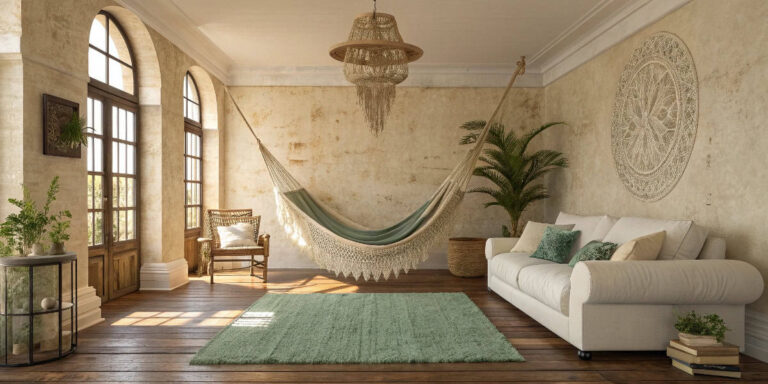
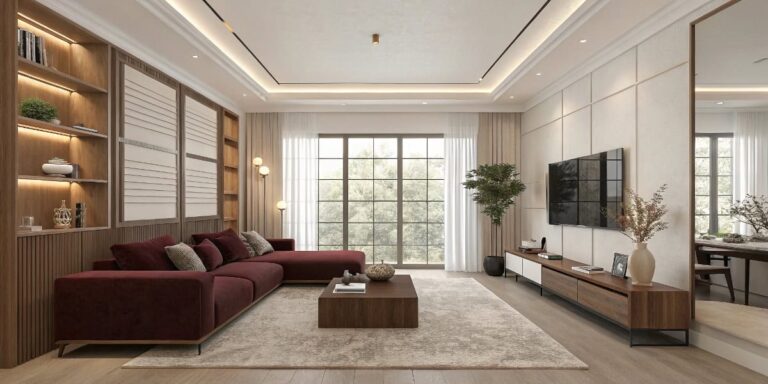
Living Room Design Ideas often begin with a neutral base, guided by the timeless 60-30-10 color rule—60% dominant, 30% secondary, and 10% accent. From there, layer in complementary accents to ensure visual continuity. Float furniture away from the walls to define functional zones while preserving natural pathways between seating areas.
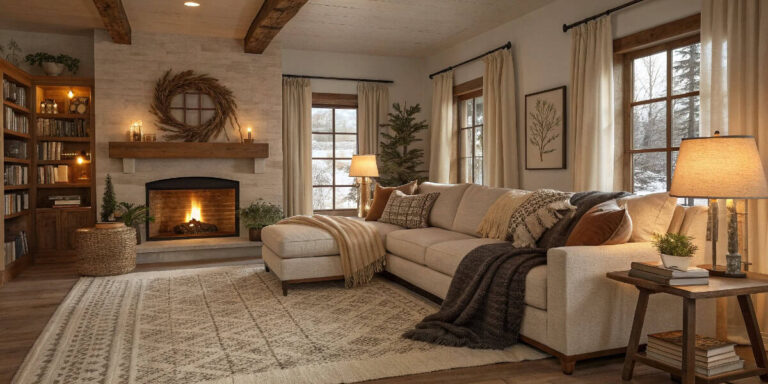
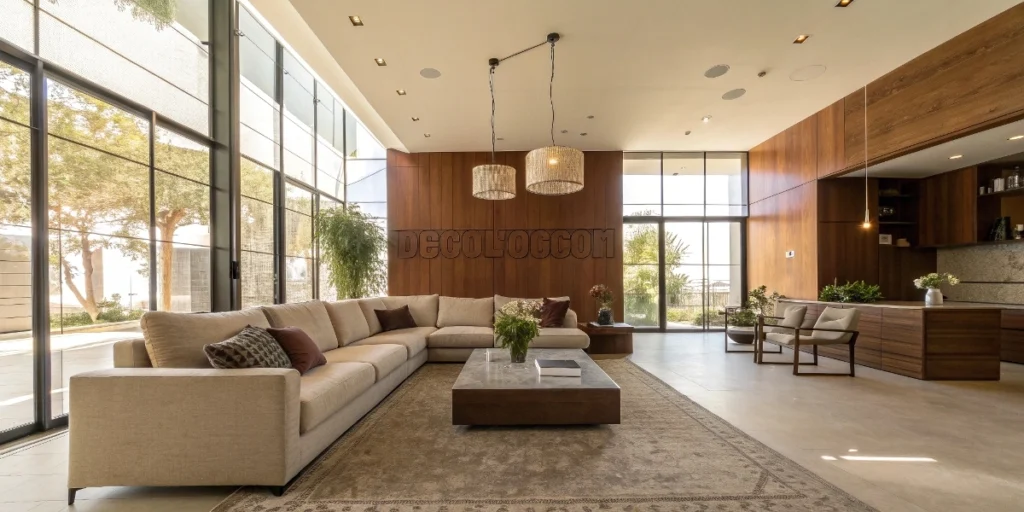
Incorporate 3–5 distinct textures using pillows, rugs, and throws to introduce depth and warmth. Layer ambient, task, and accent lighting—ideally with dimmers—to create a versatile atmosphere. Position your main seating around a striking focal point to anchor the design narrative and support a cohesive, intentional layout.

Save what you love, hover or tap the image and pin it now.
Color Palette Strategies for Modern Living Spaces
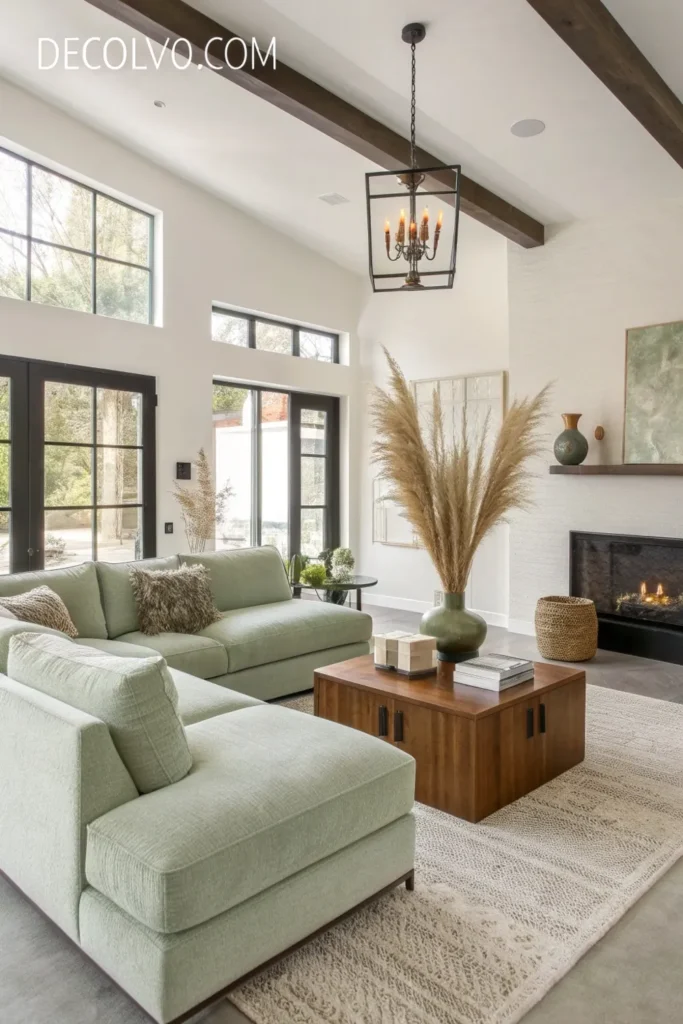
Sophistication emerges when you establish a cohesive color foundation that anchors your modern living space. Start with a dominant neutral base—warm whites, soft grays, or rich charcoals—and then layer in your accent palette strategically.
Save what you love, hover or tap the image and pin it now.
A well-planned neutral foundation with strategic accent layers transforms any modern space into a sophisticated, cohesive sanctuary.
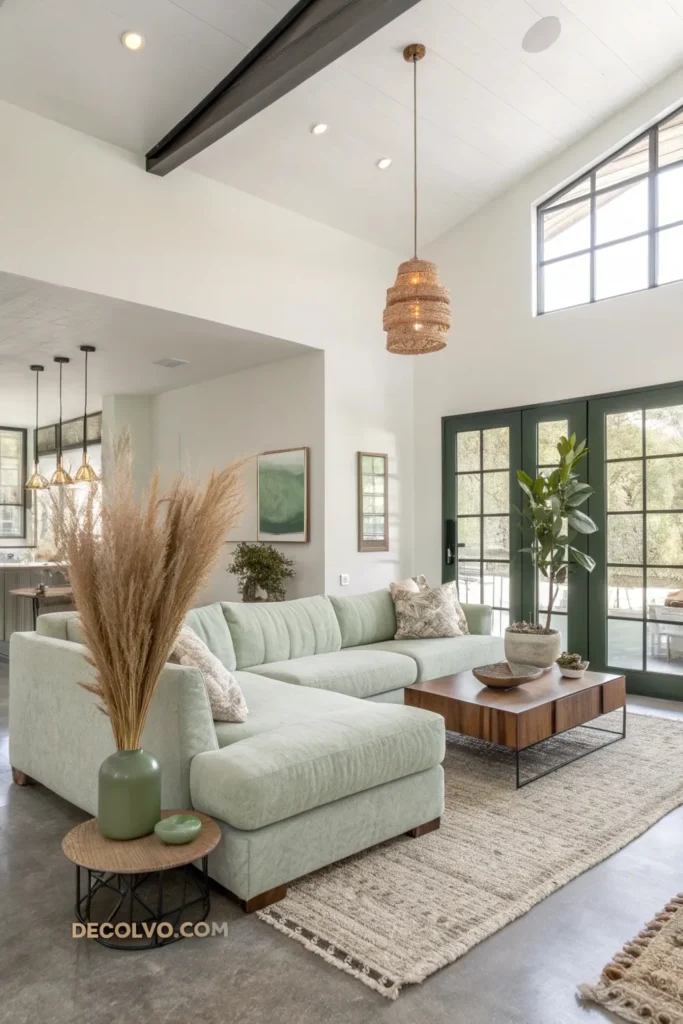
Monochromatic color schemes create visual continuity by utilizing varying shades, tones, and tints of a single hue. You’ll achieve depth through textural contrasts rather than color variation. Alternatively, complementary color combinations inject lively energy while maintaining balance, with pairings like navy and warm copper or sage green with terracotta exemplifying this approach.
Save what you love, hover or tap the image and pin it now.
Consider the 60-30-10 rule: sixty percent dominant color, thirty percent secondary, and ten percent accent. This proportion fosters visual hierarchy without overwhelming your space. Be sure to test color combinations in different lighting conditions, as both natural and artificial light can dramatically affect perception and mood.
Pro Tip: Always sample paint colors in your space before committing, as they can look different in various lighting.
Furniture Selection and Arrangement Principles
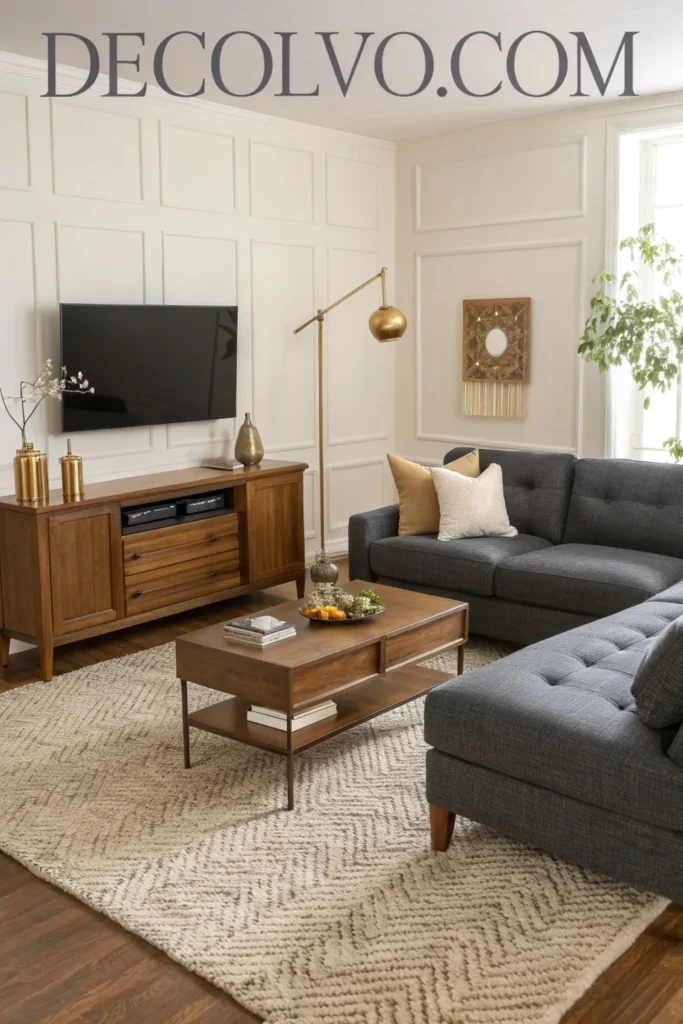
Visual balance considerations demand strategic distribution of visual weight throughout the space. Achieve equilibrium by balancing heavy pieces with lighter elements, mixing heights, and creating symmetrical or asymmetrical arrangements.
Save what you love, hover or tap the image and pin it now.
Scale proportions carefully—oversized furniture can overwhelm small rooms, while undersized pieces may disappear in expansive spaces.
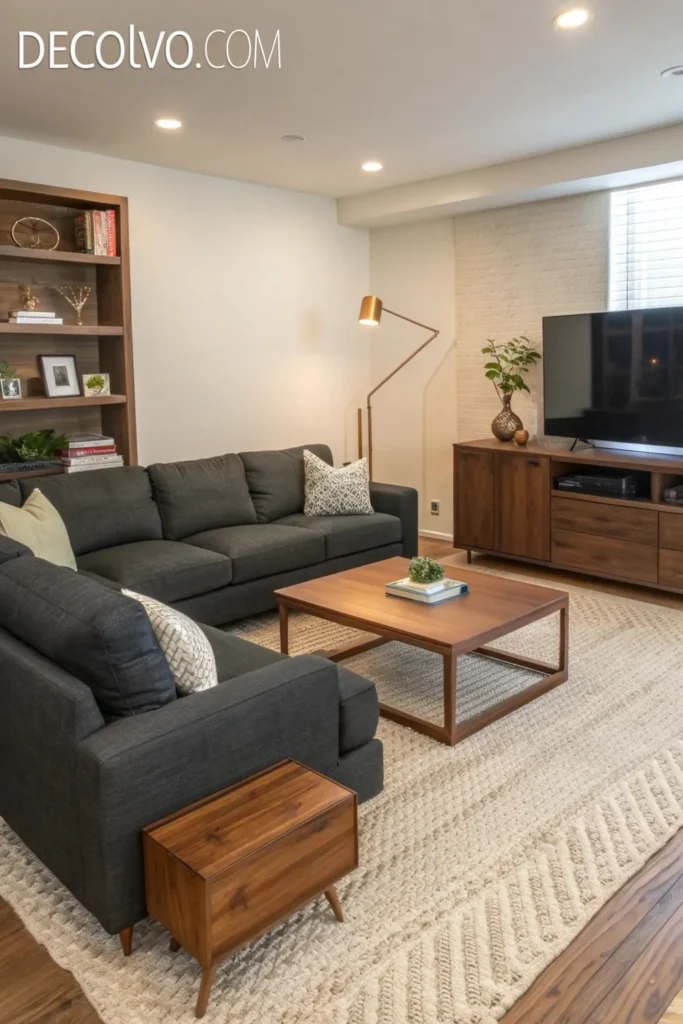
Create clear pathways between seating areas, maintaining 18-30 inches for comfortable traversal. Float furniture away from walls when possible to establish defined zones that enhance both functionality and spatial flow.
Pro tip: Always consider the room’s purpose and flow when selecting and arranging furniture to maximize both comfort and aesthetics.
Save what you love, hover or tap the image and pin it now.
Texture Layering Techniques for Added Warmth
While proper furniture arrangement establishes your room’s foundation, texture layering transforms sterile spaces into inviting sanctuaries through tactile diversity.
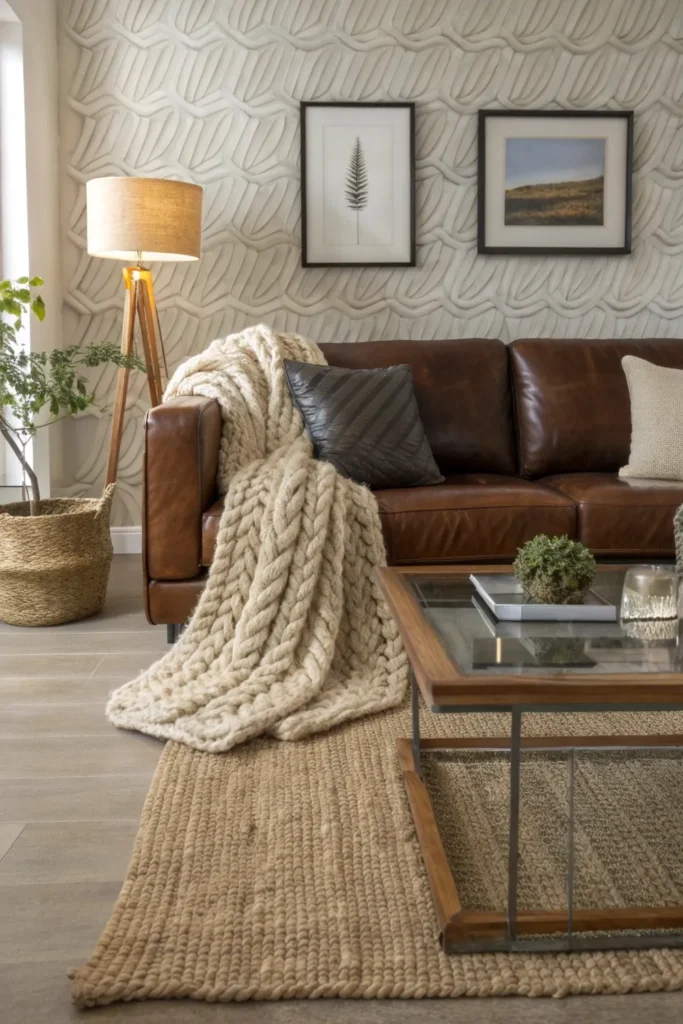
You’ll achieve visual depth by combining contrasting materials—pair smooth leather with nubby bouclé, or sleek metal with weathered wood. Incorporate textural accents through throw pillows, blankets, and rugs that introduce varying pile heights and weaves.
Save what you love, hover or tap the image and pin it now.
Transform lifeless rooms into warm, welcoming spaces by layering contrasting textures that create visual depth and tactile richness.
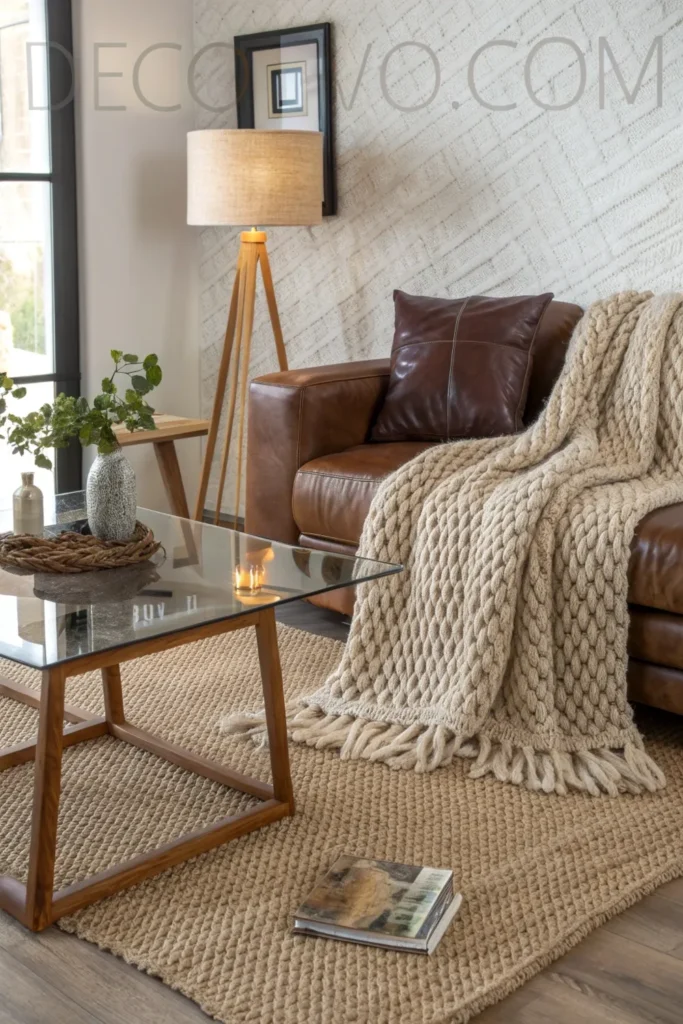
Strategic material juxtaposition creates sophisticated tension. Layer a jute rug beneath a plush Persian carpet, or position rough-hewn coffee tables against polished surfaces. Aim to include three to five distinct textures per seating area: consider velvet cushions, linen curtains, ceramic accessories, and woven baskets.
Save what you love, hover or tap the image and pin it now.
Balance is crucial—avoid overwhelming spaces with competing textures. Instead, establish one dominant texture as your anchor, then build complementary layers that enhance rather than compete with your primary material choice.
Pro tip: Experiment with different textures in small doses to find the perfect balance before committing to larger pieces.
Lighting Design for Ambiance and Functionality
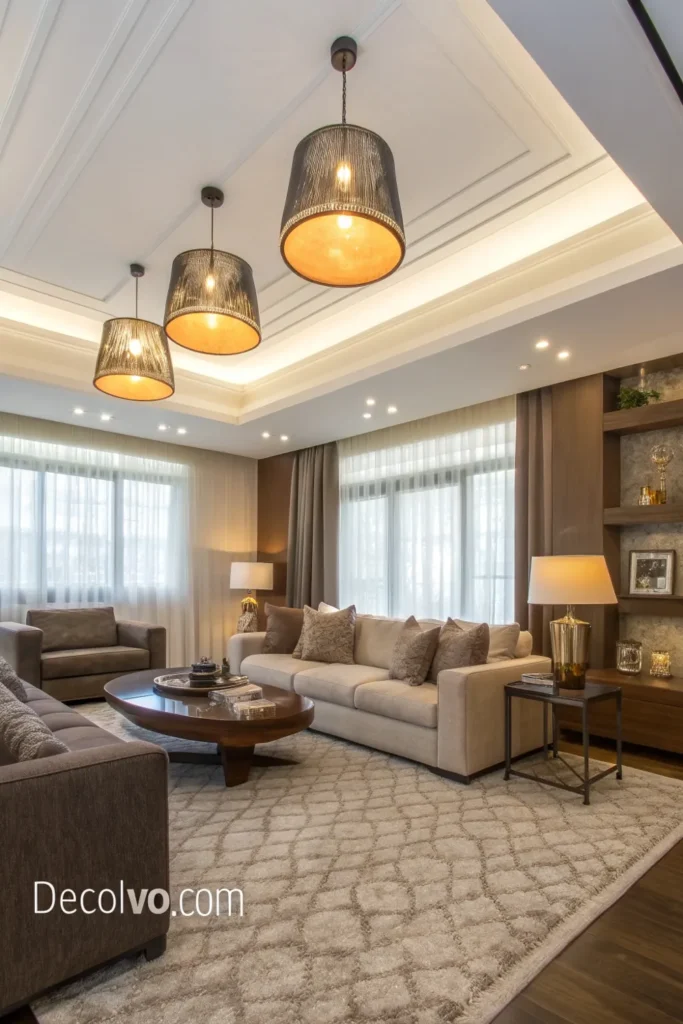
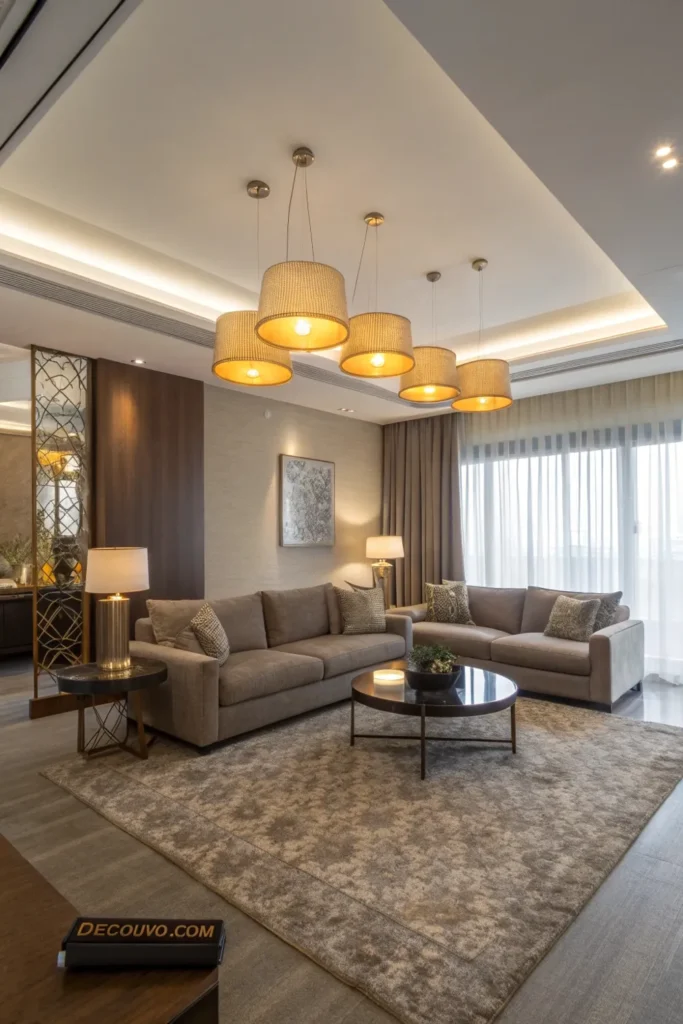
Effective lighting orchestrates your living room’s dual requirements: task-oriented functionality and mood-setting ambiance. Strategic layering combines multiple light sources to achieve ideal illumination throughout your space. Your overhead lighting design establishes the foundational brightness level, while targeted fixtures address specific functional needs.
Save what you love, hover or tap the image and pin it now.
Consider these essential lighting layers:
Save what you love, hover or tap the image and pin it now.
Install dimmer switches across all circuits to modulate intensity levels. Position task lighting to eliminate shadows on work surfaces, ensuring adequate foot-candle measurements for comfortable functionality.
Pro tip: Layer your lighting to adapt to different activities and moods, enhancing both functionality and ambiance in your living space.
Creating Focal Points That Draw the Eye
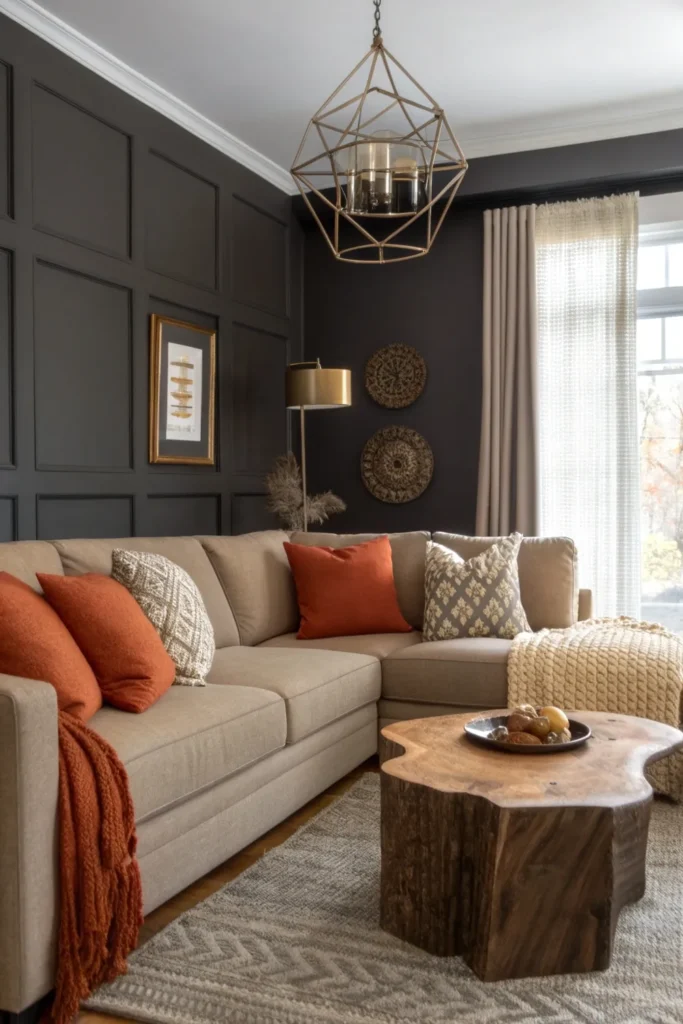
While lighting sets the stage for your room, strategic focal points are crucial for capturing attention and establishing visual hierarchy in your living space. To create maximum impact, position your primary seating to face statement pieces such as oversized artwork, architectural features, or sculptural furniture. This arrangement directs sightlines toward the designated anchor elements.
Save what you love, hover or tap the image and pin it now.
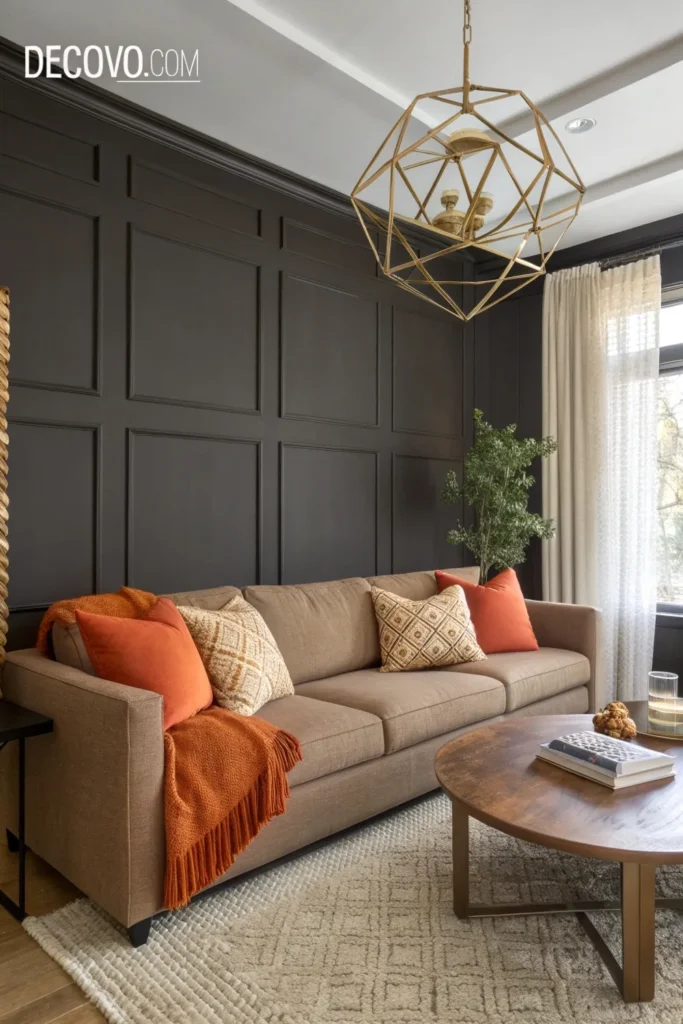
In addition to primary focal points, eye-catching accents serve as secondary focal points that enrich your room’s visual narrative without overshadowing the main attraction. Think about incorporating textured wall treatments, bold color blocks, or curated gallery walls that harmonize with your centerpiece.
Layering multiple focal points can enhance the dynamic feel of the space; consider placing smaller accent pieces next to larger statement elements to create depth and interest.
Save what you love, hover or tap the image and pin it now.
Remember that balance is key. Distribute visual weight evenly across the space to avoid overwhelming any particular area while ensuring a clear flow of direction.
Pro tip: Use a mix of sizes and textures to create a visually engaging environment that draws the eye naturally throughout the room.
Storage Solutions That Maintain Clean Lines
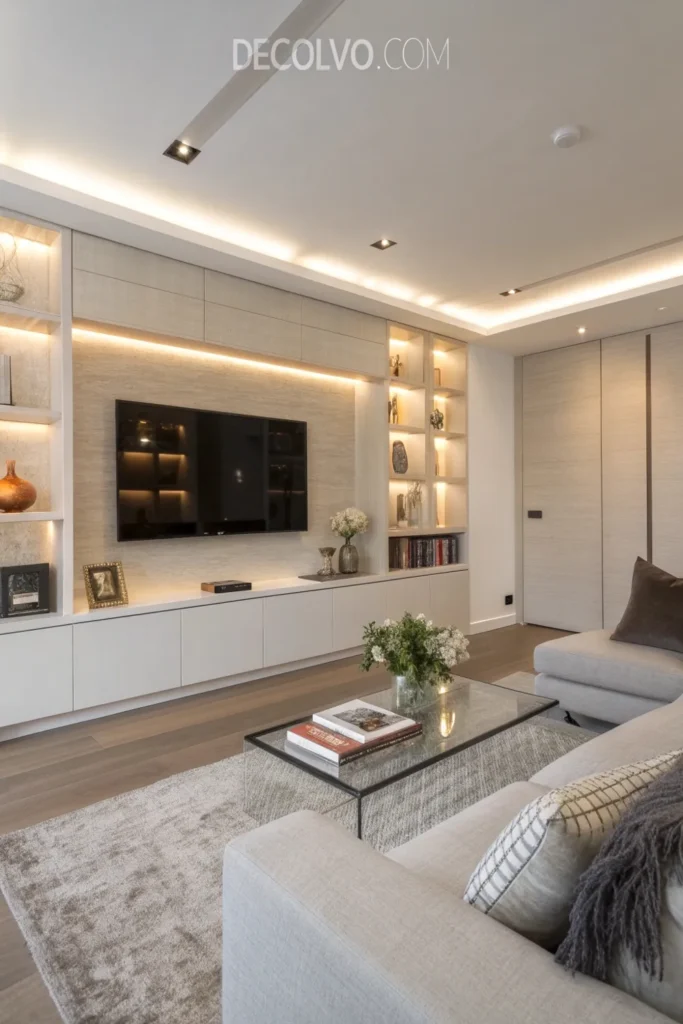
How do you maintain the sophisticated aesthetic you’ve carefully crafted while accommodating necessary storage needs? Strategic storage solutions integrate seamlessly into your living room’s design framework without compromising visual integrity.
Save what you love, hover or tap the image and pin it now.
Modern storage approaches prioritize functionality while preserving architectural clarity:
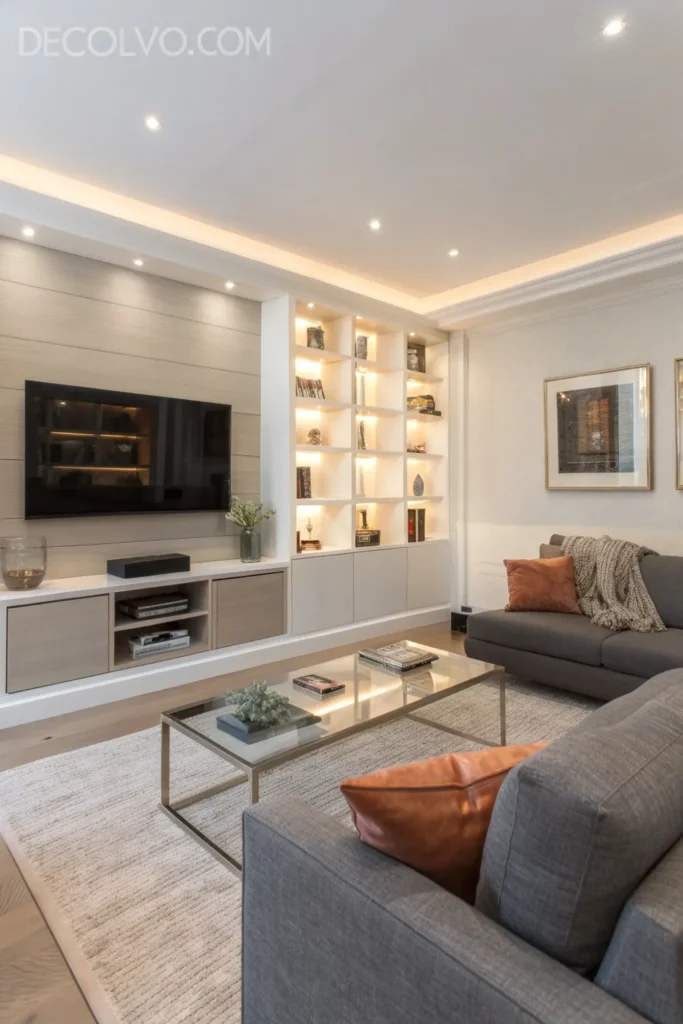
Today’s storage design philosophy balances practical needs with visual sophistication, ensuring every element serves purpose without sacrificing aesthetic principles.
Save what you love, hover or tap the image and pin it now.
Strategic placement of concealed storage maintains your room’s clean aesthetic. Consider closed systems over open shelving to prevent visual fragmentation. Well-designed storage solutions enhance rather than detract from your carefully curated space.
Pro tip: Prioritize custom solutions to ensure storage blends flawlessly with your existing decor.
Incorporating Natural Elements and Greenery
Incorporating natural elements consistently transforms sterile interiors into vibrant, life-affirming spaces that connect occupants with organic beauty. You can achieve this dynamic transformation through the strategic placement of live plants, natural textures, and organic accents that complement your existing design framework.
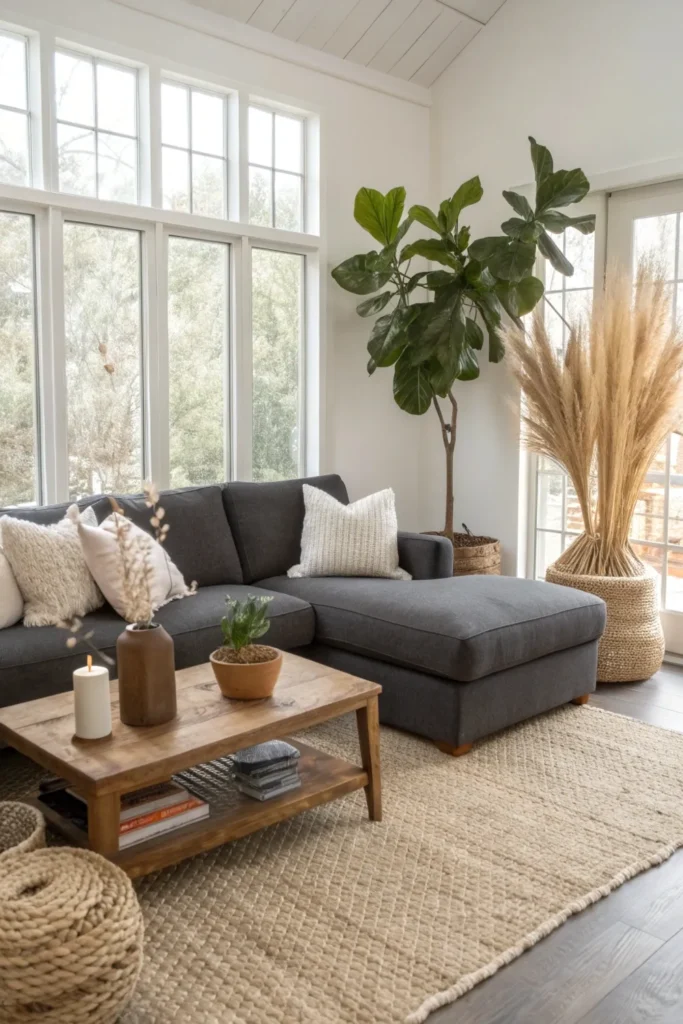
Save what you love, hover or tap the image and pin it now.
Select plants based on your room’s light conditions and maintenance preferences. Large floor plants like fiddle leaf figs create dramatic focal points, while smaller succulents provide subtle organic touches on shelving and surfaces. Incorporate natural textures through jute rugs, wooden coffee tables, or stone decorative objects to enhance the overall aesthetic.
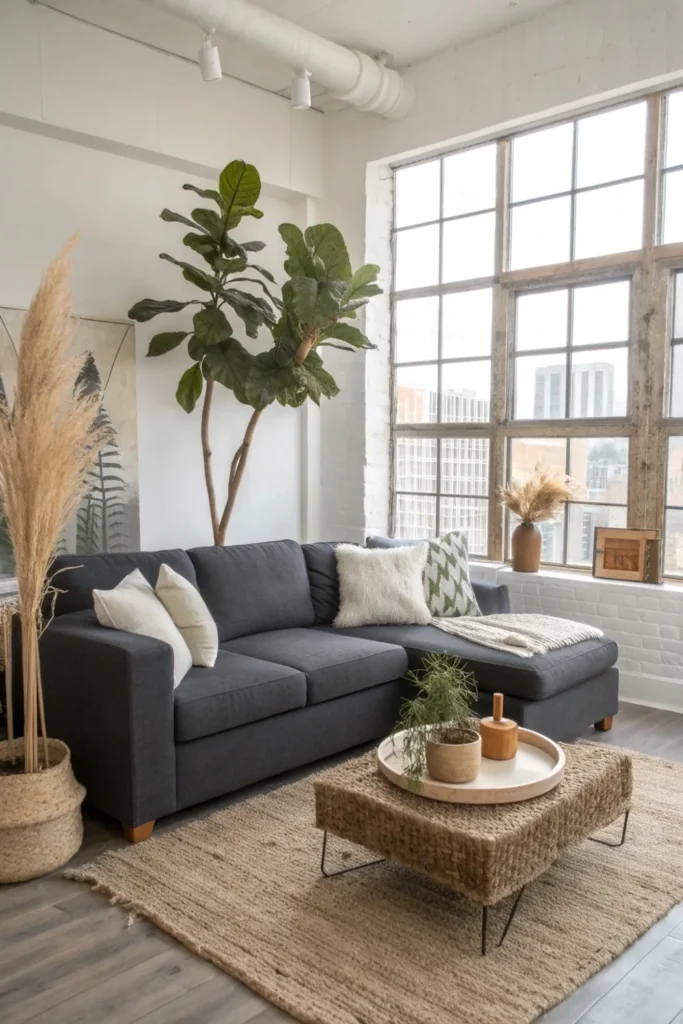
Save what you love, hover or tap the image and pin it now.
Organic accents work best when they’re purposefully integrated rather than randomly scattered. Consider grouping plants at varying heights, introducing raw wood elements, or adding woven baskets that serve dual storage and aesthetic functions while maintaining your room’s cohesive modern appeal.
Pro tip: Opt for a mix of plant sizes and textures to create visual interest and depth in your space.
Balancing Open Spaces With Defined Zones
Three fundamental approaches define successful open-concept living rooms: visual separation, functional zoning, and circulation management. You can achieve cohesive spatial delineation through strategic furniture placement, area rugs, and structural components without sacrificing the room’s inherent openness.
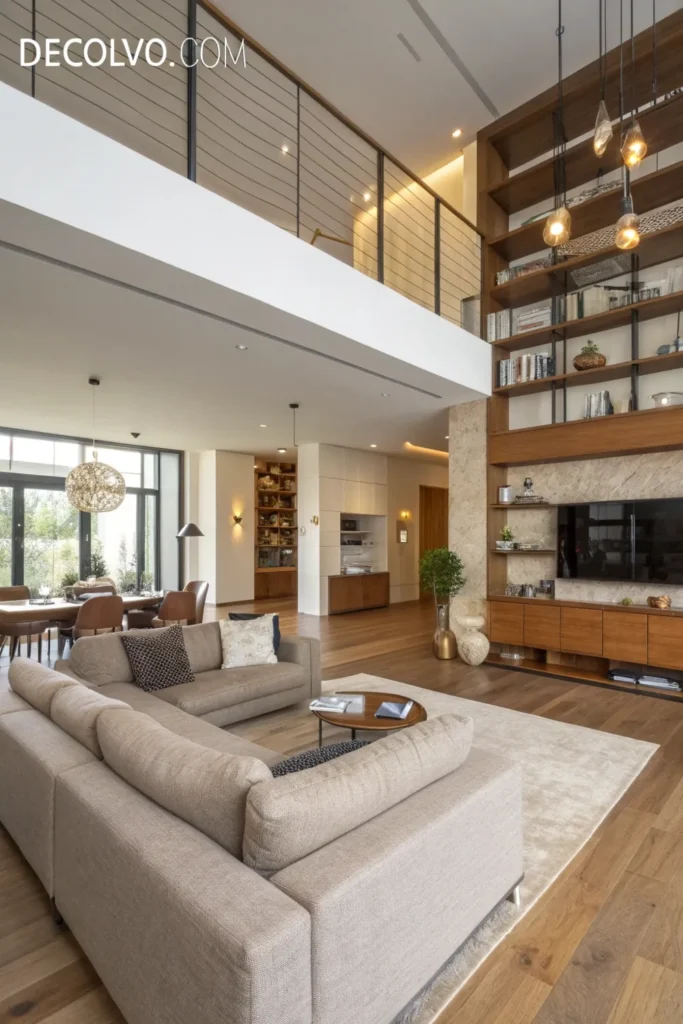
Save what you love, hover or tap the image and pin it now.
Purposeful zoning techniques create distinct areas while maintaining visual flow:
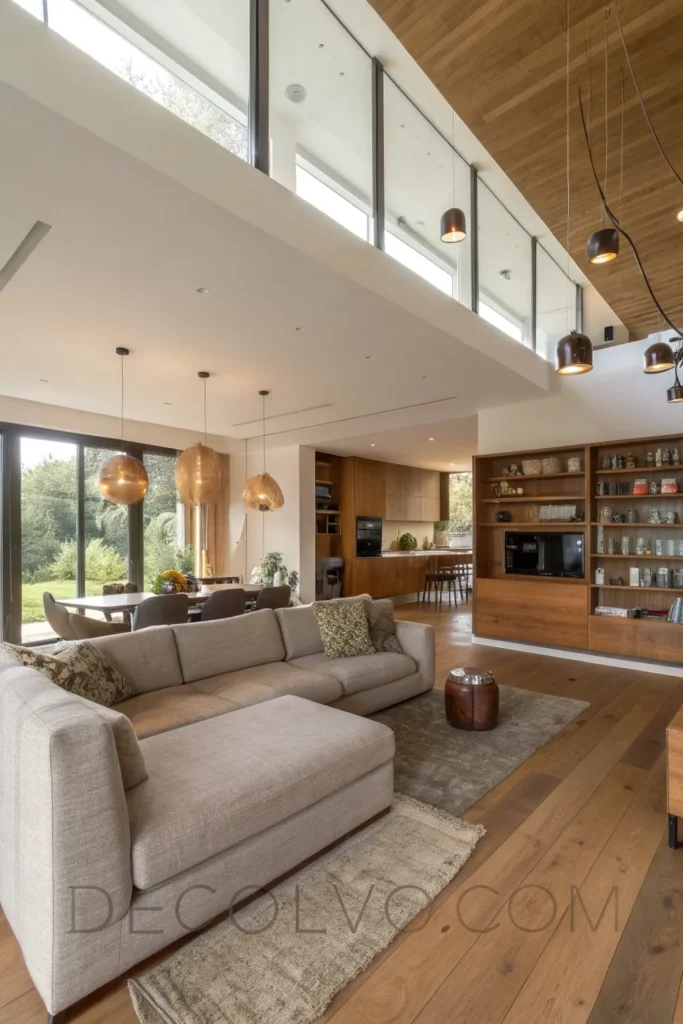
Save what you love, hover or tap the image and pin it now.
You’ll maintain spatial continuity by selecting complementary color palettes and consistent design elements across zones, ensuring each area feels intentionally connected rather than accidentally divided.
Pro tip: Experiment with layering textures in your décor to enhance the sense of defined zones while preserving an open atmosphere.
Art and Decor Placement for Visual Harmony
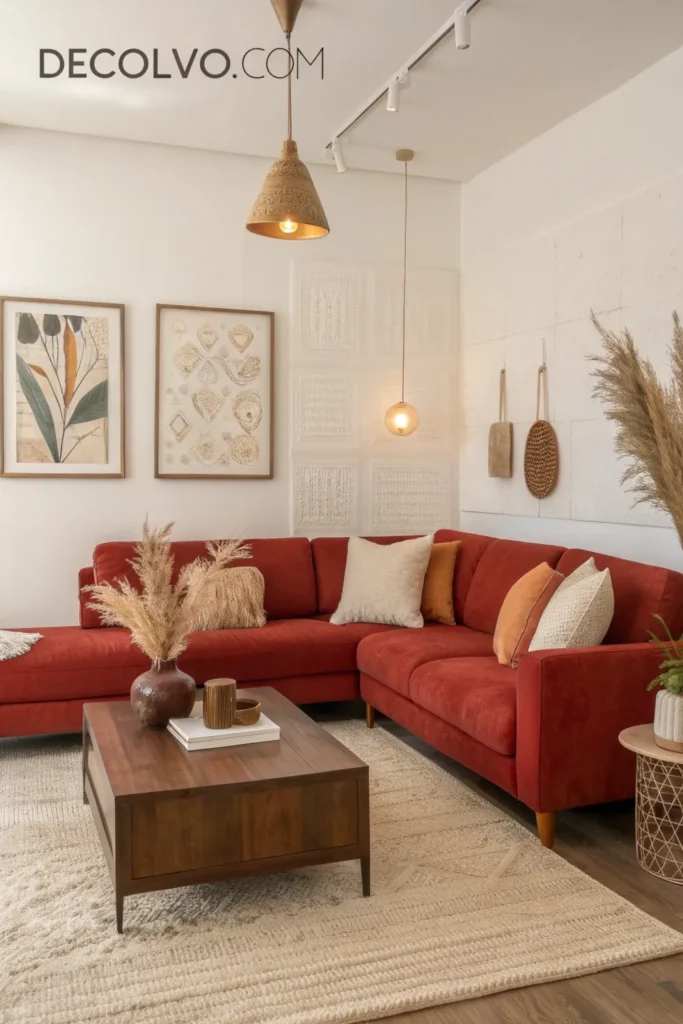
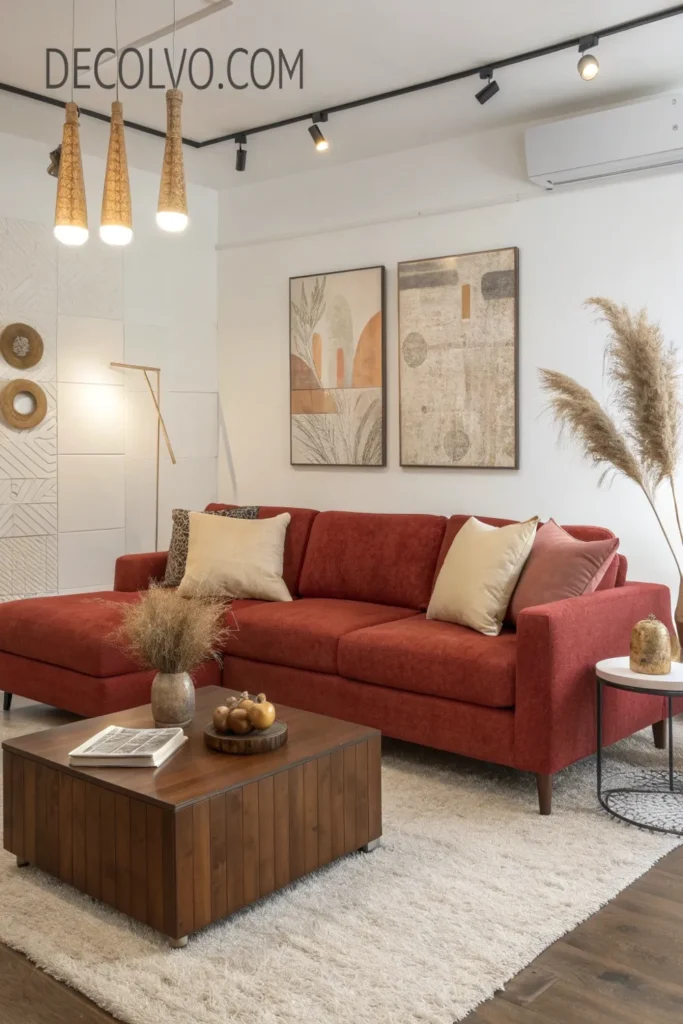
Strategic art and decor placement transforms your living room into a harmoniously designed space where every element contributes to the overall visual narrative. Achieve the ideal artwork arrangement by applying the 57-inch rule, positioning pieces at eye level to create natural sight lines.
Pay attention to scale relationships—oversized art anchors large walls, while smaller pieces can be effectively arranged in groupings of three or five.
Save what you love, hover or tap the image and pin it now.
When coordinating wall displays, balancing visual weight across the room’s perimeter is essential. Distributing color, texture, and form systematically will prevent clustering in single areas.
Layer your decor with varying heights and depths, incorporating sculptural elements on surfaces below wall-mounted pieces. This approach creates dimensional interest while maintaining compositional unity throughout your space.
Pro tip: Always step back and assess your arrangement from different angles to ensure a cohesive and inviting look.
Save what you love, hover or tap the image and pin it now.
Small Space Maximization Strategies
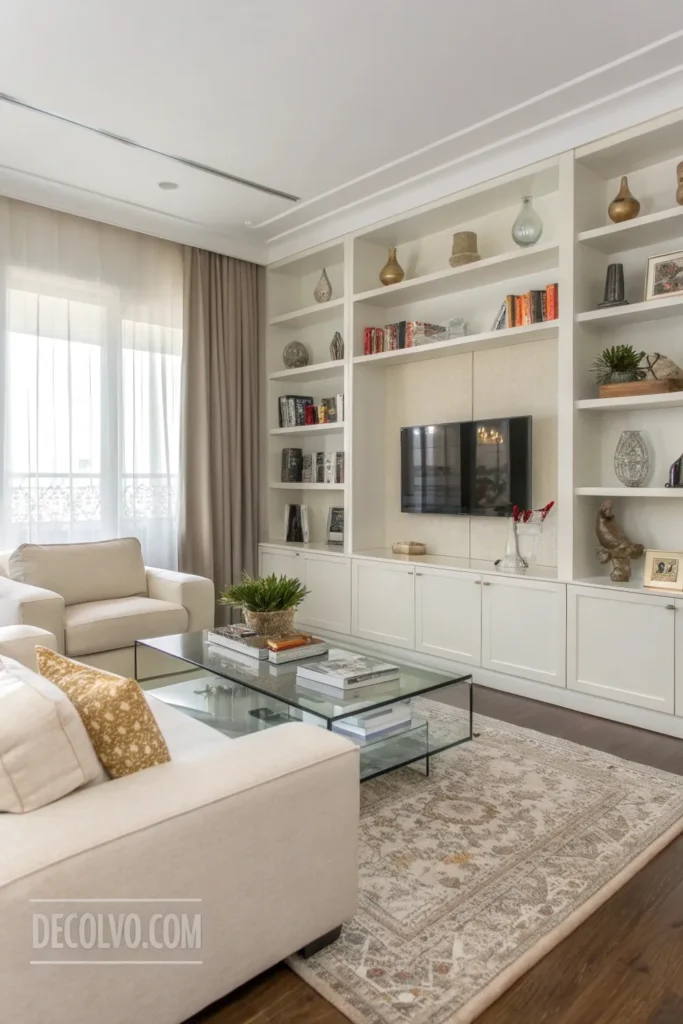
While thoughtful art placement enhances any room’s aesthetic appeal, compact living rooms require specialized design approaches that maximize both functionality and visual impact. You’ll need strategic solutions that repurpose cramped quarters into efficient, stylish environments.
Save what you love, hover or tap the image and pin it now.
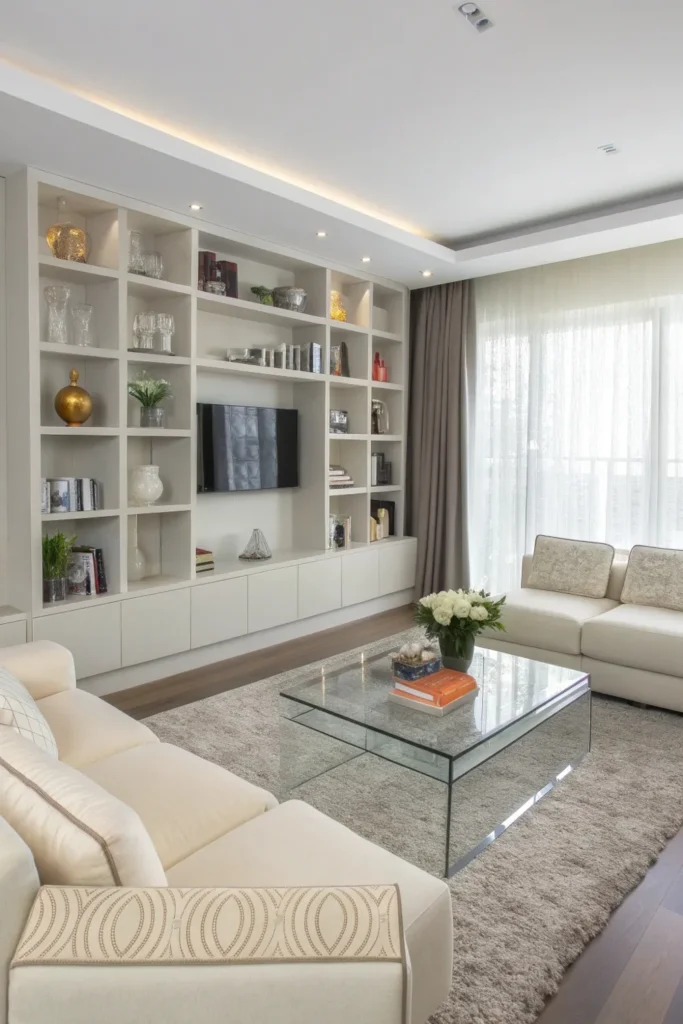
Strategic design transforms cramped living rooms into efficient, stylish environments that maximize both functionality and visual impact.
Essential Small Space Optimization Techniques:
These strategies create spacious illusions while accommodating practical storage needs without compromising design integrity.
Save what you love, hover or tap the image and pin it now.
Pro tip: Always consider the scale of your furniture to ensure it complements your small space without overwhelming it.
Seasonal Updates That Keep Your Space Fresh
Although permanent design elements provide your living room’s foundation, seasonal refreshes breathe new life into static spaces through calculated adjustments that reflect changing moods and functional requirements.
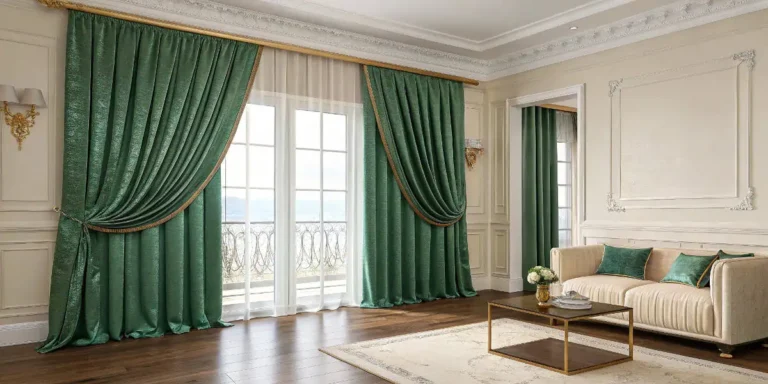
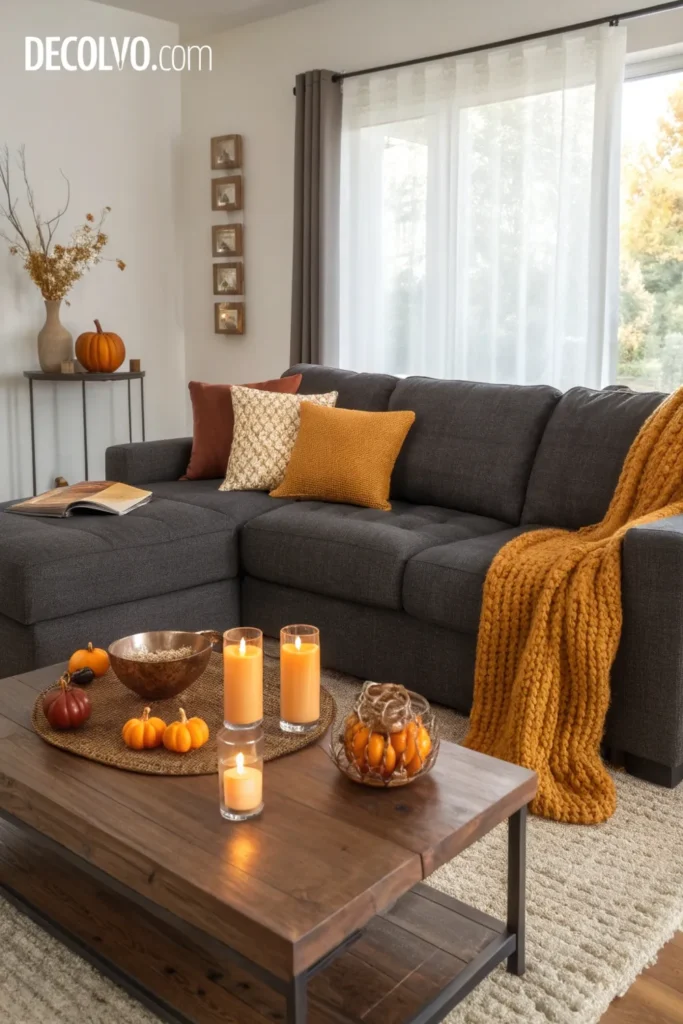
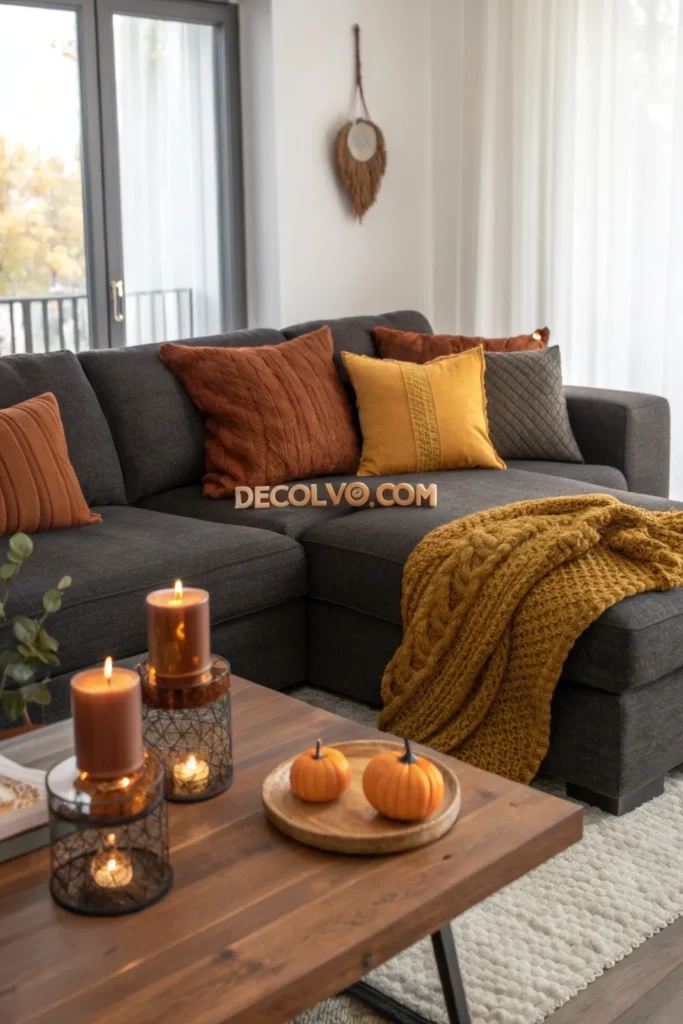
You’ll achieve maximum impact through strategic seasonal textile updates—switching lightweight linen throws for chunky wool blankets or replacing sheer curtains with heavier drapes that enhance thermal comfort during colder months.
Save what you love, hover or tap the image and pin it now.
Seasonal accessory swaps offer another layer of alteration without substantial investment. You can rotate artwork, swap pillow covers in seasonal palettes, or introduce temperature-appropriate materials like rattan for summer or brass for winter.
Consider adjusting lighting temperatures: cooler LED bulbs complement spring’s brightness, while warmer tones enhance autumn’s cozy atmosphere. These deliberate modifications maintain design cohesion while preventing visual stagnation throughout the year.
Pro tip: Regularly assess your space to identify which elements can be updated seasonally, ensuring your living area remains vibrant and inviting year-round.
Save what you love, hover or tap the image and pin it now.
Mood Board & Color Palette
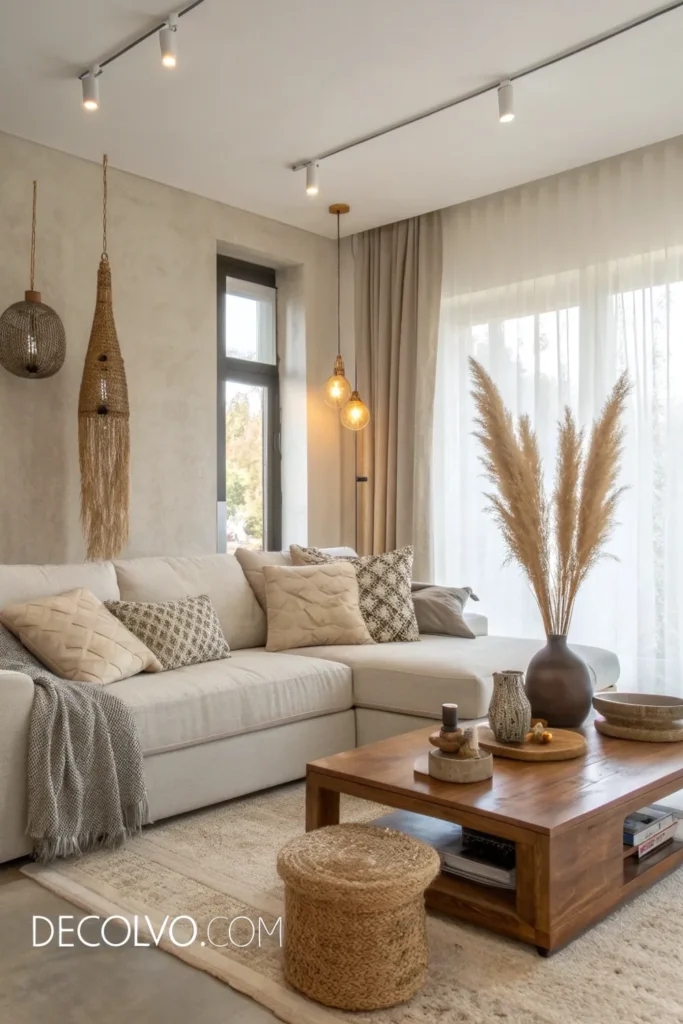
Before implementing any seasonal updates or design changes, it’s essential to establish a cohesive visual foundation through carefully curated mood boards and precisely calibrated color palettes. This systematic approach ensures your living room retains design integrity while allowing for seasonal modifications.
Save what you love, hover or tap the image and pin it now.
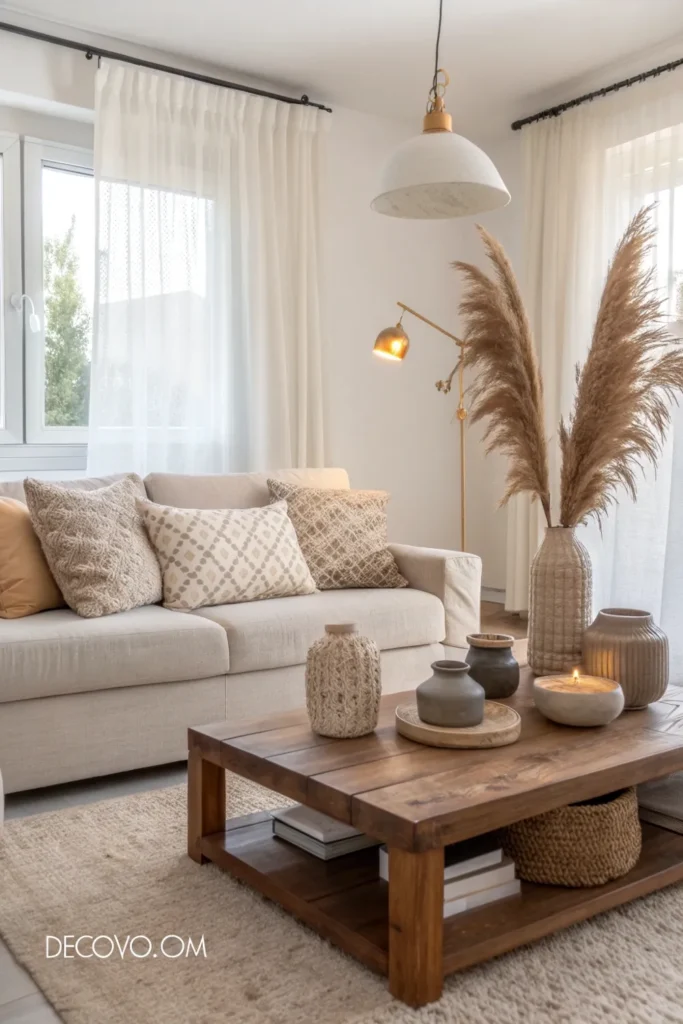
Your mood board development involves three critical components:
Save what you love, hover or tap the image and pin it now.
A cohesive color scheme eliminates guesswork during furniture selection and accessory purchases. By maintaining consistent color temperature relationships, you can ensure that your complementary hues support rather than compete with your established palette.
Pro Tip: Regularly review and refresh your mood board as your taste evolves to keep your design feeling current and inspired.
Common Mistakes & Quick Fixes
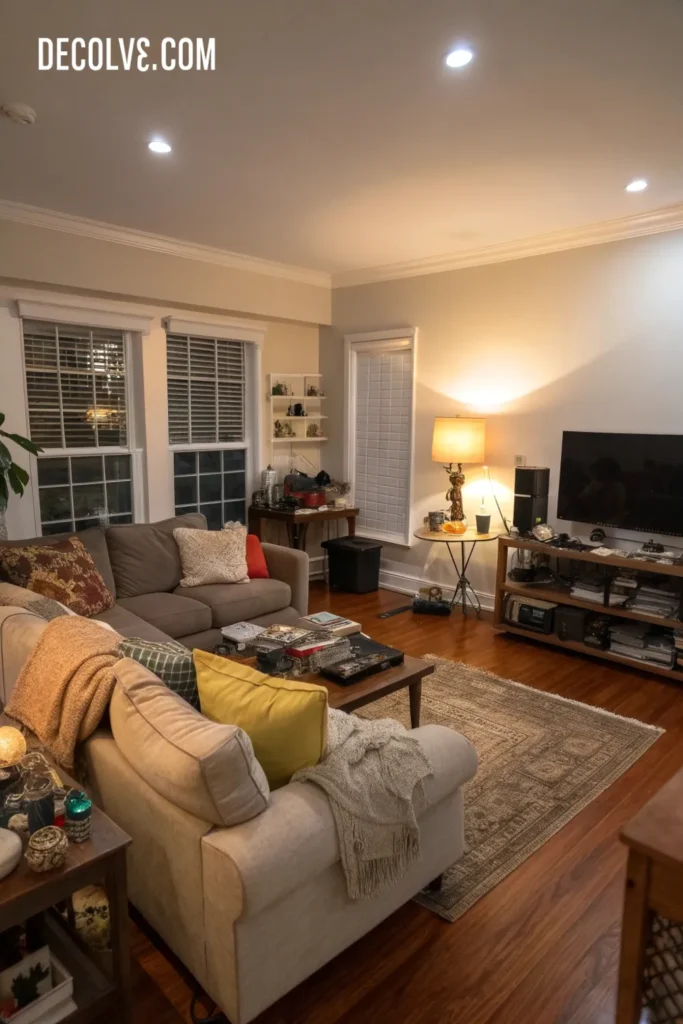
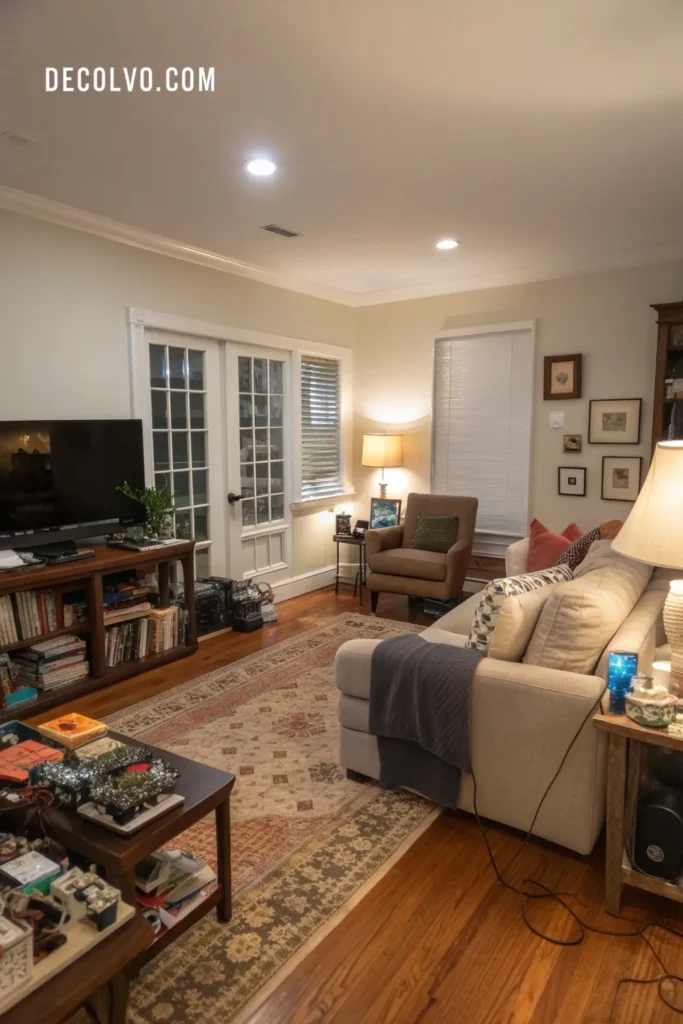
Insufficient lighting creates another critical flaw in your space. You need layered illumination: ambient, task, and accent lighting working cohesively. Don’t rely solely on overhead fixtures; incorporate table lamps, floor lamps, and wall sconces strategically.
Save what you love, hover or tap the image and pin it now.
Quick fixes include repositioning furniture to create conversation zones, adding mirrors to amplify natural light, and introducing varying light sources at different heights. These adjustments instantly alter awkward spaces into functional, visually balanced environments.
Save what you love, hover or tap the image and pin it now.
Pro tip: Experiment with different light sources and placements to find the perfect balance that enhances the mood and functionality of your space.
Step-by-Step Design Checklist
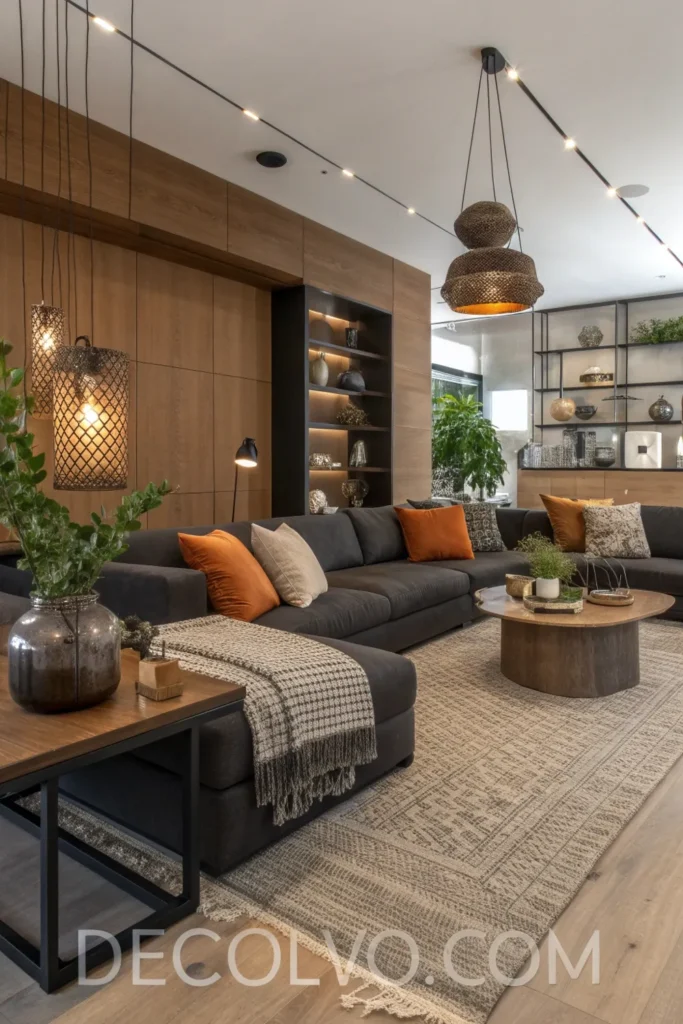
How do you convert design concepts into actionable steps that confirm professional results? Effective space planning requires systematic execution to achieve layout optimization that balances aesthetics with functionality.
Save what you love, hover or tap the image and pin it now.
1. Measure and map your dimensions – Document precise room measurements, architectural features, and traffic patterns. Create a scaled floor plan that identifies focal points, natural light sources, and electrical outlets to inform furniture placement decisions.
*Pro tip: Always double-check your measurements to avoid any discrepancies that could affect your layout.*
2. Establish your design hierarchy – Define primary seating arrangements first, then layer secondary elements like accent chairs, storage solutions, and decorative accessories. This prioritization ensures ideal space planning while maintaining visual balance.
*Pro tip: Consider the scale and proportion of furniture to ensure each piece complements the overall design.*
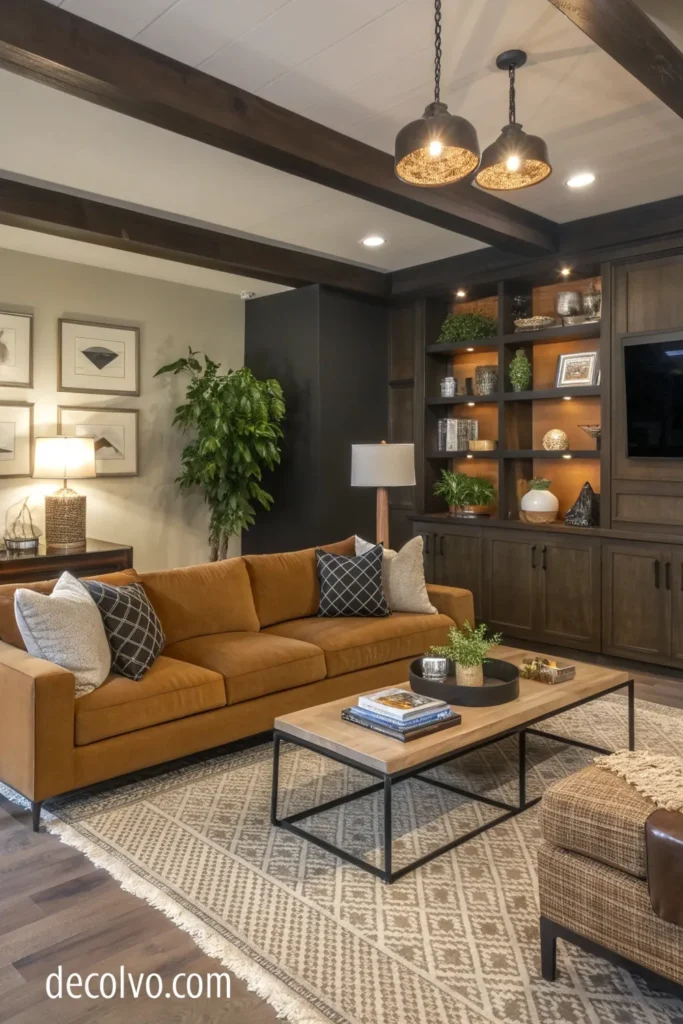
3. Test spatial relationships – Use painter’s tape to outline furniture footprints on your floor before purchasing. This layout optimization technique prevents costly mistakes and validates adequate circulation paths throughout your living space.
*Pro tip: Don’t hesitate to rearrange the tape until you find the perfect flow for your space.*
Save what you love, hover or tap the image and pin it now.
Budget-Friendly Decor Finds
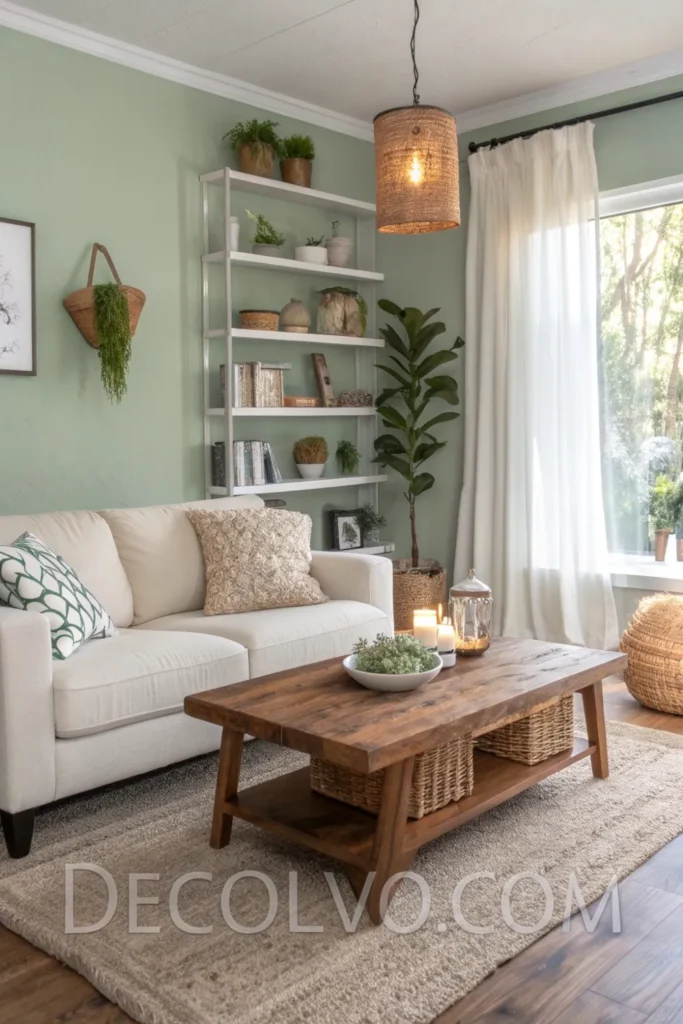
Once you’ve mapped your spatial requirements and established your architectural blueprint, implementing your vision doesn’t require a substantial financial investment. Strategic sourcing transforms budget constraints into creative opportunities. You’ll uncover premium materials at warehouse sales, estate sales, and online marketplaces offering discounted furniture finds at a fraction of retail pricing.
Save what you love, hover or tap the image and pin it now.
Thrifty DIY projects maximize impact while minimizing expenditure. Reupholster existing seating with contemporary textiles, refinish wooden surfaces using modern staining techniques, or create custom artwork through digital printing services. Consignment shops yield quality pieces requiring minimal restoration.
Save what you love, hover or tap the image and pin it now.
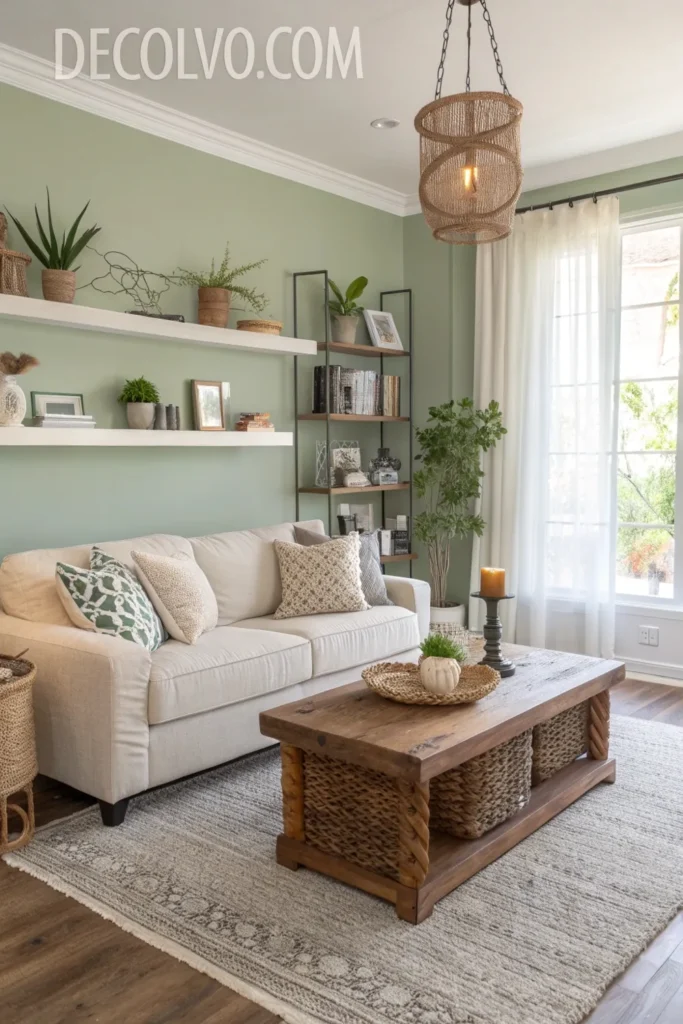
Focus on high-impact elements: statement lighting fixtures, architectural mirrors, and textural accessories. Mix investment pieces with budget finds strategically—splurge on foundational furniture while economizing on decorative accents. This approach maintains design integrity while preserving aesthetic cohesion and adhering to financial parameters.
Pro tip: Keep an eye out for seasonal sales and clearance events for additional savings on decor items!
Conclusion
You’ve orchestrated a concerto of design elements where each component functions as an instrument in your cohesive composition. Your color palette serves as the conductor, guiding furniture arrangements and texture layers through their harmonious performance. Strategic lighting takes center stage, illuminating focal points such as featured soloists. You’ll find that budget-conscious selections can achieve professional results when you understand spatial relationships and material interactions. Your living room now embodies the perfect crescendo of modern comfort.

Save what you love, hover or tap the image and pin it now.