Minimalist Bedroom Decor: The Key to Restful Sleep
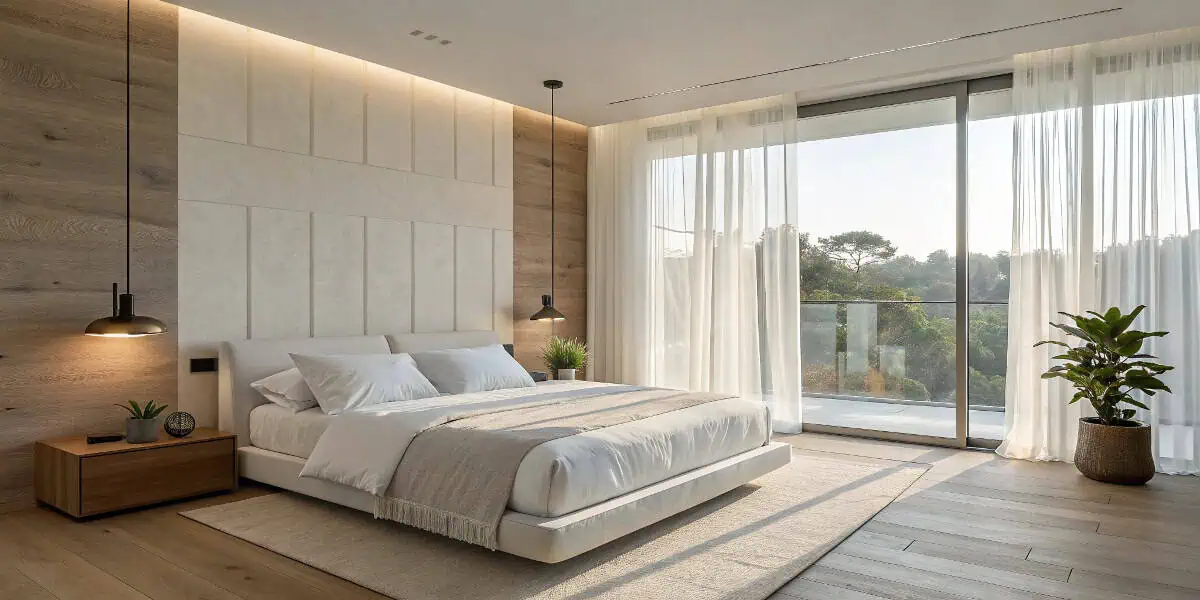
You’ll achieve a minimalist bedroom decor idea by anchoring your design with neutral palettes of whites, grays, and earth tones while selecting essential furniture with clean lines and consistent proportions. Choose platform beds with integrated storage, floating nightstands, and linear dressers to maintain visual flow and conceal clutter.
Layer natural fiber bedding in simple textures, implement strategic lighting sources, and welcome space as powerful focal points. These foundational principles will guide you toward creating your ideal serene retreat.
Start With a Neutral Color Foundation
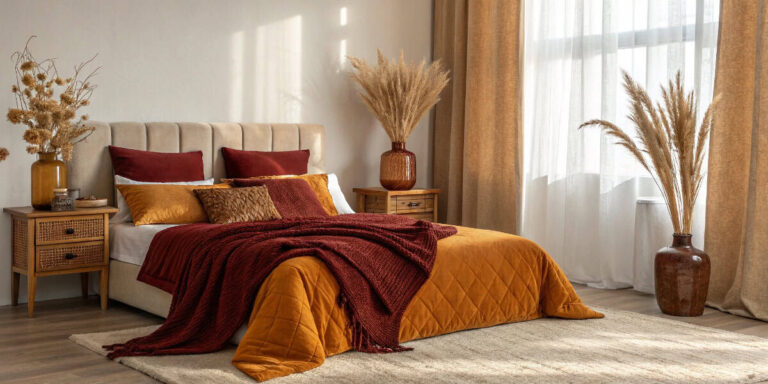
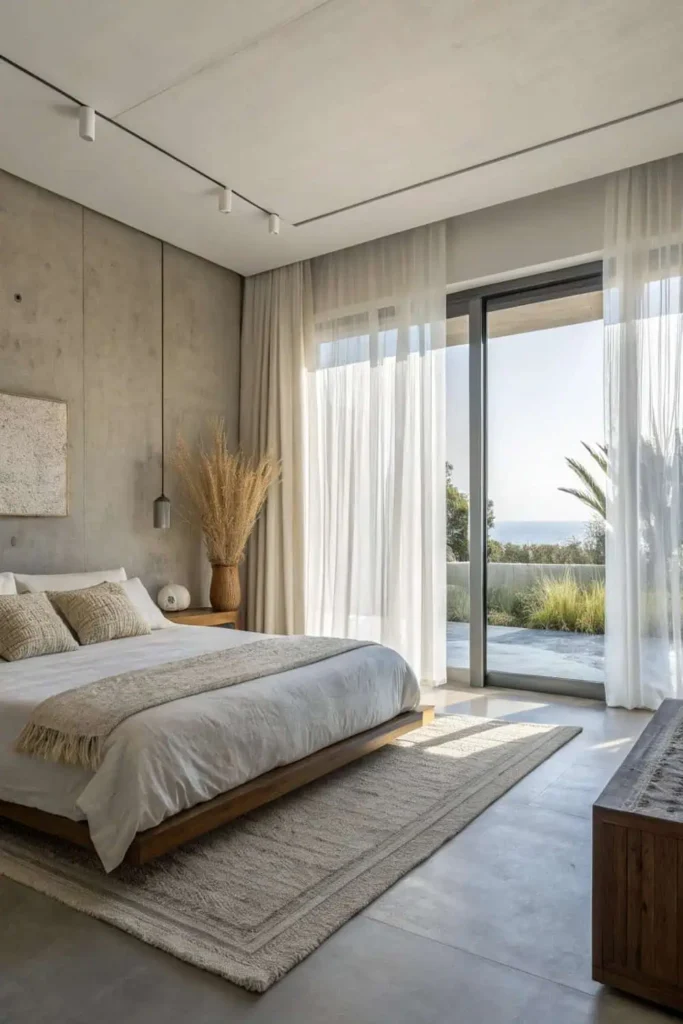
When establishing a minimalist bedroom decor, your color palette serves as the design blueprint that determines the space’s visual weight and psychological impact. You’ll want to anchor your design with a neutral color palette consisting of whites, grays, beiges, and soft earth tones. These hues create visual continuity while allowing architectural elements and textures to emerge as focal points.

Save what you love, hover or tap the image and pin it now.
Your neutral color palette becomes the foundation that shapes both the visual harmony and emotional atmosphere of your minimalist sanctuary.
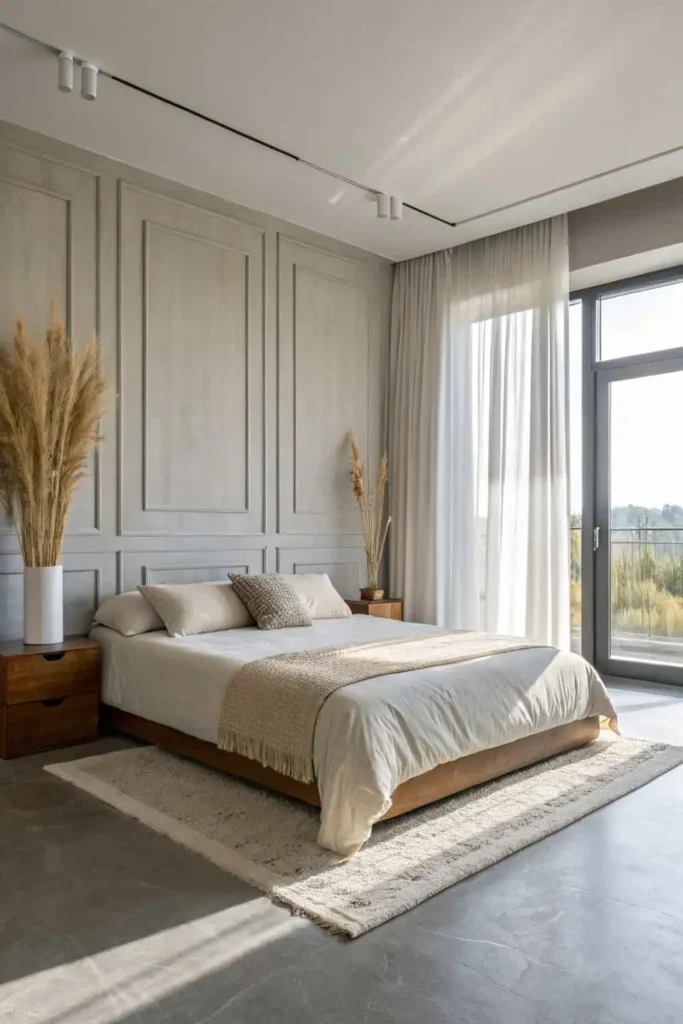
Consider implementing a monochromatic color scheme using varying shades of a single neutral tone. This approach eliminates visual competition between colors, creating seamless flow throughout your space. Layer different values of your chosen neutral—from crisp whites on walls to deeper grays in textiles—to establish depth without complexity.
Save what you love, hover or tap the image and pin it now.
Your neutral foundation provides flexibility for introducing natural materials, such as wood and stone, while maintaining the serene atmosphere essential to minimalist design principles.
Pro tip: Opt for textured fabrics and finishes in your neutral palette to add warmth and interest without overwhelming the senses.
Choose Essential Furniture With Clean Lines
Essential furniture pieces form the structural backbone of your minimalist bedroom decor, necessitating careful selection based on function, proportion, and geometric simplicity. Prioritize streamlined silhouettes that eliminate visual noise while maximizing spatial flow. Each piece should serve multiple purposes without compromising the room’s clean aesthetic.
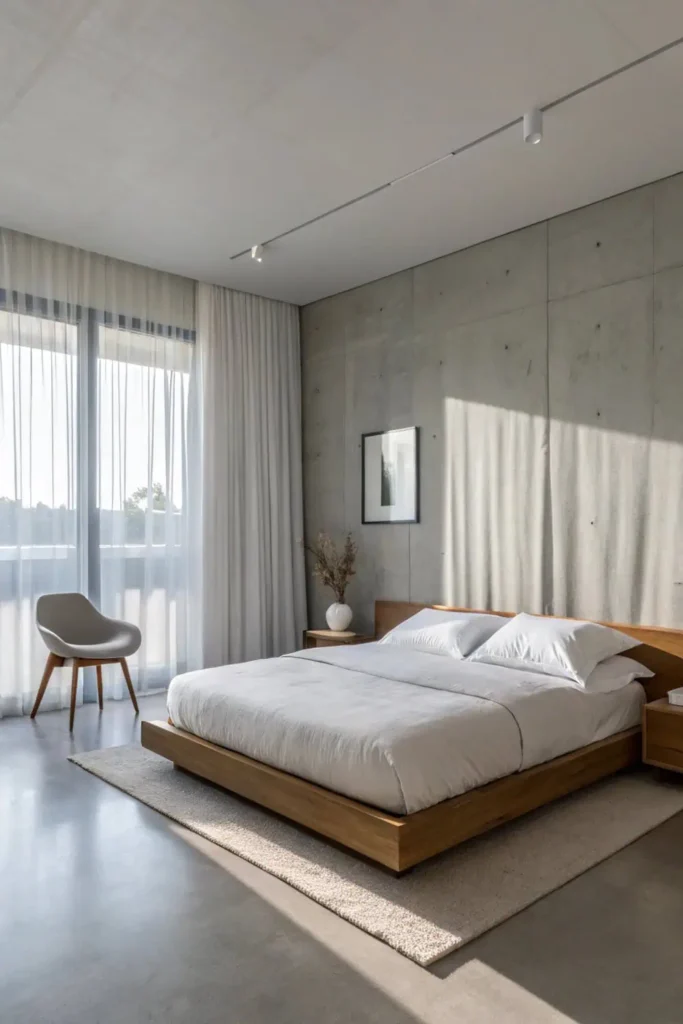
Save what you love, hover or tap the image and pin it now.
Focus on these core functional elements:
Select pieces that maintain consistent proportional relationships with your room’s dimensions. Avoid ornate details, curved embellishments, or mixed materials that compete for attention. Your furniture should recede into the background, supporting daily functions without drawing unnecessary visual attention.
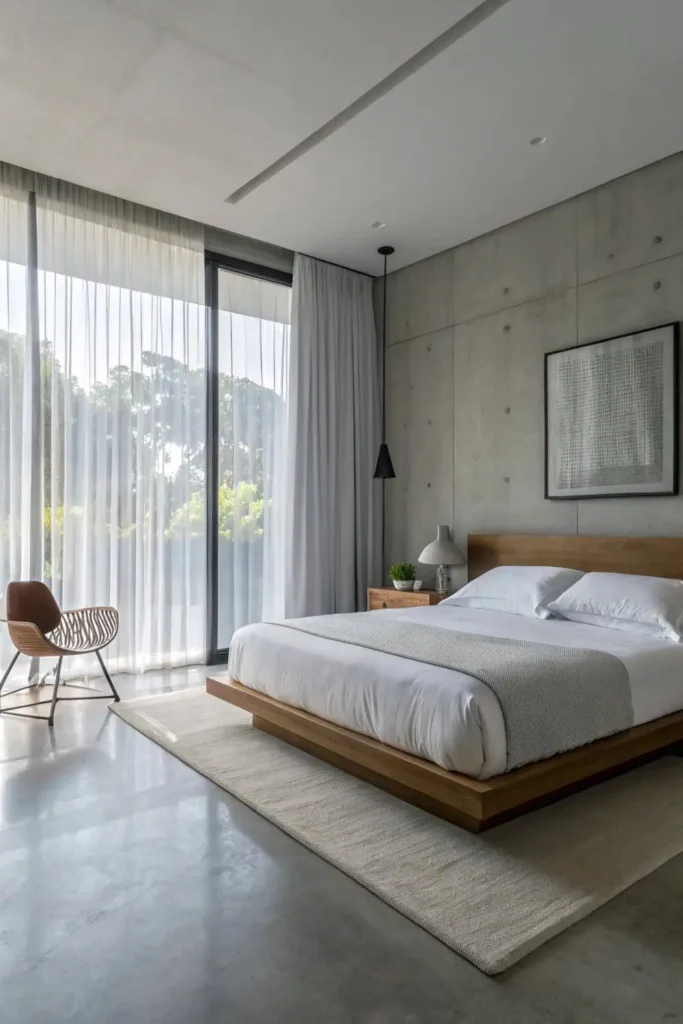
Save what you love, hover or tap the image and pin it now.
Pro Tip: Opt for neutral-colored furniture to enhance the minimalist aesthetic and create a cohesive space.
Embrace the Power of Empty Space
Beyond selecting the right furniture pieces, your minimalist bedroom decor requires strategic voids that allow each element to breathe and establish visual hierarchy. By deliberately leaving portions of walls, floors, and surfaces unoccupied, you create focused minimalism. This intentional emptiness isn’t wasted space—it’s an active design component that amplifies your room’s proportions and creates visual tension.
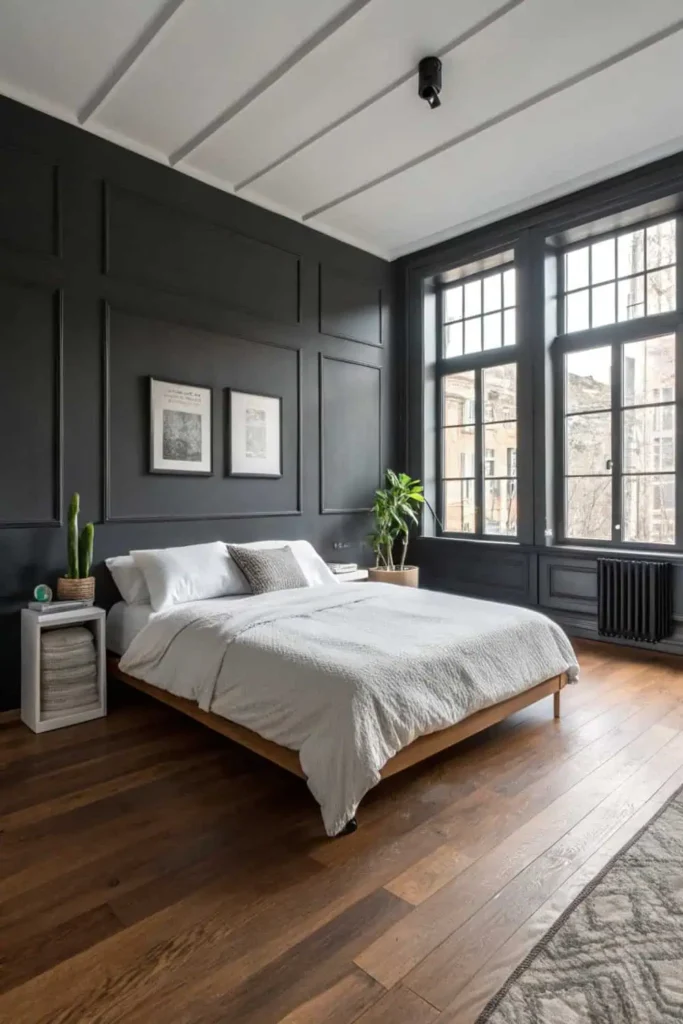
Save what you love, hover or tap the image and pin it now.
Maintain clear pathways around your bed, avoiding the clustering of furniture against walls. Generous margins between objects establish breathing room. Empty nightstands and bare walls serve as powerful focal points, drawing attention to your carefully curated pieces. This spatial restraint transforms your bedroom into a sanctuary where every element carries weight and meaning, proving that strategic absence creates a stronger presence than excessive decoration.
Pro tip: Embrace open spaces to enhance the overall aesthetic and functionality of your minimalist bedroom decor.
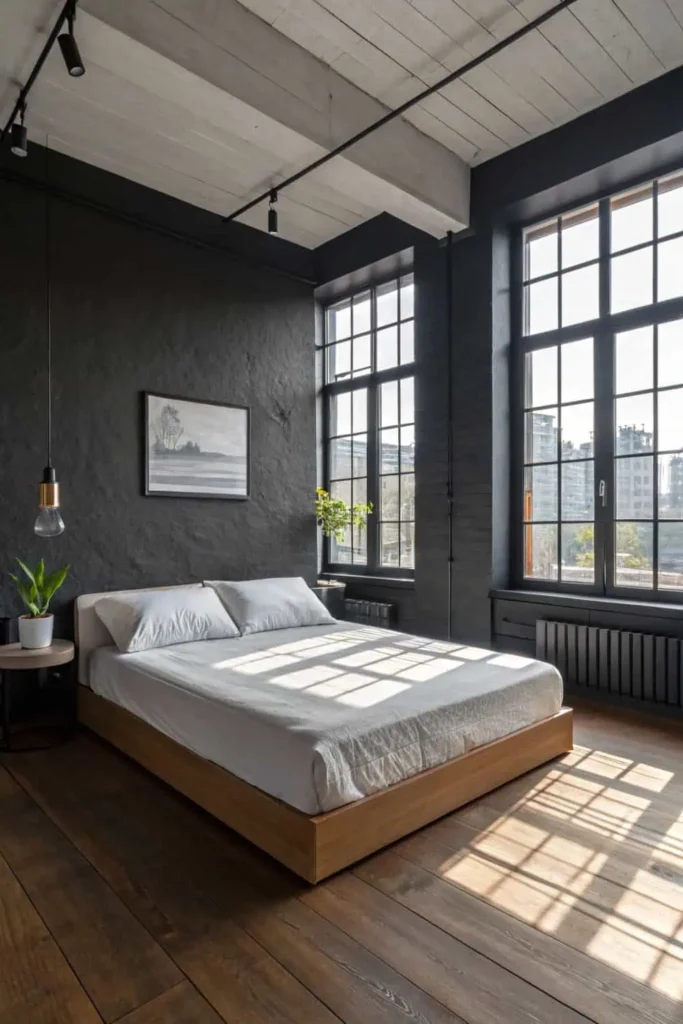
Save what you love, hover or tap the image and pin it now.
Minimalist Bedroom Hidden Storage Solutions
Successfully implementing hidden storage solutions requires thinking vertically and leveraging every available surface without compromising the room’s clean aesthetic. Built-in shelving units maximize wall space while maintaining a seamless visual flow throughout your bedroom environment.
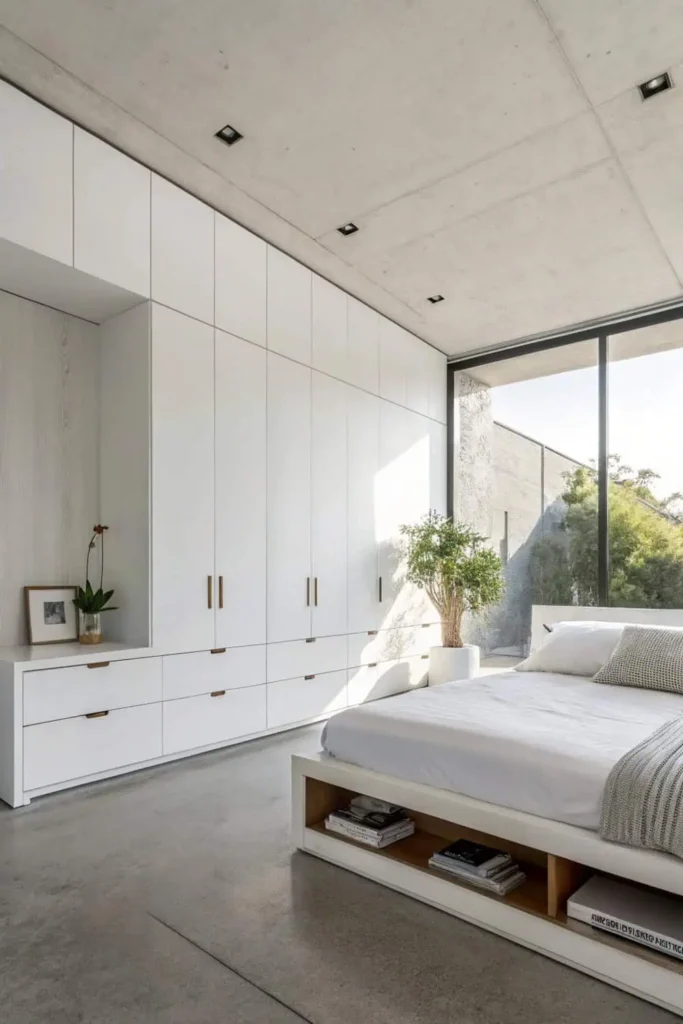
Save what you love, hover or tap the image and pin it now.
Strategic storage transforms unused areas into functional compartments:
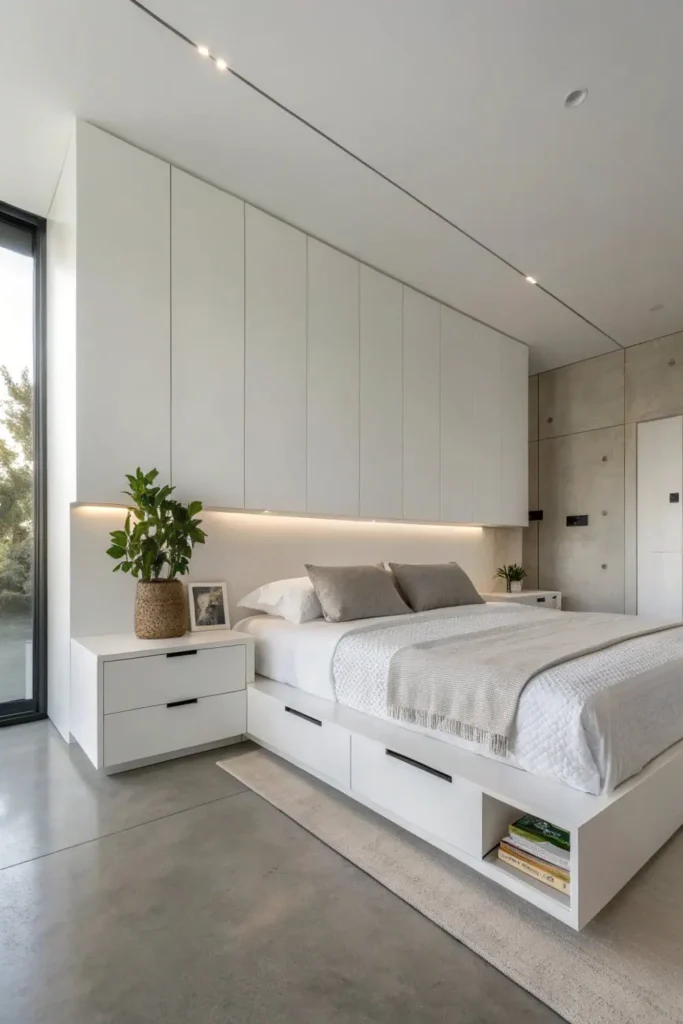
Save what you love, hover or tap the image and pin it now.
You’ll maintain spatial harmony by selecting storage solutions that complement your room’s architectural lines. These concealed systems preserve negative space while accommodating necessary belongings efficiently.
Pro tip: Choose finishes and colors for your hidden storage that match your room’s decor to enhance the illusion of spaciousness.
Minimalist Bedroom Decor With Quality Bedding
Quality bedding forms the foundation of your minimalist bedroom’s visual and tactile experience, where texture takes precedence over patterns or embellishments. Focus your textile selection on natural fibers like linen, organic cotton, or bamboo, which provide breathability and durability. These materials develop character through use while maintaining their structural integrity.
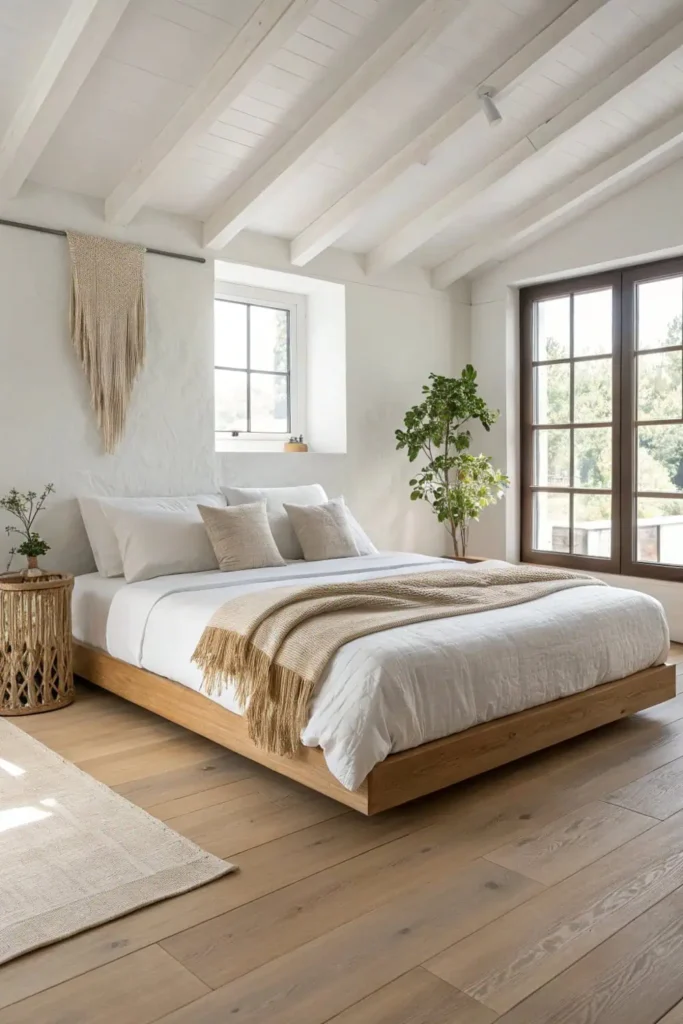
Save what you love, hover or tap the image and pin it now.
Choose neutral colorways, whites, greys, or warm beiges that enhance spatial continuity without visual interruption. Layer different tactile bedding materials through variations in weight and weave: smooth percale sheets beneath textured linen duvet covers, or crisp cotton paired with chunky knit throws. This approach creates depth through touch rather than busy patterns.
Invest in fewer, superior pieces that will age gracefully. Quality construction guarantees longevity, supporting minimalism’s core principle of thoughtful consumption over quantity-driven purchases.
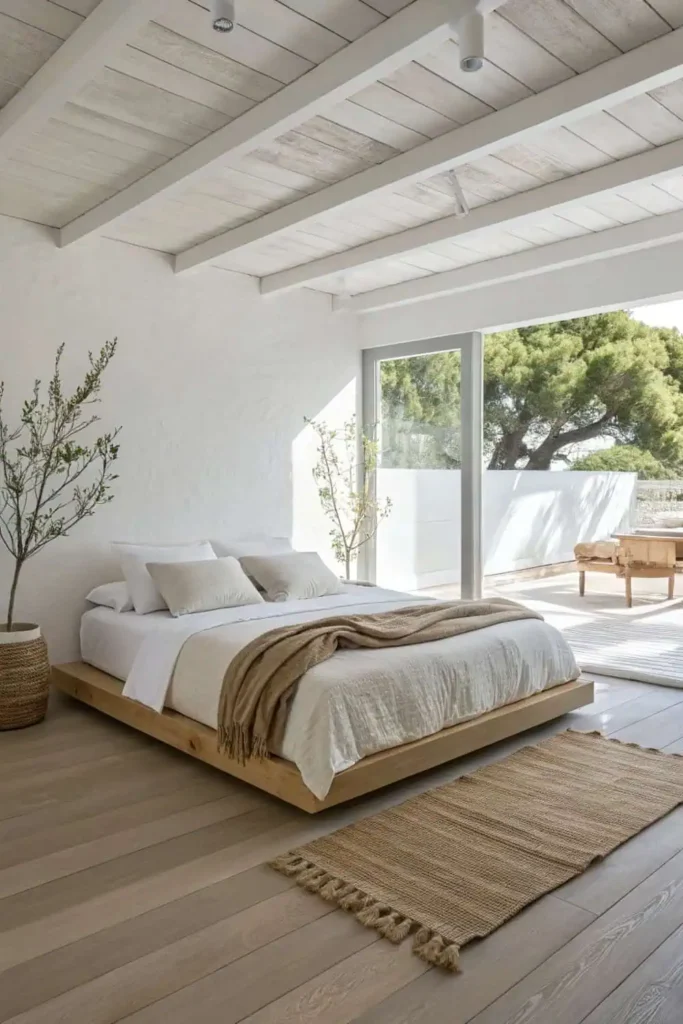
Save what you love, hover or tap the image and pin it now.
Pro tip: When selecting bedding, prioritize textures that complement each other to create a cohesive and inviting atmosphere.
Limit Decorative Items to Meaningful Pieces
While thoughtfully chosen textiles establish your bedroom’s tactile foundation, decorative elements require even more selective curation to uphold minimalist principles. Create intentional displays that serve both aesthetic and emotional purposes, avoiding visual clutter that disrupts your space’s tranquil atmosphere.
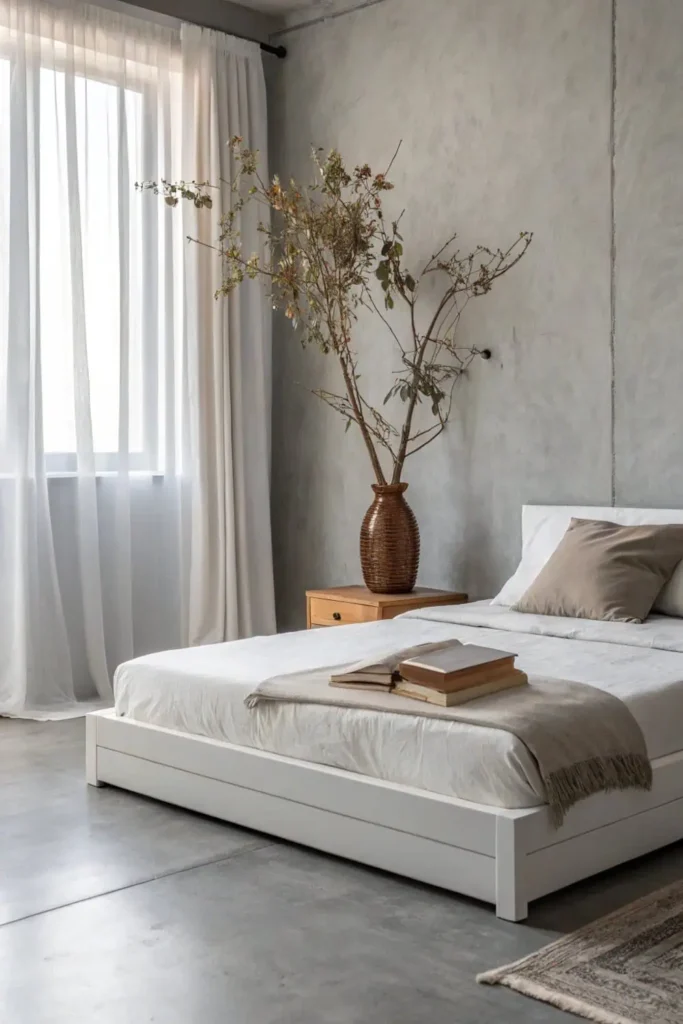
Save what you love, hover or tap the image and pin it now.
Consider these guidelines for selecting meaningful decorative items:
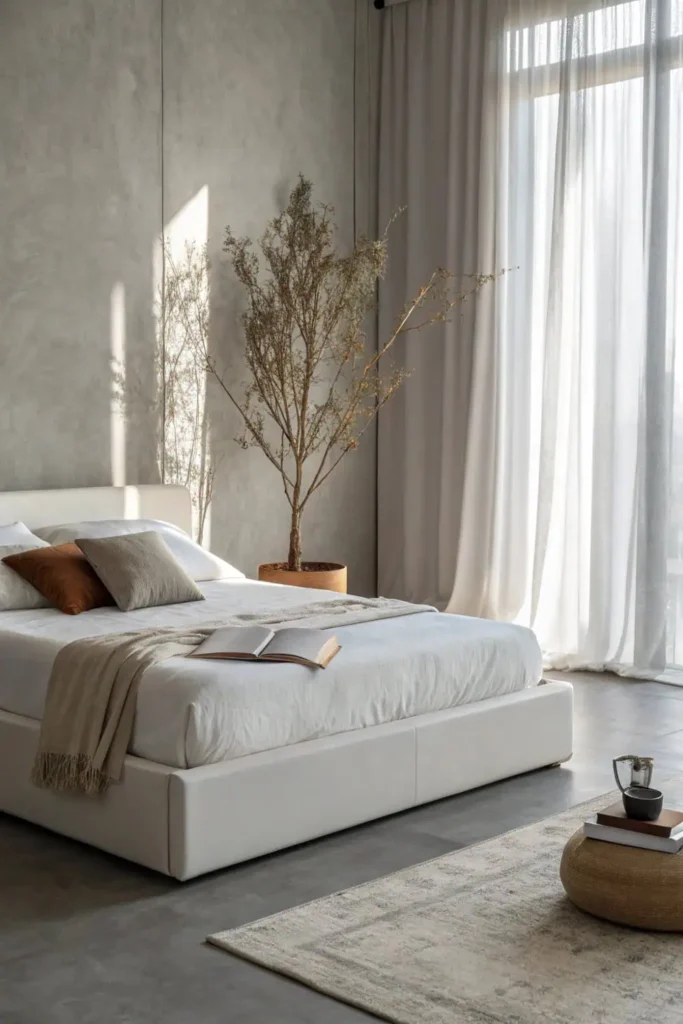
Save what you love, hover or tap the image and pin it now.
Each item should justify its presence through meaning rather than mere decoration. This approach ensures your bedroom remains a serene sanctuary while reflecting your authentic personality.
Pro tip: Prioritize items that evoke fond memories or represent your journey, enhancing both the beauty and purpose of your space.
Maximize Natural Light and Gentle Illumination
Although decorative elements establish your space’s personality, lighting fundamentally alters the atmosphere and perceived scale of your minimalist bedroom decor. Prioritize natural light as your main source of illumination by positioning your bed to take advantage of strategic window placement while avoiding glare and privacy concerns. Remove heavy drapery that blocks daylight, and opt for sheer panels or light-filtering blinds to maintain visual flow.
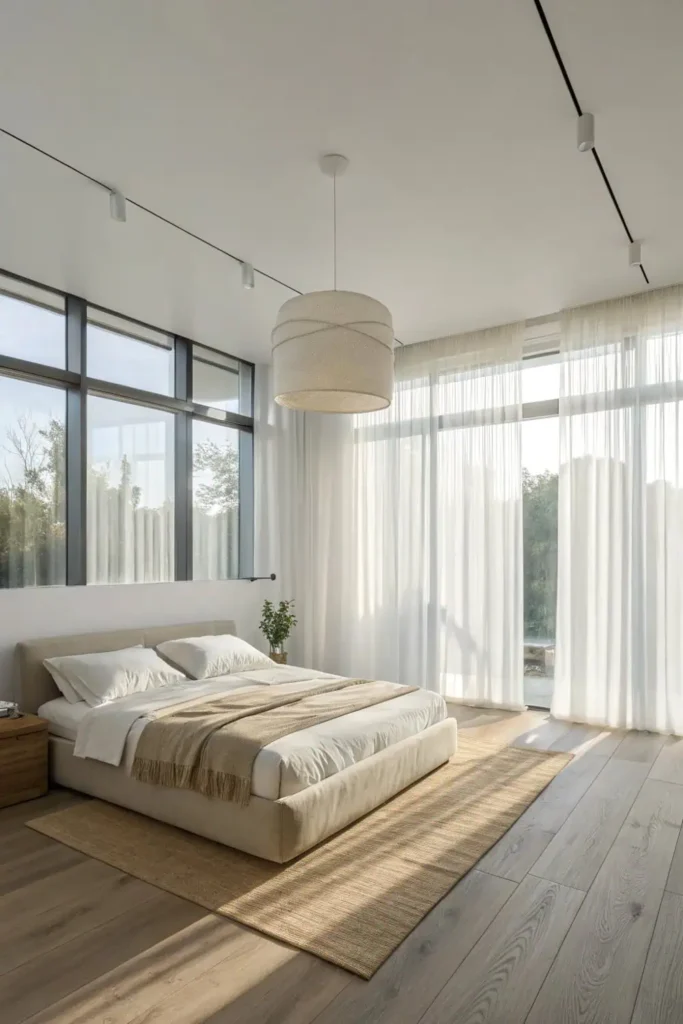
Save what you love, hover or tap the image and pin it now.
Supplement daylight with diffused lighting schemes that eliminate harsh shadows and create uniform brightness. Install recessed ceiling fixtures with warm LED bulbs, position table lamps with fabric shades at varying heights, and consider wall-mounted sconces to free up surface space. Layer your lighting sources to achieve depth while maintaining the clean lines essential to minimalist bedroom decor and design principles.
Pro tip: Use mirrors to reflect natural light and enhance the brightness of your space.
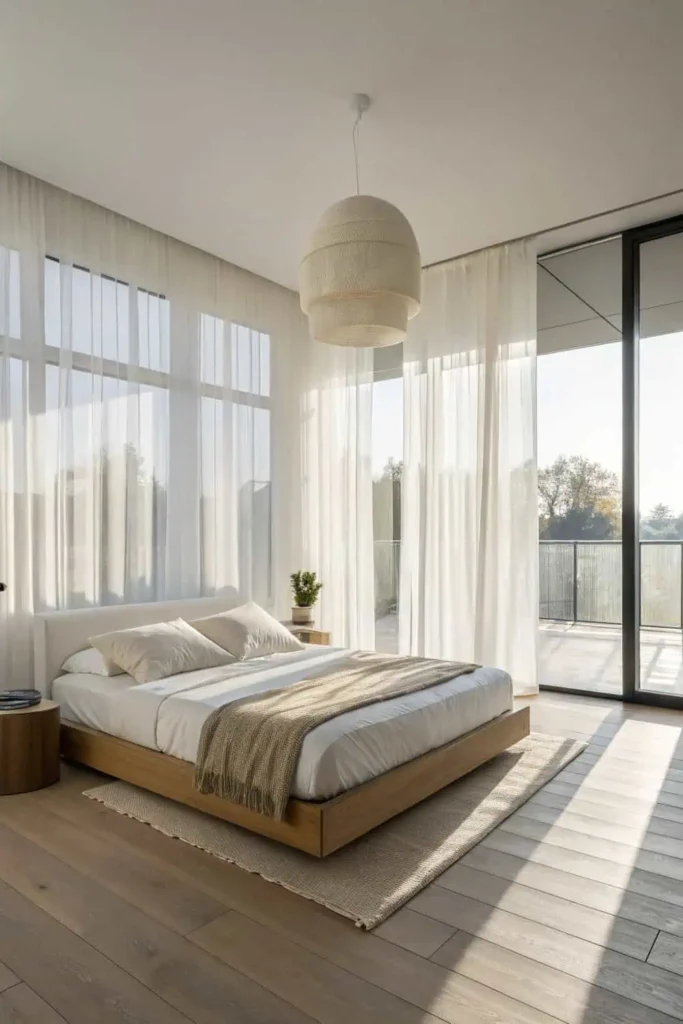
Save what you love, hover or tap the image and pin it now.
Establish Daily Habits to Maintain the Space
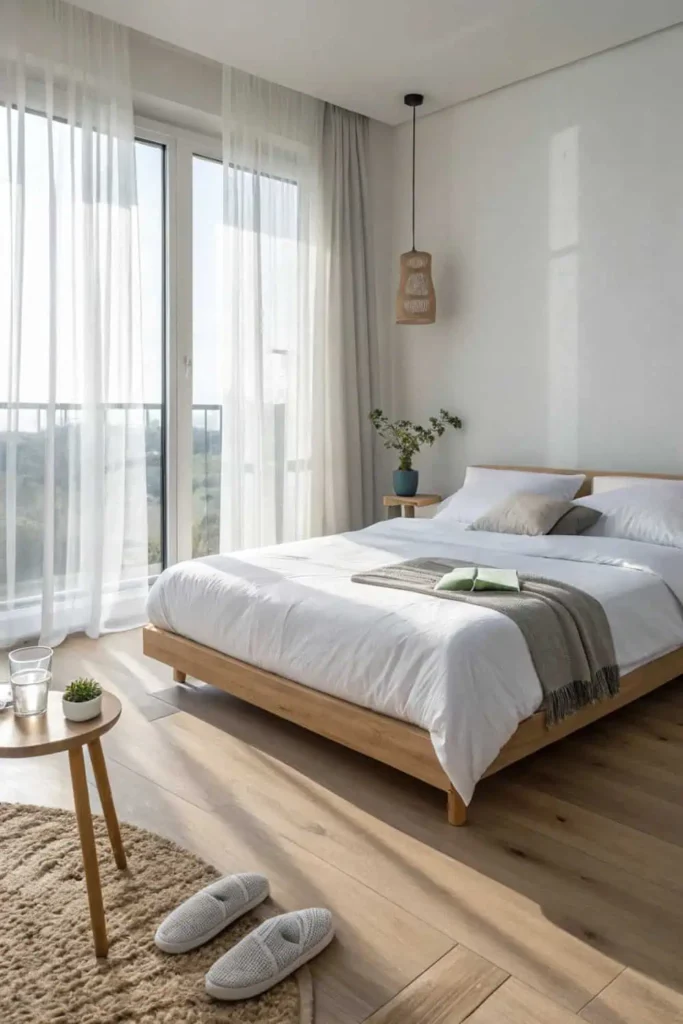
Every successful minimalist bedroom decor requires intentional daily practices that preserve its clean aesthetic and functional efficiency. Consistent daily routines transform maintenance from overwhelming tasks into effortless habits that sustain your space’s serene atmosphere.
Save what you love, hover or tap the image and pin it now.
Daily minimalist habits transform bedroom maintenance from overwhelming chores into effortless routines that preserve your sanctuary’s peaceful, clutter-free atmosphere.
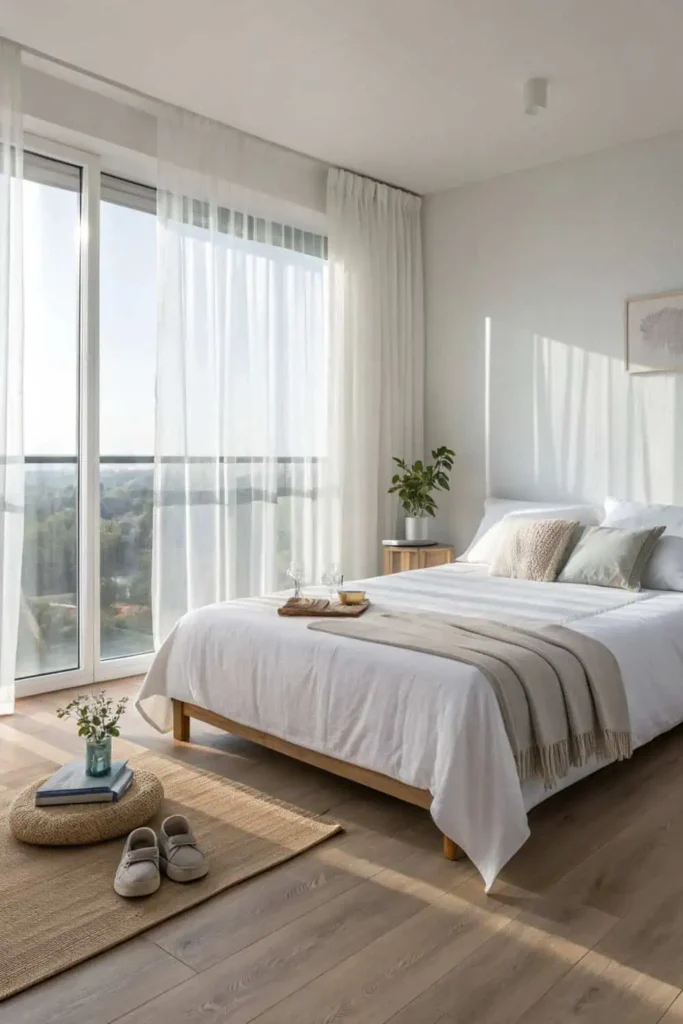
Intentional habit building centers on three essential practices:
Save what you love, hover or tap the image and pin it now.
These micro-habits compound into significant spatial impact, ensuring your minimalist sanctuary remains a restorative retreat rather than requiring periodic major overhauls.
Pro tip: Start small by focusing on one habit at a time to make the integration of these practices seamless and sustainable.
Mood Board & Color Palette
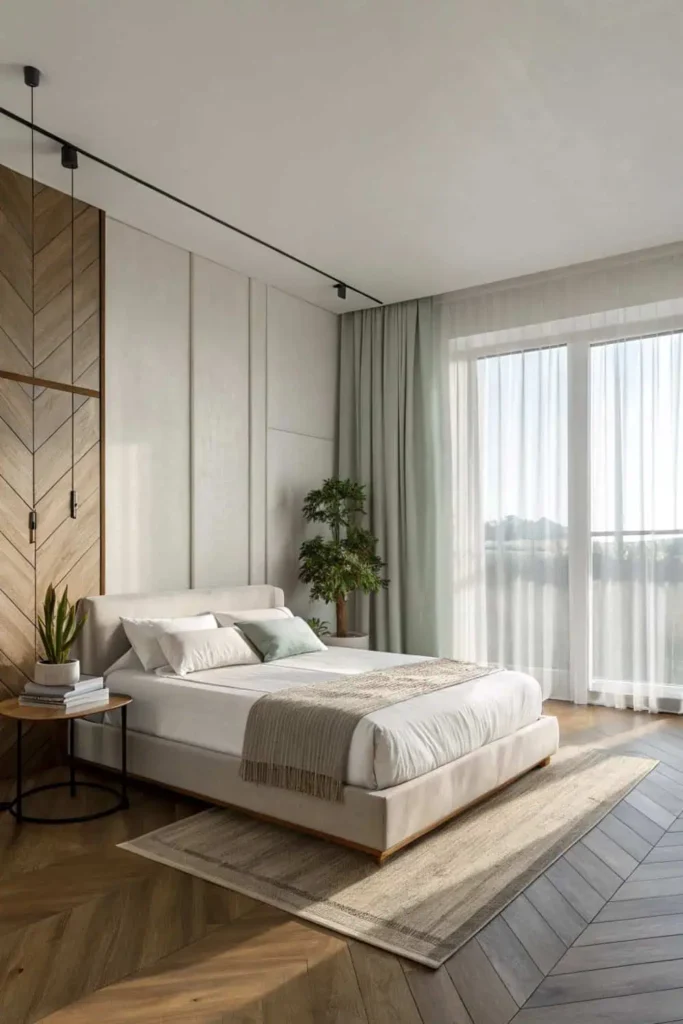
Beyond establishing maintenance routines, your minimalist bedroom decor relies on a thoughtfully curated mood board and intentional color palette. Start by gathering serene styling inspirations that emphasize negative space, clean lines, and purposeful design elements.
Save what you love, hover or tap the image and pin it now.
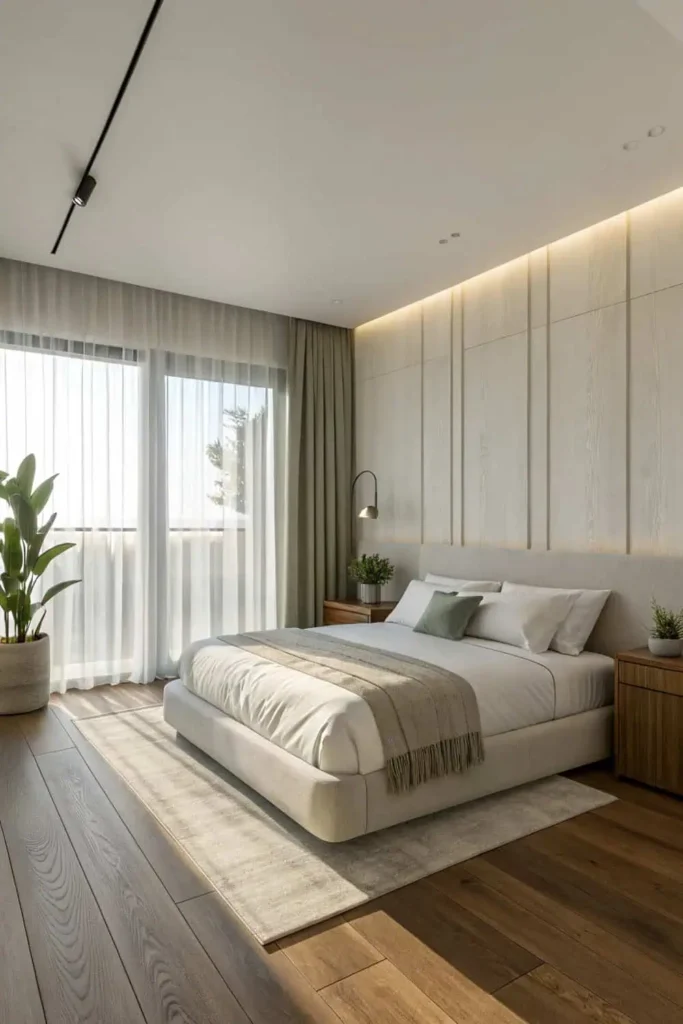
Opt for calming color combinations such as warm whites paired with soft grays, muted earth tones, or monochromatic schemes that foster visual continuity.
Your mood board should showcase materials with varied textures like linen bedding, natural wood grains, and stone surfaces—while maintaining tonal harmony. Limit your palette to a maximum of three primary colors, ensuring each shade serves a functional role within the space’s hierarchy.
Save what you love, hover or tap the image and pin it now.
Pay attention to how natural light interacts with your chosen colors throughout the day, as this significantly influences the room’s atmosphere and perceived proportions.
Pro tip: Use sample swatches to visualize how colors look in different lighting conditions before making final decisions.
Common Mistakes & Quick Fixes
Save what you love, hover or tap the image and pin it now.
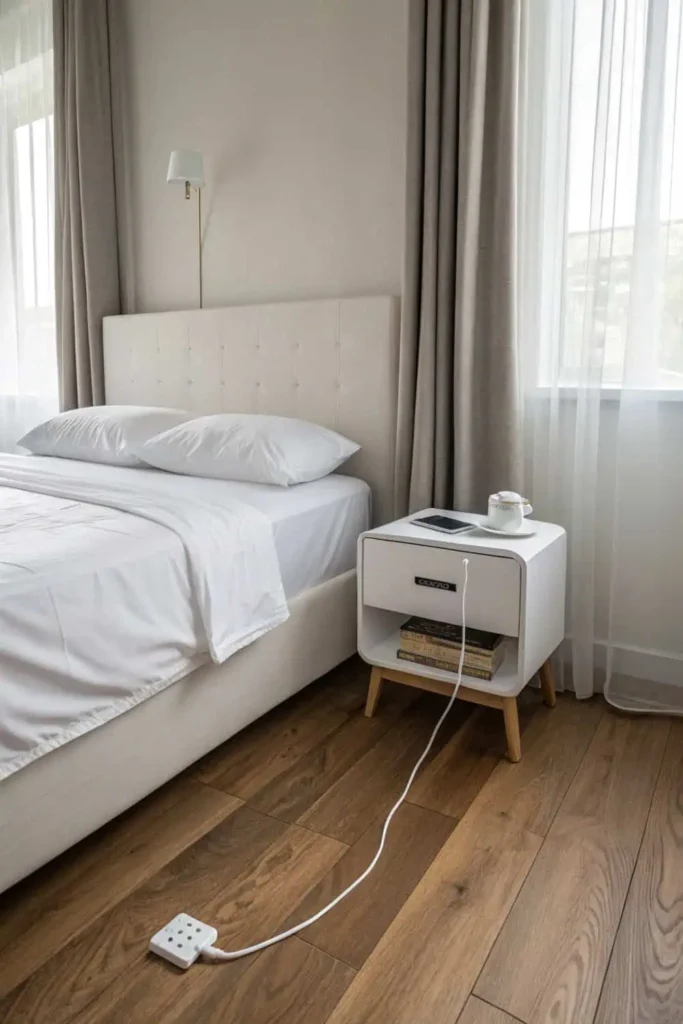
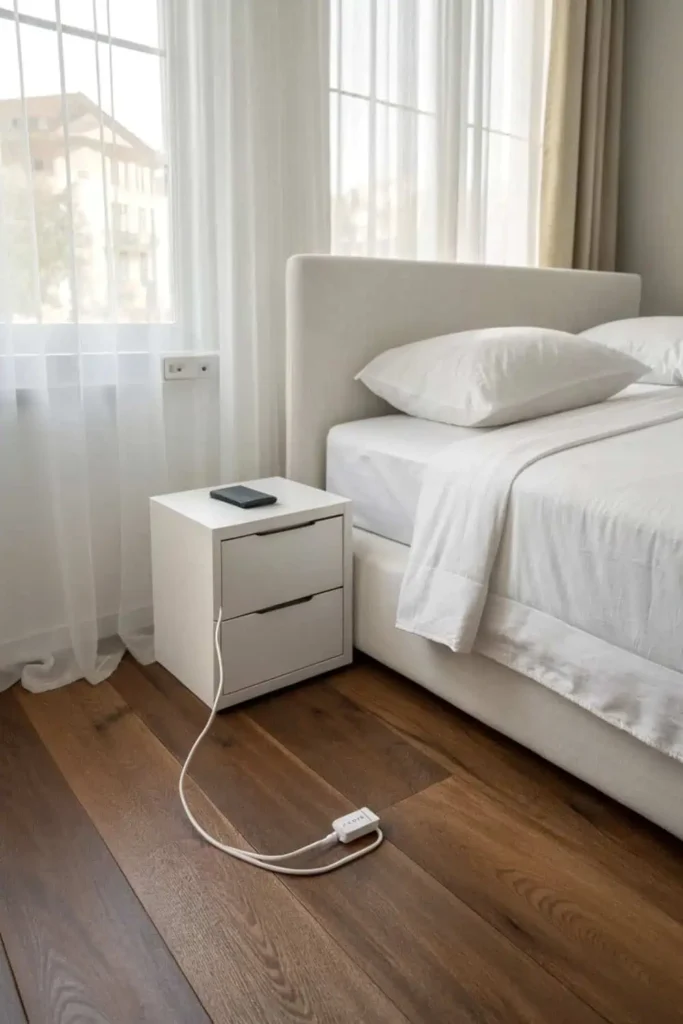
Most minimalist bedroom decor modifications falter when design enthusiasm overrides strategic planning, resulting in spaces that feel sterile instead of serene. You might be overcrowding furniture despite good intentions, while overlooking essential lighting that sets the right ambiance.
Address these frequent missteps through targeted corrections:
Save what you love, hover or tap the image and pin it now.
Your minimalist approach thrives when you balance restraint with intentional comfort, ensuring every design decision serves both aesthetic harmony and functional purpose.
Pro tip: Focus on one or two key pieces that reflect your style while keeping the rest of the space uncluttered.
Decluttering Action Plan PDF
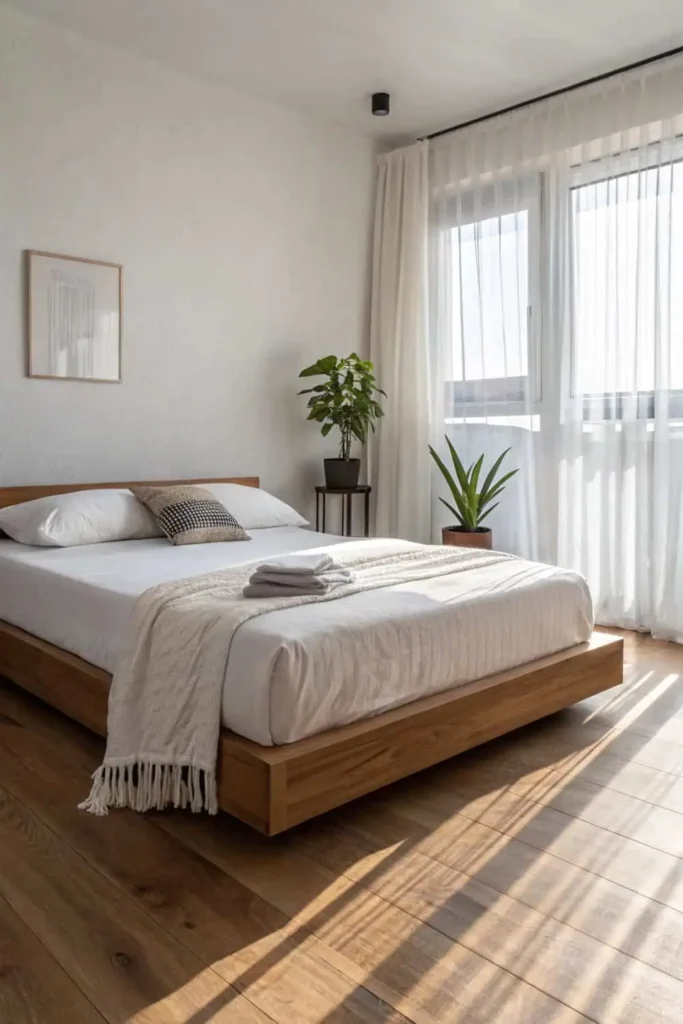
Your minimalist bedroom decor transformation needs a systematic approach instead of random organizing attempts. Download our comprehensive bedroom decluttering checklist to guide your change step by step. This structured plan begins with addressing surface clutter, then progresses through storage areas, closet organization, and furniture evaluation.
Save what you love, hover or tap the image and pin it now.
A systematic decluttering approach prevents overwhelm and creates lasting minimalist bedroom decor results through methodical, structured planning.
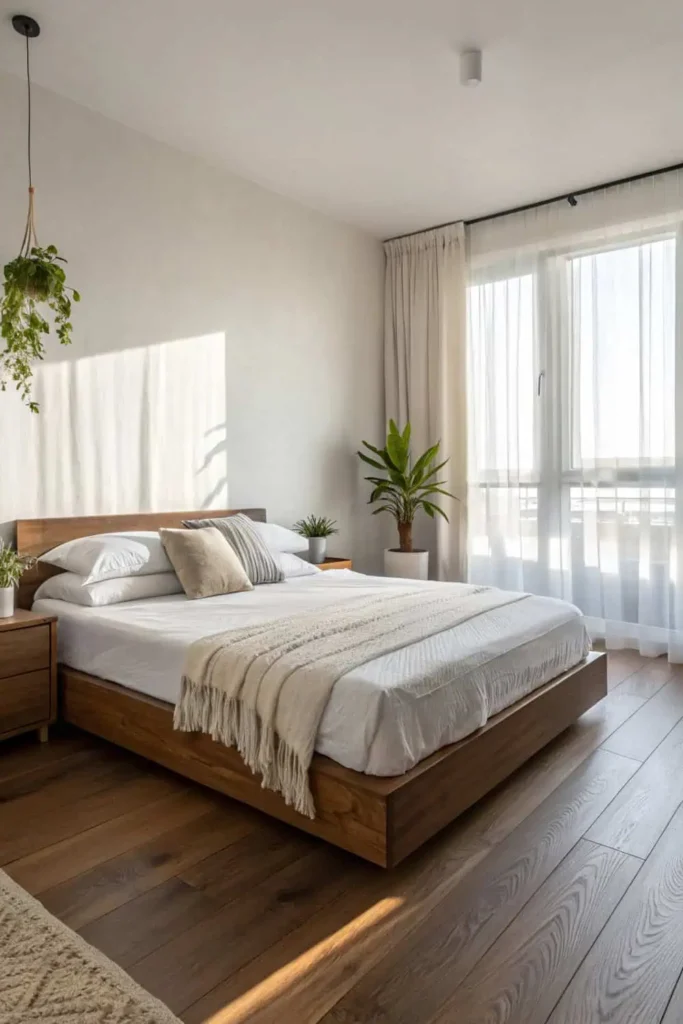
By removing non-essential items from nightstands, dressers, and visible surfaces, you’ll reduce visual noise. The checklist includes effective minimalist organizing strategies, such as the one-in-one-out rule and thoughtful furniture placement to enhance spatial flow. Each section provides specific timeframes and decision-making criteria to help you avoid feelings of being overwhelmed.
Save what you love, hover or tap the image and pin it now.
The layout of your bedroom, including its proportions and natural light patterns, will influence the best positioning for your furniture. By adhering to this sequential plan, you can create intentional negative space while ensuring that your bedroom remains functional. Keep track of your progress through each phase to achieve lasting results rather than fleeting tidiness.
Pro tip: Start with one area at a time to maintain focus and make the decluttering process feel more manageable.
Essential Minimalist Bedroom Decor Furniture Picks
Successful minimalist bedroom decor typically features three core furniture pieces: a streamlined bed frame, a functional storage solution, and purposeful seating or surface. Your furniture selection should prioritize multi-functional pieces that serve multiple purposes while maintaining clean lines.
For example, platform beds with built-in drawers eliminate the need for separate nightstands, while floating shelves provide storage without consuming valuable floor space.
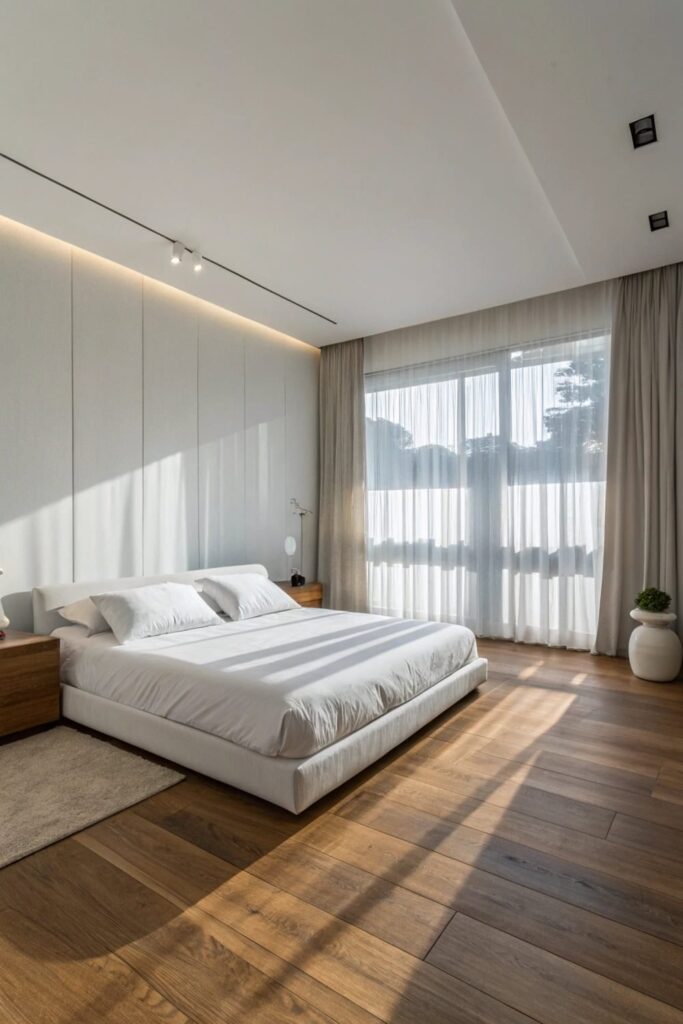
Save what you love, hover or tap the image and pin it now.
Consider these essential elements for ideal spatial flow:
Each piece should demonstrate intentional design choices that enhance your room’s functionality. By selecting furniture that combines aesthetic appeal with practical storage solutions, you can create an uncluttered environment that promotes restful sleep.
Pro tip: Opt for light colors and natural materials to further enhance the airy feel of a minimalist bedroom decor.
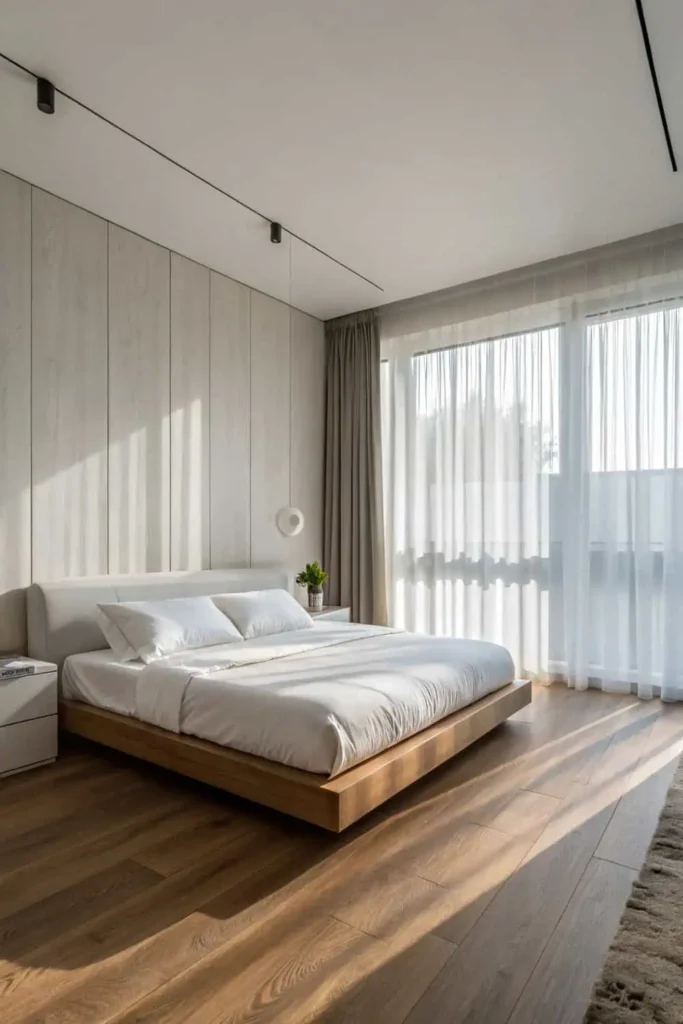
Save what you love, hover or tap the image and pin it now.
Frequently Asked Questions
How Much Does It Cost to Create a Minimalist Bedroom Decor?
Beauty is in the eye of your wallet; you might spend $500 to $2000 creating minimalist spaces. Opt for budget-friendly minimal options like platform beds and neutral linens. Low-maintenance, bright furnishings maximize functionality while maintaining clean lines and ideal spatial flow.
Can Minimalist Bedrooms Work for Couples With Different Style Preferences?
You’ll succeed when you establish shared aesthetic goals while addressing individual storage needs. Create designated zones for personal items, maintain clean sightlines, and select neutral palettes that accommodate both partners’ preferences within minimalist design principles.
What’s the Difference Between Minimalist and Scandinavian Bedroom Design?
You’ll find Scandinavian minimalism emphasizes natural materials like wood and wool, creating warmth through texture. Meanwhile, minimalist design focuses on functionality and simplicity, prioritizing clean lines and neutral palettes over material-driven coziness.
How Do I Make a Small Minimalist Bedroom Feel Larger?
Think of your space as a blank canvas. You’ll maximize natural light with sheer window treatments while utilizing multifunctional furniture like storage ottomans. Light colors, mirrors, and vertical lines create visual expansion through strategic design principles.
Are Minimalist Bedrooms Suitable for Children and Teenagers?
You’ll find minimalist bedrooms for active young minds promote focus and rest. Achieving simple style for growing children requires strategic storage solutions, durable materials, and flexible zones that adapt to their developmental needs while maintaining clean lines.
Conclusion
Your minimalist bedroom functions like a well-designed architectural blueprint—every element serves a purpose, nothing’s superfluous. Research shows that clutter-free environments reduce cortisol levels by 23%, directly improving sleep quality. You’ve now commanded the spatial hierarchy: neutral foundations anchor your design, clean-lined furniture defines zones, and strategic negative space creates visual breathing room. You’ll uncover that true luxury isn’t about accumulating objects—it’s about curating intentional spaces that support your well-being through thoughtful design restraint.

Save what you love, hover or tap the image and pin it now.